Top 20 Viking Beard Styles For Rugged Men
Quick answer: The popular image of Vikings as unkempt and wild is largely a modern invention. Archaeological finds — combs (among the most common artifacts recovered from Viking-age sites), tweezers, and ear picks — along with contemporary written accounts describing Norse men bathing weekly and combing their hair, point to a culture that took grooming seriously. The styles below range from that historically-grounded, well-kept look to the bolder, more theatrical versions popular today.
What History Actually Shows
Wooden and bone combs are among the most frequently found personal items at Viking-age sites, often kept in protective cases — not the kind of care given to a tool used rarely. Carved figures from the period, including one from the Oseberg ship burial, show long, deliberately shaped mustaches and beards. Contemporary accounts from outside Scandinavia specifically note Norse men’s cleanliness and grooming, in some cases crediting it for their reputation abroad. The “wild and unkempt” version popularized in film and TV is a stylistic choice, not a historical one.
Well-Groomed, Historically-Grounded Styles
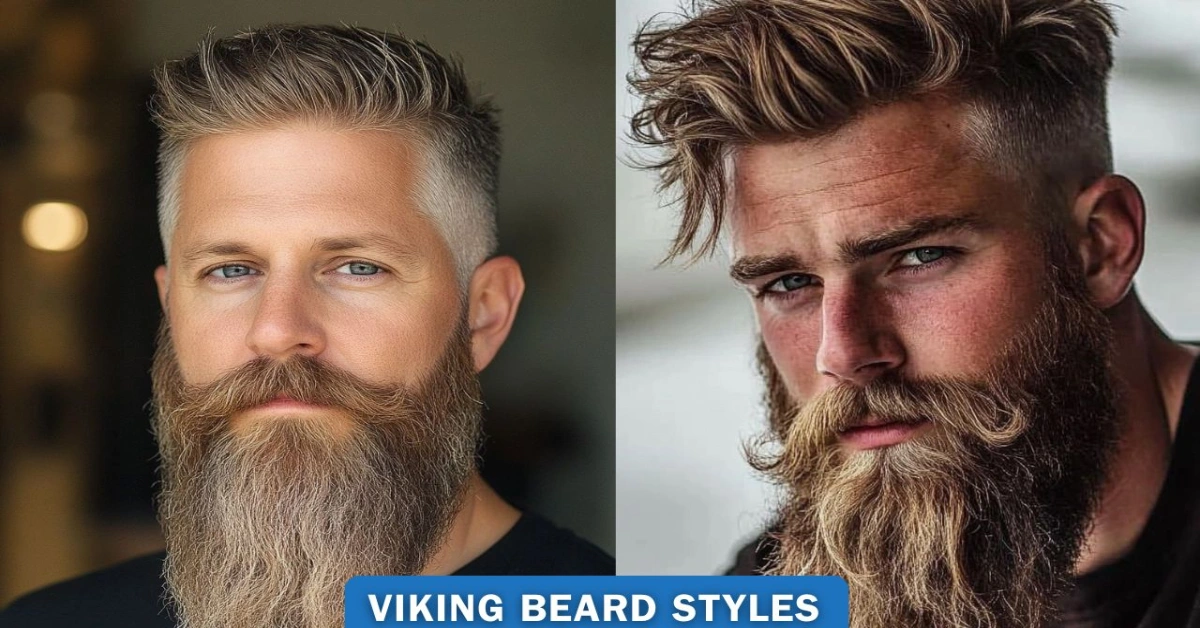
1. Rounded, Well-Kept Beard
Neatly trimmed and shaped rather than left to grow freely — closest to what the archaeological and written record actually supports, and genuinely professional-appropriate for most workplaces.
2. Short Beard
Not every Viking-inspired look requires significant length — a shorter, well-maintained beard fits the same historically grounded aesthetic while requiring far less growing time.
3. Square Beard
A defined, structured shape that reads as deliberate rather than wild. Low-maintenance to keep once shaped, since the square line is easy to trim back to as it grows.
4. Handlebar Mustache With Beard
A shaped, twisted mustache paired with a full beard — needs regular twisting and a light wax to hold its form as it grows out.
Bolder, More Theatrical Styles
5. Unruly or Messy Beard
The look most people picture when they hear “Viking beard” — a fuller, less shaped beard paired with a shorter haircut to balance the overall silhouette. A modern aesthetic choice more than a historical one, but a genuinely low-maintenance option if you don’t want to trim often.
6. Big and Bushy Beard
Allowed to grow long and full with only occasional tip trims to control shape. Requires patience and genetics more than technique, and works best paired with regular conditioning to prevent dryness at length.
7. Super Long Beard
A significant time investment — reaching real length takes years, not months — and needs consistent care (washing, conditioning, occasional oiling) to avoid looking unkempt rather than intentional at that length.
8. Uneven or Asymmetrical Beard
Deliberately varied length across the beard — shorter at the sides and mustache, fuller at the chin, for example — for a more textured, rugged silhouette than an evenly trimmed beard.
Braided Styles
9. Single or Double Braid
One or two sections of the beard braided while the rest stays loose. Needs enough length to braid securely (generally a few inches past the chin) and a small hair tie or bead to hold the braid’s end.
10. Multiple Small Braids
Several thinner braids throughout a longer beard rather than one or two larger ones — more time-intensive to install and maintain, and best learned from a step-by-step tutorial or barber the first time.
11. Tied or Wrapped Beard
A leather strip or cord wrapped around a gathered section of beard, sometimes finished with a bead. A distinctive detail that works on beards long enough to gather into one bound section.
Pairing With a Haircut
12. Beard With a Skin Fade
A close skin fade at the sides paired with a fuller beard creates deliberate contrast between the shaved sides and the facial hair — ask your barber to blend the fade gradually into the beard line rather than leaving a hard edge.
13. Beard With an Undercut and Small Braids
A shorter or growing-out beard paired with braided top hair and an undercut — a good combination while your beard is still filling in and hasn’t reached full length yet.
14. Chin Strap Beard
A narrow line of beard running along the jaw, connecting to the sideburns, without full cheek or mustache coverage. Reads as edgier and needs regular edging to keep the line clean.
15. Curled or Textured Beard
Natural wave or curl left visible rather than straightened, or achieved with a beard iron and styling product on straighter hair. Works especially well paired with the braided styles above, since texture holds a braid’s shape better than fully straight hair.
Frequently Asked Questions
Were Vikings actually as unkempt as the “Viking beard” stereotype suggests?
No — combs are among the most commonly recovered personal items from Viking-age sites, and written accounts from the period specifically describe Norse men as clean, well-groomed, and combed. The wild, unkempt image is a modern stylistic invention.
How long does it take to grow a beard long enough to braid?
Generally a few inches past the chin at minimum, which for most men takes several months of consistent growth without trimming.
What’s the lowest-maintenance style on this list?
The short or rounded well-kept beard — both need only periodic trimming to maintain shape, without the daily styling a braided or curled beard requires.
Do I need special products to maintain a longer beard?
Yes — regular conditioning (a beard oil or balm) becomes more important as length increases, since longer facial hair is more prone to dryness and split ends than a shorter, well-trimmed beard.
Editorial note: Historical claims about Viking grooming reflect archaeological and documentary evidence as of 2026; style names and pairing suggestions reflect modern barbering trends rather than historical Norse practice specifically.