10 Best Haircuts for Balding Men (By Hair Loss Pattern)
There is no single “best” haircut for balding men, because hair loss does not happen the same way for everyone. A cut that hides a receding hairline can actually draw more attention to crown thinning, and what works in the early stages usually stops working once loss becomes more advanced. The right approach depends on where you are actually losing hair, not just on picking a style off a list.
If you are not sure which pattern describes your hair yet, our guide on how to tell if your hair is thinning covers the early signs and common causes before you get to the styling decision covered here.
Match the Haircut to Your Hair Loss Pattern
Most male pattern hair loss follows one of a few recognizable shapes. Identifying yours first makes the rest of this guide far more useful.
| Pattern | What It Looks Like | Best Approach |
|---|---|---|
| Receding hairline | Thinning at the temples, forming an M shape | Keep it short, reduce contrast between hairline and rest of the style |
| Crown thinning | Hair loss starting at the top or back of the head | Add texture and height at the front to draw the eye away from the crown |
| Overall thinning | Reduced density across the whole scalp | Shorter styles with movement, minimal contrast between areas |
| Advanced balding | Significant loss across multiple areas | Often looks more intentional and polished fully shaved |
10 Haircuts That Work With Hair Loss, Not Against It
1. Textured Crop (Receding Hairline)
A short, textured crop with a soft, undefined front keeps attention off a thinning hairline. Because the style has no hard line at the front, there is nothing to visually mark exactly where the hairline has moved.
2. Caesar Cut (Receding Hairline)
The short, straight fringe of a caesar cut sits forward, providing coverage right at the hairline without looking like an obvious attempt to hide anything. It is one of the most reliable options specifically for early-stage temple recession.
3. Low Skin Fade with Texture on Top (Receding Hairline)
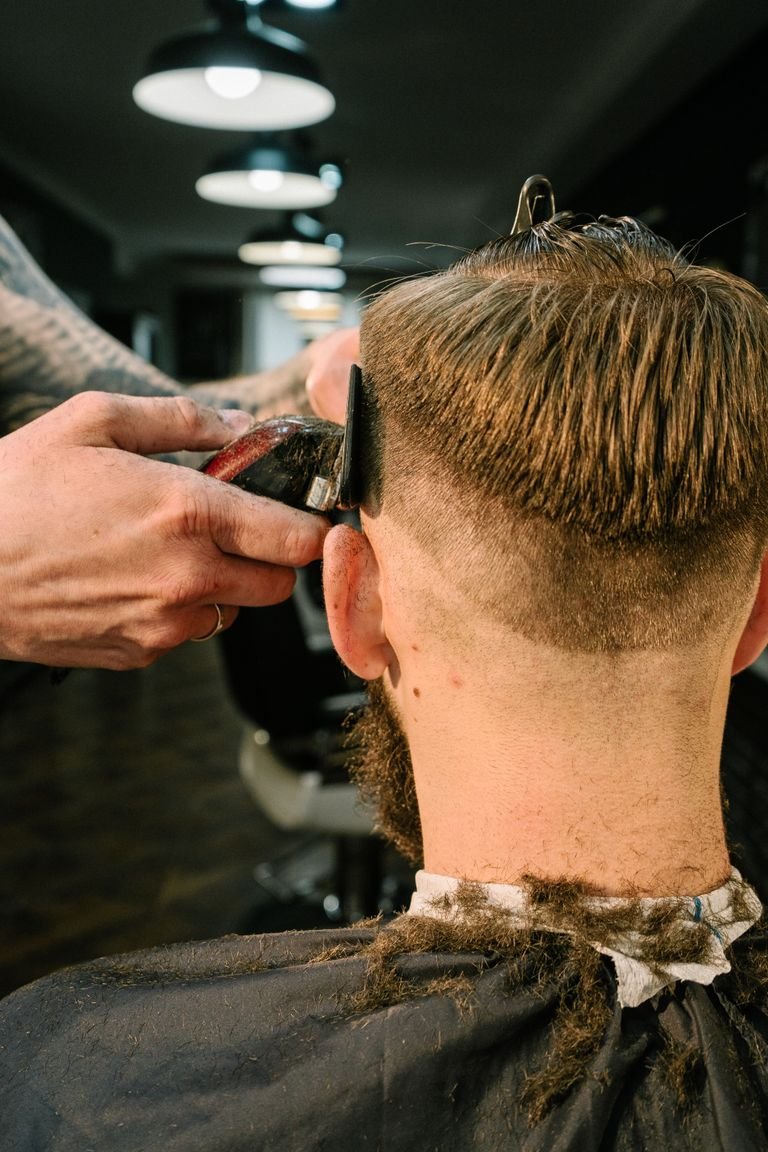
Fading the sides down to skin removes any competing length for the eye to compare against the hairline, while a small amount of texture on top keeps the overall look current rather than severe.
4. Textured Quiff (Crown Thinning)
Styling the front and top upward and back adds height exactly where it draws attention away from a thinning crown. A matte styling product gives the lift its shape without adding shine that would highlight the scalp underneath.
5. Pushed-Back Pompadour (Crown Thinning)
Similar in effect to a quiff but with a smoother, more structured finish, a pompadour works well for men who want a slightly more polished, formal look while still directing attention toward the front of the head.
6. Medium Textured Crop (Crown Thinning)
A bit more length than a standard crop, worked into loose texture on top, adds visual volume across the crown area without requiring a strict, structured style to maintain.
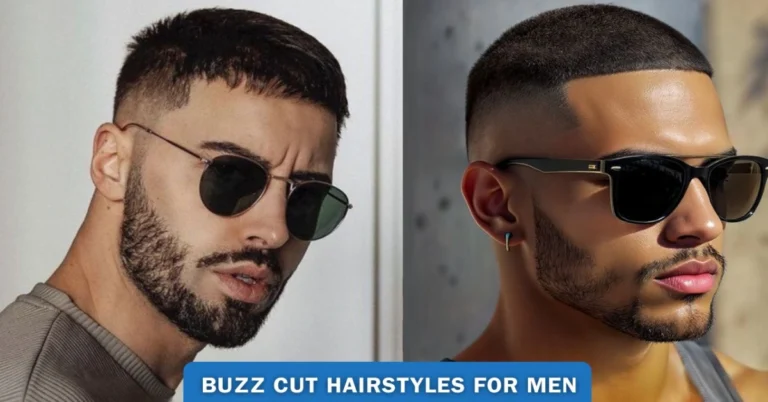
7. Buzz Cut (Overall Thinning)
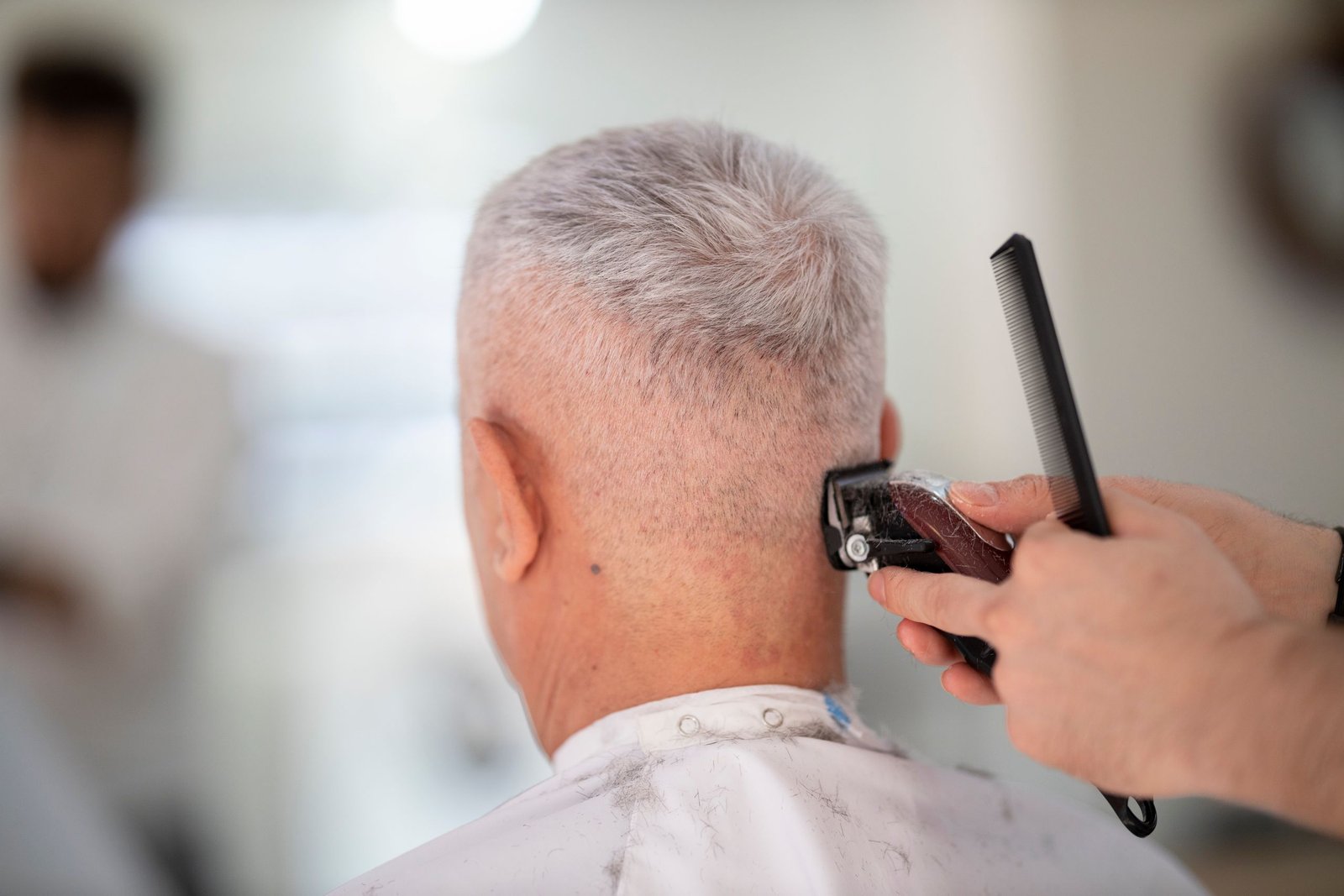
Cutting all the hair to a uniform, short length removes the contrast between thinner and fuller areas entirely, since there is no length anywhere for density differences to show through.
8. Crew Cut (Overall Thinning)
A close relative of the buzz cut with very slightly more length on top, a crew cut keeps the same low-contrast benefit while offering a touch more styling flexibility for men not ready for an all-over buzz.
9. Fully Shaved Head (Advanced Balding)
For more advanced or widespread hair loss, a fully shaved head is widely considered to read as a deliberate, confident choice rather than an attempt to disguise something. It requires the most consistent maintenance of any option here, generally a shave every two to three days, but eliminates the styling question entirely.
10. Very Short Crop with a Full Beard (Advanced Balding)
Pairing a very short crop or buzzed top with a fuller, well-maintained beard balances the face and shifts visual weight downward. Our guide to short beard styles covers options that pair particularly well with this kind of minimal, low-maintenance top.
Styling Tips to Maximize Fullness
- Blow-dry for lift. Directing airflow upward and against the direction hair naturally falls, using a round brush if there is enough length, creates the appearance of more volume than the hair actually has.
- Use matte, not shiny, products. Glossy pomades and gels reflect light off the scalp in thinning areas, which draws more attention to them. Matte clays and pastes hold shape without the shine.
- Keep the sides noticeably shorter than the top. This contrast makes whatever length remains on top read as fuller by comparison.
- Trim on a consistent schedule. Thinning hair that grows out unevenly is far more noticeable than hair kept to a consistent, well-maintained length.
- Avoid long, heavy styles. Length adds weight, and weight flattens hair against the scalp, which reduces the appearance of volume rather than adding it.
Should You Just Shave It All Off?
For many men, particularly once hair loss reaches a more advanced stage, shaving the head entirely is a genuinely practical choice rather than a last resort. It removes the daily question of how to style thinning hair, requires no product, and is widely seen as a confident, deliberate look rather than something to be self-conscious about. The main trade-off is maintenance frequency, since stubble regrowth becomes visible within a couple of days and needs regular reshaving to keep the clean look intact. If a fully shaved head is not something you are ready for, working with one of the shorter, lower-contrast cuts above is a reasonable middle ground while you decide.
Common Mistakes to Avoid
| Mistake | Why It Happens | How to Fix It |
|---|---|---|
| Growing hair longer to compensate | Trying to have “more” hair to work with | Shorter, lower-contrast cuts generally look fuller and more intentional than longer, thin hair |
| Using a hard side part with a receding hairline | Sticking with a style from before hair loss started | Switch to a softer, textured front that does not create a hard line at the hairline |
| Using glossy or heavy products | Habit from styling fuller hair in the past | Switch to matte, lightweight products that add texture without shine |
| Ignoring the beard while focusing only on the haircut | Treating hair and facial hair as separate decisions | Coordinate a shorter cut with a well-maintained beard to balance the overall look |
| Waiting too long between trims | Avoiding the barber out of self-consciousness | Regular trims actually keep thinning hair looking neater and more controlled |
Frequently Asked Questions
What is the best haircut for a receding hairline?
A textured crop, caesar cut, or low skin fade with texture on top all work well, since each removes the hard lines that would otherwise draw attention to where the hairline has moved. Avoiding a sharp, defined part is the most important general principle.
Does shaving your head make hair loss look worse?
Generally the opposite. A fully shaved head is widely considered to look more polished and deliberate than visibly thinning hair, especially once hair loss becomes more advanced. It removes any comparison between thin and fuller areas since there is no length left at all.
Can a haircut alone fix a receding hairline?
No haircut stops or reverses hair loss. What the right cut can do is reduce contrast and avoid drawing attention to thinning areas, which meaningfully changes how noticeable the hair loss appears day to day, even though the underlying pattern is unchanged.
Should sides always be shorter than the top for balding men?
In most cases, yes. Keeping the sides shorter than the top creates a visual contrast that makes the top read as fuller by comparison, which is one of the most consistent tricks used across nearly all the cuts recommended for hair loss.
Final Thoughts
The most reliable haircuts for balding men all share the same underlying logic: reduce contrast, avoid hard lines that mark where hair has thinned, and choose length and texture that work with the hair you actually have rather than trying to recreate a fuller look from years ago. Whether that means a low-maintenance buzz cut, a textured crop, or going fully shaved, the goal is a style that looks deliberate and well kept, not one trying to hide something.