7 Best Short Haircuts for Women Over 40 (2026 Guide)
Hair texture and thickness genuinely shift in your 40s — often becoming coarser in some places, finer in others, and starting to grow in gray at the roots. These seven cuts are chosen to work with those specific changes, not to fight them.
What Actually Changes in Your 40s
Two things tend to happen around this decade: overall hair diameter often decreases, making strands individually finer even if the total volume looks similar, and gray growth typically accelerates at the temples and part line first. A cut that works with both — rather than one designed for uniformly thick, non-gray hair — tends to hold its shape and look intentional for longer between salon visits.
1. The Textured Bob
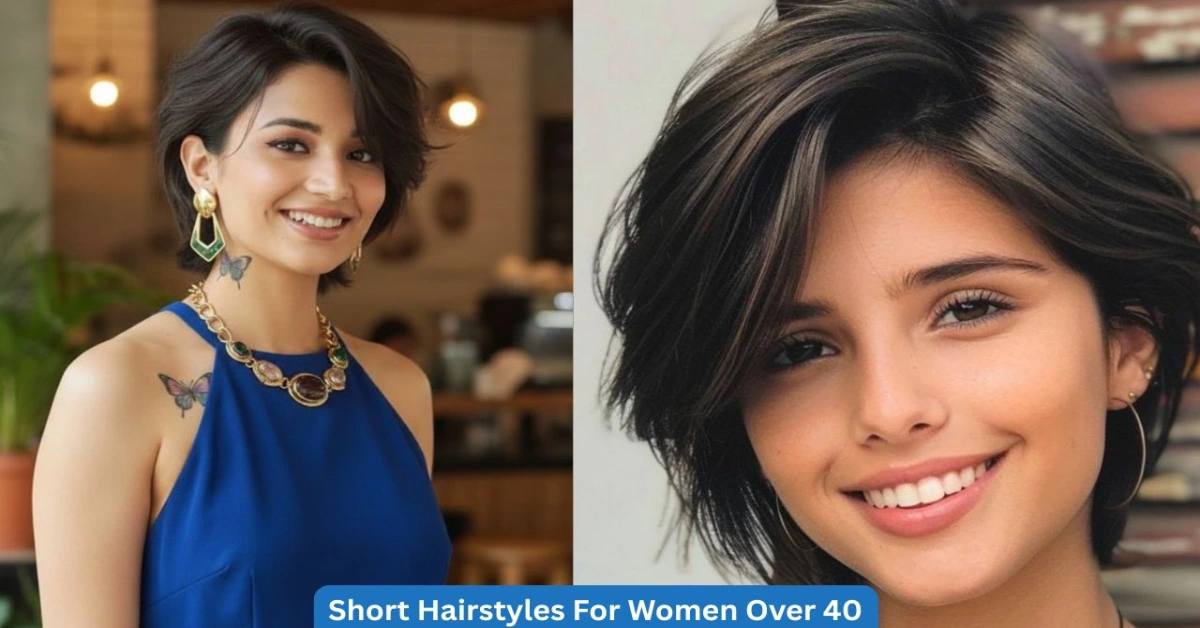
Chin-to-jaw length with soft layers through the ends. The shorter length carries less weight than longer styles, which helps finer hair hold volume through the day instead of going flat by afternoon.
2. The Long Pixie With Length on Top
Short at the sides and back, longer through the crown and front. Gives more styling options than a classic pixie — swept back, tousled, or pushed to one side — while still being genuinely low-maintenance.
3. The Angled Lob
A long bob cut shorter at the back and longer toward the front. The angle adds a modern line without needing daily heat styling, and the added front length is easier to tuck behind an ear on busy days than a blunt-all-around cut.
4. The Face-Framing Shag
Heavy layering with curtain-style pieces around the face. The layers are cut to fall into place with air-drying, and the broken-up shape is one of the more forgiving styles for regrowth between color appointments if you’re covering gray.
5. The Graduated Bob
Shorter at the nape, building length toward the front — a slightly rounder, fuller shape than the angled lob. Adds visible density through the back of the head, which is often where hair thins first.
6. The Silver-Ready Crop
A short, textured crop cut close at the sides with movement on top. Specifically useful during a gray transition: the short length means new growth blends into the existing cut within a few weeks rather than creating a long, obvious demarcation line.
7. The Soft Side-Part Bob
A classic bob with a deep side part instead of a center part. The deep part naturally covers more of the hairline and temple area — useful if that’s where thinning or graying is most visible — without looking like a deliberate cover-up.
If You’re Transitioning to Gray
Shorter cuts genuinely make this transition faster and less awkward than growing it out on long hair, because there’s simply less colored length to grow past. The silver-ready crop and long pixie are the two most commonly recommended by stylists specifically for this reason — both let new growth catch up to the cut within a few months rather than a couple of years.
Styling for Finer, Changing Hair
- A lightweight volumizing mousse on damp roots, rather than heavier products that weigh fine hair down.
- Air-drying upside down for the first few minutes to build lift before finishing with a round brush.
- A texturizing spray on dry hair to help styles hold shape through the day, especially for the shag and crop styles.
- A trim every 6-8 weeks — finer, layered cuts show split ends and lose shape faster than thicker, blunt styles.
The textured bob or graduated bob work best. Both use a shorter length and internal layering to reduce weight, which helps finer hair hold volume through the day instead of falling flat.
A short crop or long pixie makes the transition fastest. Because there’s less colored length overall, new gray growth blends into the cut within weeks rather than creating a long, obvious line between colors.
Every 6-8 weeks for most of these styles. Layered, textured cuts lose their shape faster than blunt, one-length styles, so regular trims matter more here than with longer hair.
Final Thoughts
The most useful thing you can bring to a stylist consultation is an honest read on how your hair has actually changed — finer strands, more gray, different texture — rather than a photo of a cut on someone with different hair. Any of these seven work as a strong starting point; the details get adjusted from there.
For more short-cut ideas, see our guides to short haircuts for women in their 30s and medium hairstyles for thick hair.