23 Trendy Cornrows Hairstyles For Men
Quick answer: Cornrows are a genuine protective style — braided flat against the scalp, they reduce daily manipulation and heat exposure on natural hair — but the same tension rule that applies to any tight braiding applies here: snug, not painful. Below are 15 real style variations, followed by what actually protects your hairline while wearing them. For general braid safety and how long styles should stay in, see our braid tension guide.
Classic and Beginner-Friendly Styles
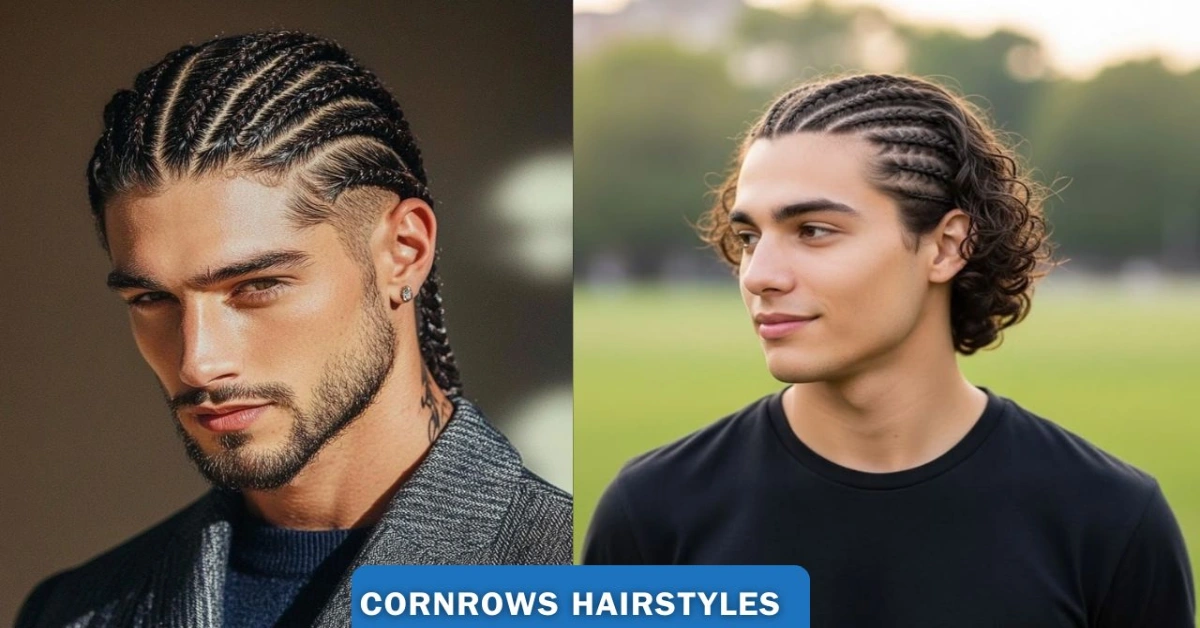
1. Basic Straight-Back Cornrows
Rows running straight from the front hairline to the nape, evenly spaced. The simplest, most classic version and a good starting point if you’re new to the style.
2. Simple Cornrows With Varied Plait Size
The same straight-back pattern but with a mix of thicker and thinner braids for texture. Works especially well on rounder face shapes, where volume at the temples adds balance.
3. Small Cornrows
Thinner, more numerous rows creating a finer, more detailed pattern. Takes longer to install than jumbo cornrows but holds a crisp look for longer between touch-ups.
4. Jumbo Cornrows
Fewer, thicker braids that install faster and read as bold and low-maintenance. A practical choice if you want the protective benefit without a long salon session.
Feed-In and Design Styles
5. Feed-In Cornrows
Braiding starts with just the natural hair, then gradually “feeds in” small amounts of extension hair as the row progresses, so the braid appears to grow thicker and more natural toward the back rather than starting bulky at the hairline. This is the technique most stylists mean when they say “cornrows” for a fuller, longer-lasting look, since it puts less immediate tension on the hairline than a braid that’s full extension-thick from the first inch.
6. Cornrow Designs and Patterns
Curved, zigzag, or geometric rows – lightning bolts, diamonds, crosses – parted and braided into the pattern before braiding begins. The design lives in the parting, not in anything added afterward, so it takes a stylist comfortable with freehand parting rather than following a straight grid.
7. Cornrows With a Shaved Design
A thin shaved line or pattern cut into the scalp alongside or through the part, then braided around it so the shaved line stays visible. This is a distinct technique from a plain design cornrow above – it needs clippers with a detailing blade, not just careful parting – and works best on shorter natural hair where the shaved line has good contrast.
Pairing Cornrows With a Fade
8. Cornrows Into a Skin Fade
Rows braided on top, tapering into a bald or near-bald fade at the sides and back. This is the most requested combination because it keeps the styled top low-maintenance while the fresh, sharp sides carry most of the “just left the barber” look between cornrow touch-ups. For the fade mechanics behind this – where a skin fade starts, how it differs from a low or mid fade – see our fade haircut guide.
9. Cornrows Into a Mid or Low Fade
The same idea with a gentler taper, useful for workplaces or schools with conservative grooming policies, or simply for anyone who’d rather not re-fade every two weeks to keep the contrast crisp.
10. Cornrows With an Undercut
Rows on top with the sides clipped short and uniform rather than tapered – a flatter, more graphic contrast than a fade, and one of the lower-upkeep pairings since a straight undercut grows out more forgivingly than a sharp fade line.
Longer and Gathered Styles
11. Tied-Back Cornrows
Longer rows gathered and tied at the back with thread or a band rather than left loose – practical for anyone who needs hair off the neck for work, sport, or heat, and a natural next step once cornrows are grown past shoulder length.
12. Cornrows Into a Ponytail or Bun
All rows drawn into a single gathered point and either left as a ponytail or wrapped into a bun. Works well as a temporary style for a single event without redoing the whole head.
13. Cornrows With Dreadlocks or Twists
Front and crown sections cornrowed while the back is left as locs or twists, or the reverse – useful once locs are established and growing out unevenly, since fresh cornrows up front keep the hairline neat while the back keeps developing. See our dreadlock styles guide for maintaining the loc sections themselves.
Two More Practical Variations
14. Two-Strand Cornrows
Rows braided with only two strands instead of the usual three, giving a slightly raised, rope-like texture. Holds a similar length of time to standard three-strand rows but reads as visibly different up close, which is the main reason people choose it.
15. Cornrows on Shorter Natural Hair
Hair as short as an inch or so can still be cornrowed, though rows will be smaller and the style won’t hold quite as long as on longer hair, since there’s less length for the braid to grip. A skilled stylist can still get several weeks out of it with the right amount of gel or edge control at the roots.
The Tension Rule That Actually Protects Your Hairline
Cornrows are a protective style only when they’re installed correctly. Braided too tight, they pull on the same follicles at the same angle for weeks at a time, and that repeated pulling is the direct cause of traction alopecia – a slow, often permanent thinning along the hairline and parts that dermatologists specifically link to tight braiding, weaving, and ponytails. The warning signs are immediate: if your scalp is sore, tender, or tight enough to give you a headache in the first day or two, the braids are too tight and should be redone looser, not toughed out. A correctly installed cornrow feels snug, not painful, and shouldn’t leave bumps, scabbing, or bald patches along the part lines. This applies at any age, but it matters most for children’s hairlines, which are still developing – see our braids for kids guide for the age-specific version of this rule.
Plan on 2 to 4 weeks per set before taking cornrows down, longer if feed-in extensions were used, shorter if your scalp runs oily or you’re noticing early frizz at the roots. Keep the scalp moisturized between installs with a light, water-based product rather than a heavy grease, which mostly sits on top of the braid without actually reaching the scalp.
Frequently Asked Questions
How tight should cornrows feel?
Snug and secure, not painful. Soreness, tenderness, or a headache in the first day or two means the braids are too tight and should be loosened or redone.
How long can cornrows stay in?
Typically 2 to 4 weeks. Feed-in styles with added extension hair can sometimes last a bit longer; shorter or finer natural hair usually needs a fresher take-down sooner.
Do cornrows work with all hair types?
They hold best on coily and very curly textures, which grip the braid more easily. Straighter or very fine hair can still be cornrowed but the rows may not hold as long and often need extra product to stay put.
Can cornrows be paired with a fade?
Yes – it’s one of the most common combinations. A skin, mid, or low fade at the sides keeps the sides sharp while the cornrowed top does the styling work, and only the fade needs regular touch-ups between full cornrow reinstalls.
Editorial note: This guide was reviewed and updated in 2026, with style descriptions and the braid-tension safety guidance checked against current dermatological guidance on traction alopecia.