Human Hair Wigs: The Complete Guide to Choosing, Wearing, and Caring for One
A human hair wig is made from real strands of hair rather than synthetic fiber, which is why it can be washed, heat styled, colored, and reshaped in almost the same way as natural hair growing from the scalp. That flexibility is also why human hair wigs cost more and need more careful maintenance than synthetic alternatives. This guide explains how they are built, how to choose one that suits your face, hair type, and budget, and how to keep it looking natural for as long as possible.
What Makes a Wig Human Hair
A human hair wig uses hair collected from real donors and processed for reuse, usually sorted so the hair strands run in the same direction (called being kept in cuticle alignment). This alignment reduces tangling and matting, and it is the main reason higher quality human hair wigs move and behave like natural hair rather than clumping together after a few wears.
Human hair wigs are generally grouped by where the hair originated and how it was processed. Common origins include Indian, Brazilian, Malaysian, and European hair, each with slightly different natural texture, thickness, and curl pattern. None of these labels is regulated or standardized industry wide, so origin claims from a seller are a starting point for judging texture and quality rather than a guarantee.
Human Hair vs Synthetic Wigs
Choosing between human hair and synthetic fiber comes down to how much styling flexibility you need against how much time and money you want to spend on upkeep.
| Factor | Human Hair Wig | Synthetic Wig |
|---|---|---|
| Heat styling | Can be flat ironed, curled, and blow dried like natural hair | Melts or frizzes under direct heat unless labeled heat resistant |
| Appearance | Moves and catches light like natural hair | Can look slightly uniform or shiny depending on fiber quality |
| Lifespan with daily wear | Roughly one to three years with proper care | Roughly four to six months with daily wear |
| Maintenance effort | Needs washing, conditioning, and occasional restyling | Holds its set style and needs minimal styling |
| Cost | Higher upfront investment | Lower upfront cost |
| Color changes | Can be dyed darker or toned by a professional | Cannot be safely dyed |
Neither option is universally better. A synthetic wig is often the more practical choice for occasional wear or a first wig, while a human hair wig makes more sense for people who wear a wig daily and want it to be restyled or blended with their own hair over time. If a full wig feels like more commitment than you need, a hair extensions guide covers lighter weight options that add length or volume without covering the whole scalp.
Types of Human Hair Wigs
The cap construction determines how natural the hairline looks, how the wig is secured, and how much it costs. Understanding these differences matters more than the hair quality itself when it comes to how convincing a wig looks in daily wear.
Lace Front Wigs
A lace front wig has a sheer lace panel sewn along the front hairline only, with the rest of the cap made from a sturdier wig cap material. Individual hairs are hand tied into the lace so the hairline appears to grow directly from the scalp, which is the main reason lace front wigs are the most common style for everyday wear. The lace is typically glued or taped down and trimmed close to the skin for the most natural result.
Full Lace Wigs
A full lace wig uses lace across the entire cap, not just the front, which allows the hair to be parted anywhere and styled up in a ponytail or bun without exposing wefts underneath. Full lace wigs generally take longer to make and cost more than lace front wigs because every strand across the whole cap is hand tied.
Closure and Frontal Wigs
These use a smaller lace panel, either a closure at the crown or a frontal across the hairline, combined with machine wefted hair for the rest of the cap. This construction is a middle ground: it gives a natural part or hairline at a lower cost than a full lace wig, while still being more affordable and quicker to put on than a fully hand tied cap.
Machine Made (Wefted) Wigs
Wefted wigs are sewn in rows without any lace, which makes them the most affordable and generally the most durable option, but the hairline is less seamless up close. These work well for anyone who wants a natural hairstyle rather than an undetectable hairline, or as a lower maintenance option for frequent wear. The wefted construction used in these wigs is similar to what you find in a sew in weave, the main difference being that a wig sits on top of the head rather than being sewn into your own braided hair.
Monofilament Wigs
A monofilament wig uses a fine mesh across part or all of the cap, with each hair individually hand tied through it. This lets the scalp show through faintly between strands and allows the hair to be parted in different directions, similar to how hair sits on a real scalp. It is a common choice for people with thinning hair or scalp sensitivity because the mesh is soft and breathable.
How to Choose the Right Human Hair Wig
The best human hair wig is the one that matches your natural hairline, face shape, and lifestyle, not simply the most expensive option available.
- Cap size: Wigs are usually offered in petite, average, and large cap sizes. A cap that is too loose will shift during the day, while one that is too tight causes headaches and can damage the lace along the edges.
- Texture match: If you plan to blend the wig with your own edges or eyebrows, choose a texture close to your natural hair, whether that is straight, wavy, or curly, rather than assuming any human hair wig will match.
- Density: Density describes how much hair is tied into the cap, usually listed as a percentage. Around 130 percent density looks close to an average natural head of hair, while higher percentages look fuller and more voluminous.
- Length and layers: Shorter, layered wigs are generally easier to manage and style than very long, blunt cut wigs, especially for a first time wearer.
- Color matching: Bring the wig into daylight before committing, since color can look different under indoor lighting than it does outdoors.
- Budget: Decide your cap construction first, since that affects price more than hair length does. A wefted wig in a longer length can cost less than a short full lace wig.
How to Put On and Style a Human Hair Wig
Start by preparing your natural hair underneath: braiding it flat against the scalp or using a wig cap keeps the base smooth and helps the wig sit correctly. Position the wig from the front hairline back, adjusting the ear tabs so both sides sit evenly, then secure it using the adjustable straps inside the cap, combs, clips, or lace glue or tape depending on the wig type and how long you plan to wear it.
Once it is on, style the hairline with a small amount of edge control or gel if needed, and use a wide tooth comb rather than a brush to detangle from the ends upward. Heat tools can be used on human hair wigs, but keep the temperature moderate, around 150 to 180 degrees Celsius, and always use a heat protectant spray first, exactly as you would on natural hair.
Caring for a Human Hair Wig
Human hair wigs need less frequent washing than natural hair growing from your scalp, since they do not receive the same oil production from a scalp. Washing every 10 to 15 wears, or roughly every two to three weeks with regular use, is a reasonable guide, though it depends on how much product and sweat the wig is exposed to.
- Detangle gently before washing, working from the ends up to avoid pulling on the wefts or lace.
- Wash with lukewarm water and a sulfate free shampoo, applying it in a downward motion rather than scrubbing or piling the hair on top of itself.
- Condition the mid lengths and ends, avoiding the wig cap and lace base, then rinse thoroughly since leftover product build-up makes hair look dull and feel stiff.
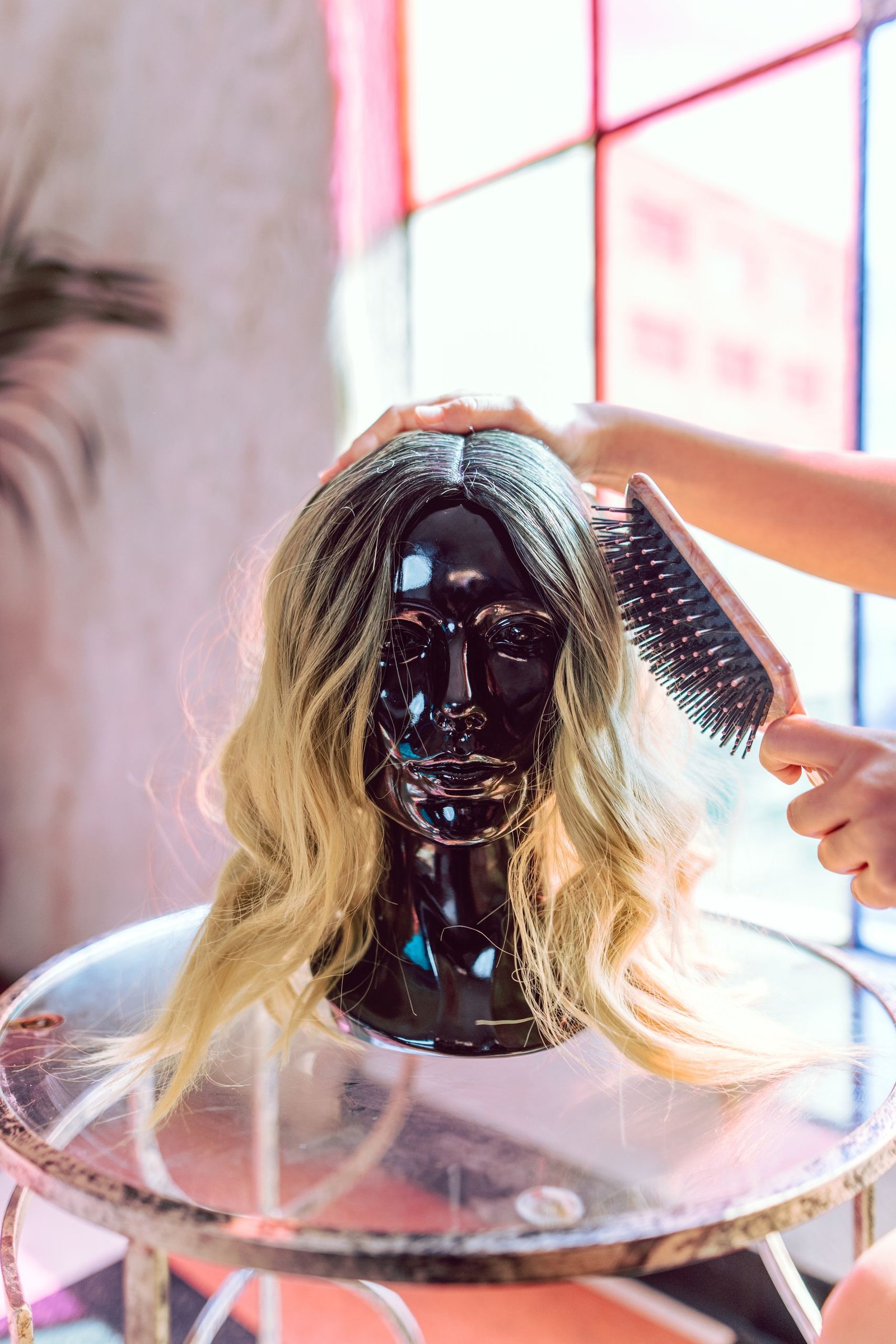
- Air dry on a wig stand rather than a towel or flat surface, which helps the cap keep its shape and the hair keep its natural fall.
- Store on a stand or in a silk or satin bag when not in use to reduce friction and prevent the lace from creasing.
How Long Do Human Hair Wigs Last
With proper care, a human hair wig worn daily typically lasts one to three years before the hair thins out or the lace weakens from repeated adhesive use. A wig worn only occasionally, such as for special events, can last considerably longer since it experiences far less friction, heat, and product exposure. The lace and cap construction tend to wear out before the hair strands themselves do, which is why gentle handling around the base matters as much as caring for the hair.
Common Mistakes to Avoid
| Mistake | Why It Causes Problems |
|---|---|
| Brushing from the roots down | Pulls on knots and can loosen hair from the wefts or lace |
| Sleeping in the wig without protection | Friction against a cotton pillowcase causes tangling and frizz |
| Using regular shampoo formulated for scalp buildup | Can be too harsh and strip the hair faster than necessary |
| Skipping heat protectant | Human hair wigs can dry out and become brittle from repeated heat, just like natural hair |
| Choosing cap size by guesswork | Leads to a poor fit that shifts, slips, or causes discomfort |
Frequently Asked Questions
Can you swim or exercise in a human hair wig?
Yes, though chlorine and salt water can dry out the hair over time, so rinsing the wig with fresh water afterward and applying a leave in conditioner helps protect it. For frequent swimming or exercise, many wearers keep a separate, lower cost wig instead of exposing their main one to constant moisture and sweat.
How do you match a human hair wig to your own hair color?
Compare the wig to your hair in natural daylight rather than indoor lighting, and check the color against a few different sections of your hair, since natural hair often has some tonal variation. If an exact match is not available, a colorist can often tone or lightly dye a human hair wig to blend more closely.
Do human hair wigs damage your natural hair?
The wig itself does not damage your hair, but tight braiding underneath, repeated glue or tape application directly on your hairline, or wearing a wig cap that is too tight can contribute to breakage or irritation over time. Giving your scalp regular breaks and using a gentler adhesive method reduces this risk.
Is a lace front or a full lace wig better for beginners?
A lace front wig is usually easier and less expensive to start with, since it only requires blending the front hairline. A full lace wig offers more versatility for styling and parting but generally costs more and takes more practice to apply evenly across the whole cap.