Beginner’s Guide to Hair Extensions: Types, Pros, and Cons
Hair extensions all promise the same result, more length or volume, but the type you choose determines almost everything else: how natural they look, how long they actually last, what they cost over a year rather than one visit, and how much stress they put on your own hair underneath. This guide walks through the real differences between hair qualities and attachment methods so you’re choosing based on what matters for your hair and lifestyle, not just what a salon happens to stock. If you already know roughly how much length you want to add, our guide to choosing the right extension length covers that side of the decision in more depth.
Human Hair vs. Synthetic: The First Decision
Before choosing an attachment method, the hair itself needs deciding. Human hair extensions can be heat-styled, curled, straightened, and dyed the same way your natural hair can, and with proper care they typically last six to twelve months or longer, which makes them reusable across multiple installs. Synthetic extensions are considerably cheaper upfront and require less daily maintenance, but most cannot tolerate heat at all without melting or frizzing permanently, and even heat-resistant synthetic fibers only handle low temperatures with real caution. Synthetic hair also tends to look shinier or more uniform than natural hair under direct light, which becomes more noticeable the closer someone looks, while human hair blends in with realistic movement and a matching shine pattern.
For a one-time event or occasional wear, synthetic extensions are a reasonable, budget-friendly choice. For anything worn regularly or styled with heat tools, human hair is the only option that holds up.
Remy vs. Non-Remy: Why It Affects How Long Extensions Last
Within human hair, the term Remy refers to how the hair cuticles are aligned. Remy hair is collected and kept with every strand’s cuticle running in the same direction, root to tip, which is what keeps the hair from tangling and matting against itself. Non-Remy hair is collected from mixed sources without preserving that cuticle direction, so strands rub against each other in conflicting directions, causing faster tangling and a duller, rougher texture after just a few washes.
The practical difference shows up in lifespan: well-maintained Remy hair commonly lasts around a year, while non-Remy hair often needs replacing within six months and doesn’t hold up to reuse the way Remy does. Remy hair costs more upfront, but the extended lifespan and reduced tangling usually make it the better value for anyone planning to wear extensions regularly rather than once.
Attachment Methods Compared
| Method | How Long It Lasts | Best For | Main Drawback |
|---|---|---|---|
| Clip-in | Reapplied daily, no ongoing wear time | Occasional wear, special occasions, testing a length or color before committing | Not designed for daily use; visible if clips aren’t hidden well under the top layer |
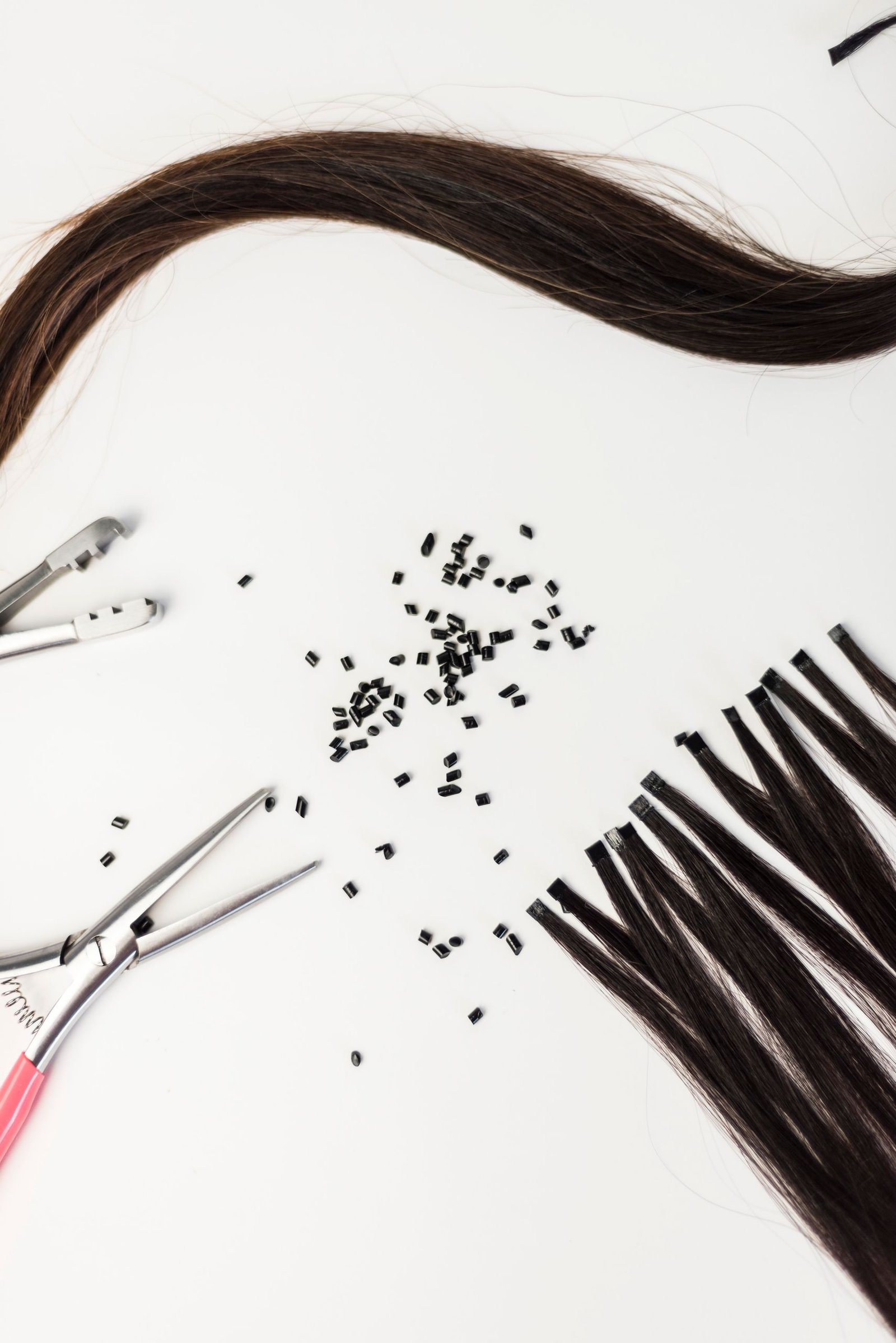
| Tape-in | 6-8 weeks between reapplications | A natural part-line look with minimal daily maintenance | Requires professional removal with adhesive remover; can’t be washed upside-down without loosening the bond |
| Sew-in / weave | 6-8 weeks, sometimes longer | Adding both length and volume, protective styling on natural hair underneath | Heavier tension on the scalp if braided too tightly; needs professional removal |
| I-tip / micro-link | 3-4 months | A longer-wearing option with the most natural root movement | Individual strand application takes significantly longer in the chair and costs more |
Protecting Your Scalp: What to Know About Traction Alopecia
Extensions and weaves are named directly by the American Academy of Dermatology as a cause of traction alopecia, hair loss caused by repeated pulling on the hair follicle. This isn’t a reason to avoid extensions altogether, but it is a reason to pay attention to how they’re installed and how your scalp feels afterward. According to the AAD, warning signs to stop a style immediately include scalp pain or stinging, crusting, “tenting” where sections of scalp pull upward, visible broken hairs around the hairline, and any noticeable thinning or a receding hairline.
The AAD’s specific prevention guidance includes choosing sewn-in weaves over glued ones, keeping any braided base looser rather than pulled tight, especially around the hairline, and giving your scalp recovery time between installs rather than reinstalling back-to-back for months at a stretch. Their simplest rule of thumb: if a hairstyle feels painful, it’s too tight, regardless of how it looks.
People with naturally curlier or coilier hair textures carry a higher risk of traction alopecia due to hair follicle shape, which is worth discussing directly with your stylist when choosing both the attachment method and how tightly any braided base is installed.
Cost Over Time, Not Just at Checkout
The cheapest option at checkout isn’t always the cheapest option over a year. Synthetic clip-ins cost the least upfront but need replacing every one to three months with regular wear. Non-Remy human hair costs more than synthetic but typically needs replacing within six months. Remy human hair costs the most initially, but a well-maintained set lasting closer to a year, combined with fewer reapplication or replacement visits, often works out to a comparable or lower cost per month of wear. Attachment method affects ongoing cost too: tape-in and sew-in methods require a paid reapplication appointment every six to eight weeks, while clip-ins have no reapplication cost at all beyond the initial purchase.
Matching Extension Type to Your Lifestyle
Someone who swims regularly or works out daily will find tape-in or sew-in extensions more frustrating to maintain, since both need careful handling around water and sweat to avoid loosening the bond early. Clip-ins suit an active lifestyle better precisely because they come out at the end of the day. Anyone new to extensions who isn’t sure they’ll like the length or look long-term is better served starting with clip-ins or a shorter-commitment method before investing in a longer-lasting, more expensive install. For special occasions only, synthetic clip-ins make the most financial sense, since the cost of higher-quality human hair isn’t justified by a handful of wears per year.
Frequently Asked Questions
What’s the Actual Difference Between Remy and Virgin Hair?
Remy describes cuticle alignment, while virgin hair describes hair that has never been chemically processed, colored, or treated. Hair can be both Remy and virgin at once, which is generally considered the highest quality combination, but the two terms describe different things and aren’t interchangeable.
How Do I Know if My Extensions Are Too Tight?
Scalp pain, stinging, or a tight, tender feeling at the hairline are the clearest signs. According to the American Academy of Dermatology, if a hairstyle feels painful, it’s too tight regardless of how secure or neat it looks, and it should be loosened or removed rather than left to “settle.”
Can I Reuse Hair Extensions?
Human hair extensions, especially Remy quality, can typically be reused across multiple installs with proper care and storage between wears. Synthetic and non-Remy extensions generally can’t be reused effectively since the fibers or cuticle damage degrade faster.
Which Extension Type Is Best for a First-Time Wearer?
Clip-in extensions are the most forgiving starting point since they require no professional application, can be removed daily, and let you test a length or color before committing to a longer-wearing, more expensive method.
Do Hair Extensions Damage Natural Hair?
The extensions themselves don’t damage hair; how tightly they’re attached and how long they’re left in does. Following professional application, keeping tension loose, and taking breaks between installs, as recommended by dermatologists, significantly reduces the risk of traction-related damage.