How To Choose Your Length Of Hair Extensions?
Quick answer: The single biggest factor in whether extensions look natural isn’t the length you pick in isolation — it’s how that length relates to your own hair. As a rule of thumb, extensions no more than three to four inches longer than your natural hair blend most convincingly; going further than that starts to look visibly attached rather than like your own hair grown out. Your own hair also needs enough length (roughly four to five inches minimum, depending on the method) for the attachment point to hide properly underneath.
How to Measure Correctly
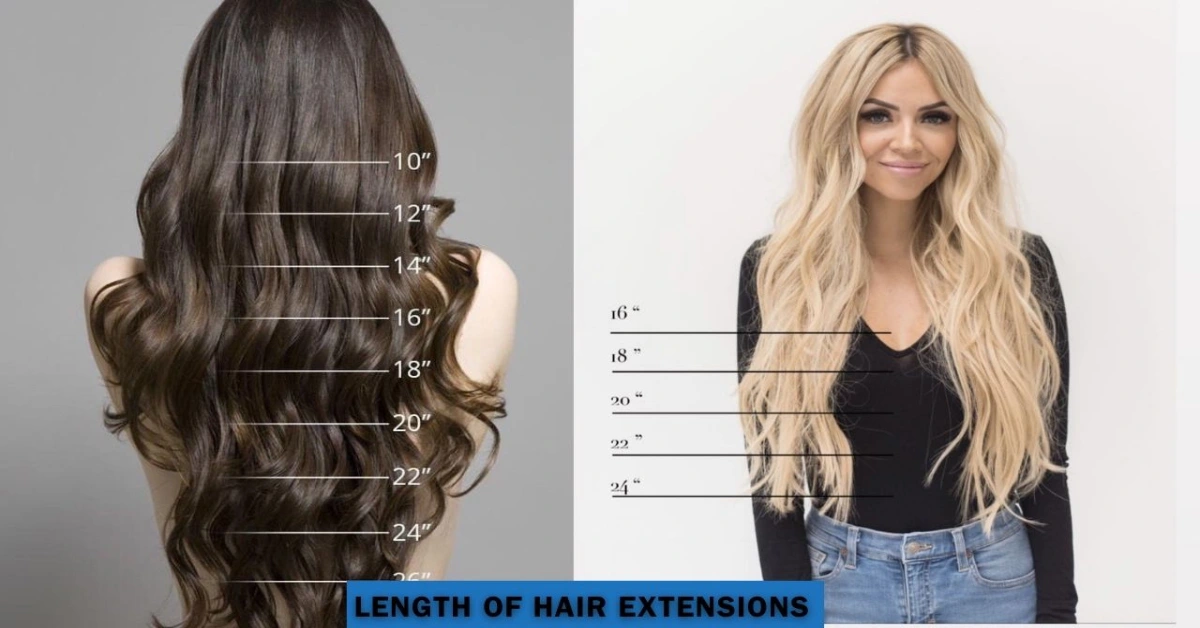
Measure your natural hair from the crown straight down to the ends while it’s dry and unstretched — this is your baseline. Extension lengths are measured the same way, from the top of the weft or tip down to the end. If your hair is 16 inches and you want a noticeably longer look, an 18 to 20 inch extension typically blends well; jumping straight to 24 inches or longer from a 16-inch base will be visibly obvious at the root transition, however good the blending technique.
Common Length Targets, and What They Actually Mean
| Extension length | Typical result on shoulder-length natural hair |
|---|---|
| 16 inches | A modest length boost, often to mid-back on shorter starting hair |
| 18 inches | Noticeably longer, generally landing mid-back to lower-back depending on starting length |
| 22 inches | A dramatic length increase, usually reaching lower-back — best attempted in two shorter installs rather than one very long single install for a natural taper |
| 24 inches | Among the longest commonly available; needs natural hair on the longer side already (14+ inches) to blend without an obvious cutoff point |
Attachment Method Changes What Length Works Best
- Clip-in: temporary and reapplied daily, so length is more forgiving since there’s no ongoing blend to maintain between wears. Best for occasional wear rather than daily use.
- Tape-in: semi-permanent, applied in thin sections close to the scalp. Works best matched closely to natural length since the flat tape section needs your own hair to fully cover it.
- I-tip / nail-tip: individual strands attached at the root, giving the most natural movement and part flexibility. A good option for longer, more dramatic length increases since the strand-by-strand application blends gradually.
- Machine weft / hand-tied weft: a full row of hair sewn or beaded in, covering more volume at once. Works well for adding both length and thickness, but needs enough natural hair length to hide the weft’s attachment row underneath the top layer.
When to Split a Big Length Jump Into Two Installs
Going from very short or shoulder-length hair straight to 22-24 inch extensions in one sitting often looks like an obvious wig-like cutoff rather than natural growth. A more convincing approach is a shorter length first (allowing your own hair to also grow and blend over a few months), followed by a longer install later — the same principle stylists use for gradual color lifts rather than one drastic change.
Frequently Asked Questions
How much longer than my natural hair can extensions realistically go?
Three to four inches longer blends most convincingly. Beyond that, the transition point becomes more visible regardless of attachment method or stylist skill.
Does my hair need a minimum length before I can get extensions?
Generally yes — around four to five inches minimum, so there’s enough natural hair to cover the attachment point (tape, weft track, or tip) underneath the top layer.
Which attachment method is best for a dramatic length change?
I-tip or hand-tied weft methods tend to blend more naturally at longer lengths than tape-in, since the attachment points are distributed rather than concentrated in flat sections.
Is it better to do one big length jump or two smaller ones?
For a significant length increase from short or shoulder-length hair, two smaller installs spaced months apart (as your natural hair also grows) generally blend more convincingly than one large jump.
Editorial note: Length and blending guidance reflects general extension-application practice as of 2026. A consultation with a stylist experienced in extensions, who can assess your specific hair density and texture in person, remains the most reliable way to choose.