Top 16 Unique Taper Fade Haircuts
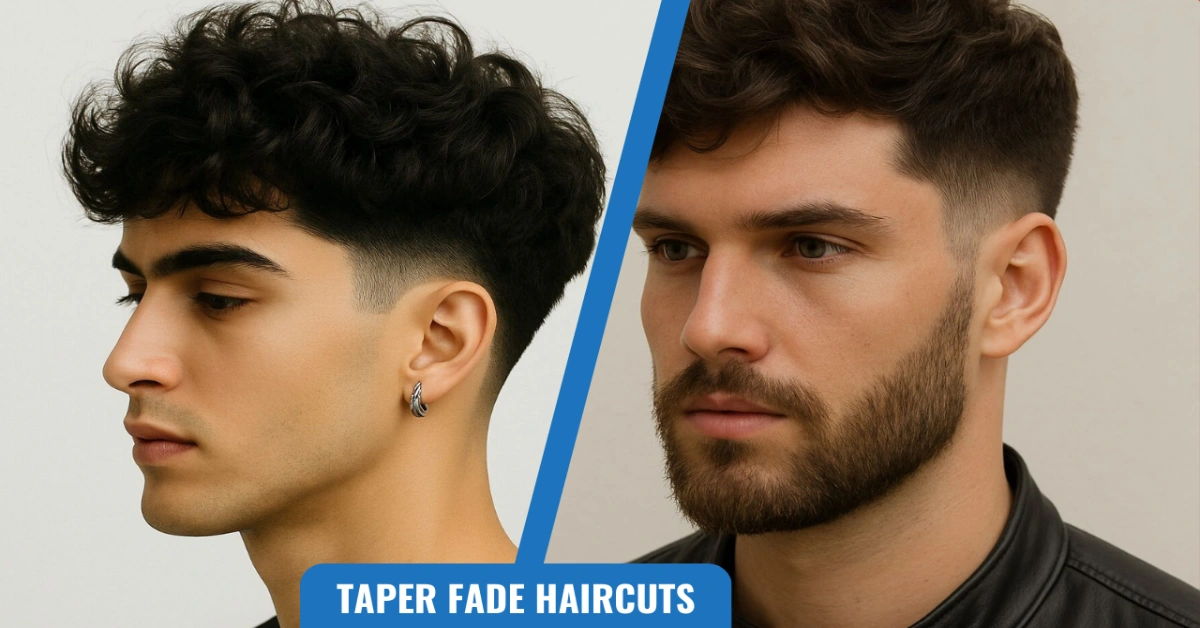
Quick answer: A taper and a fade solve the same problem — shorter hair at the bottom, longer on top — but differently: a taper gradually shortens with a soft transition and doesn’t need to reach the skin, while a fade blends much closer to the scalp with a sharper contrast. “Taper fade” is a hybrid: fade-level closeness at the bottom, with a taper’s gentler blend as it climbs. Below is where low, mid, and high versions actually start, plus twelve real style pairings. For the fade side of this distinction in more depth, see our fade haircut guide.
Low, Mid, and High: Where Each One Actually Starts
Low Taper Fade
Starts just above the ears and blends down toward the neckline — the most subtle of the three, since most of the head keeps its length. Suits thinner hair well, since it keeps more scalp coverage on the sides, and softens a square jawline by keeping the visual weight lower on the head.
Mid Taper Fade
Starts around the temples, roughly halfway up the side of the head. A balanced middle ground that works with pompadours and quiffs particularly well, since the higher starting point draws the eye upward toward the volume on top.
High Taper Fade
Starts high on the head, at or above the temple. The most dramatic contrast of the three, and the one that best controls bulk in thick or curly hair by removing more length overall on the sides.
Skin Fade vs. Taper Fade
A skin (or bald) fade takes the sides all the way down to bare scalp at some point in the blend. A taper fade, even a high one, keeps some length throughout rather than exposing skin — it’s the softer of the two options and generally more forgiving to grow out between barber visits.
12 Taper Fade Pairings Worth Asking For
- Caesar + taper fade: a short, blunt forward fringe with a low or mid taper fade — a classic, low-maintenance option that suits naturally curly hair well.
- Curly top + taper fade: curls left full on top with the sides tapered close, so there’s nothing to style except the top itself.
- Faux hawk + taper fade: a graded strip left slightly longer down the center, tapered rather than shaved on the sides, for a softer take on the mohawk shape.
- Afro taper fade: a shaped afro on top with a taper fade at the sides — lower upkeep than a full afro while still framing the face.
- Blowout + taper fade: a vintage, volume-forward top paired with a modern taper fade at the sides for contrast.
- Hard part + taper fade: a shaved line defining a side part, combined with a taper fade for extra structure.
- Mini pompadour + taper fade: a lower-effort daily version of the pompadour with a mid or high taper fade underneath.
- Quiff + taper fade: hair pushed up and slightly back at the front, tapered at the sides — a versatile daily style that works for both casual and formal settings.
- Slick back + taper fade: hair combed straight back with product, given a modern edge by a taper fade rather than a plain trim at the sides.
- Spiky top + taper fade: textured, upward-styled spikes with a taper fade that keeps the sides from competing with the height on top.
- Textured crop + taper fade: short, choppy layers on top with a taper fade — one of the most requested combinations for straight to wavy hair.
- Side part + taper fade: a defined side part paired with a taper fade for a more polished, office-appropriate finish.
Frequently Asked Questions
Is a taper fade the same as a regular fade?
No. A fade blends much closer to the skin with a sharper transition; a taper fade keeps a softer, more gradual blend while still tightening up more than a plain taper. The two get confused constantly because barbers and clients use the terms loosely.
How often does a taper fade need a trim?
Every two to four weeks. The blend itself grows out visibly faster than a plain taper, since the closer-cut section at the bottom shows new growth sooner.
Which fade height is most versatile for a first-time client?
A low taper fade is the safest starting point — it’s the most subtle of the three and the easiest to grow out or adjust if you decide you want more or less contrast next visit.
Can any hair type get a taper fade?
Yes — straight, wavy, curly, and coily hair all work with a taper fade. The main adjustment is at the top: curlier hair typically needs the barber to account for shrinkage after drying, the same consideration that applies to any curly cut.
Editorial note: Fade terminology and starting points reflect common barbershop convention as of 2026 and vary somewhat by barber. Bring a reference photo along with the name of the fade height you want for the most reliable result.