Top 10 Modern Ideas to Style a Throw Blankets
Quick answer: A throw blanket is a decorative, lap-sized layer (roughly 50×60 inches standard, up to 80×70 for oversized) meant to add texture and warmth to a sofa or bed end — not to replace a full bed blanket. For UAE homes specifically, natural fibers like cotton, linen, and wool actually make sense year-round, since interiors run cold under constant air conditioning even when it’s 45°C outside. One well-chosen throw per main seating area reads as intentional; three or four mismatched ones read as clutter.
A throw blanket is one of the cheapest, lowest-effort ways to make a room feel finished — but only if the material, size, and fold actually suit the piece of furniture it’s on. Here’s what to actually check before buying one, and the specific folds that make it look styled rather than just left there.
Throw Blanket Sizes, Explained
| Category | Typical Dimensions | Best For |
|---|---|---|
| Small throw | 40″ × 50″ | Armchair, single-seat accent |
| Standard throw | 50″ × 60″ | Sofa arm or back, most common size |
| Large throw | 60″ × 70″ | Deep sofas, full sofa coverage |
| Oversized throw | 70″ × 80″ | Large sectionals, bed-end layering on a queen/king |
If you actually want to sleep under it — not just style with it — a throw isn’t the right category. A queen bed blanket runs about 90×100 inches and a king about 108×100; a 50×60 throw will only ever cover a fraction of that, which is exactly why it works as a decorative accent and not a substitute.
Material: What Actually Matters in a Climate-Controlled UAE Home
It’s easy to assume a hot climate means lightweight fabric only — but most UAE living rooms and bedrooms run on air conditioning most of the year, which means the room itself is often genuinely cool. Material choice should follow how the room actually feels indoors, not the temperature outside:
- Cotton: Breathable, easy to wash, and the most practical everyday choice — holds up well to regular use and machine washing.
- Wool: Genuinely warm for AC-cooled evenings, durable, but usually needs gentler washing (check the care label — many wool throws are dry-clean or hand-wash only).
- Cashmere: The premium option — very soft and light while still warm, but delicate; hand wash cold or dry clean, and store folded rather than hung to avoid stretching.
- Fleece: Affordable, warm, and machine washable — the most low-maintenance option, though it doesn’t have the same visual texture as natural fibers.
- Faux fur: Strong texture and visual impact for an accent chair, but needs occasional gentle brushing to prevent matting, and can shed slightly when new.
Folds and Placements That Actually Look Styled
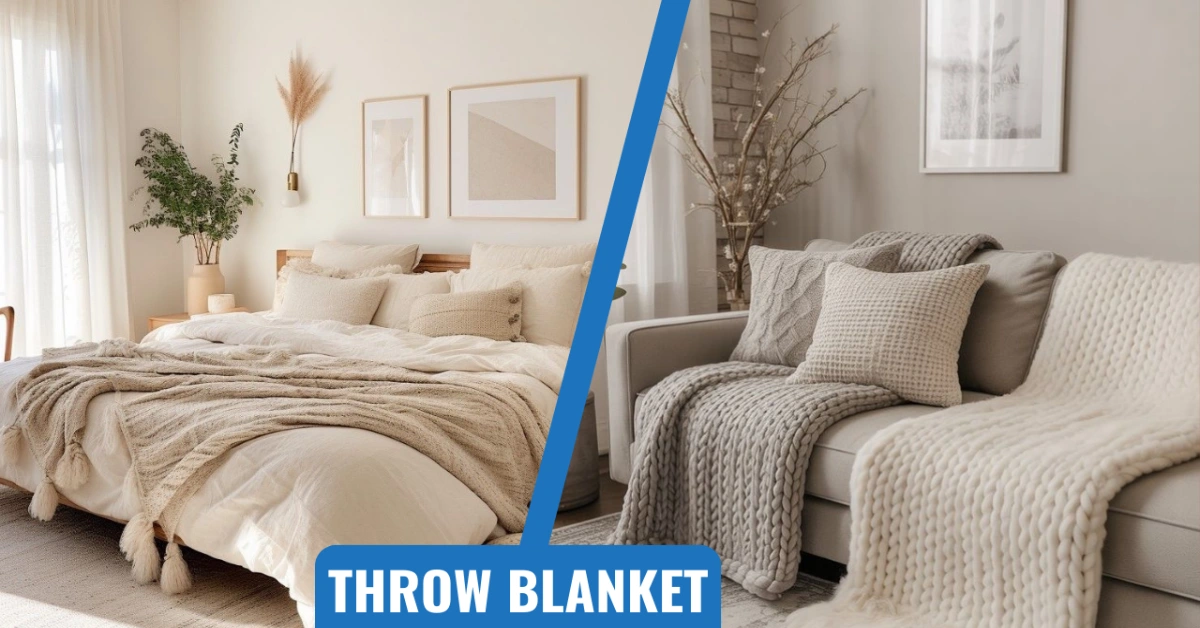
- Arm drape: Fold the throw in half or thirds lengthwise and drape it over one sofa arm, letting it fall naturally. The simplest option and works in almost any room.
- Diagonal corner fold: Fold into a triangle and drape over one back corner of the sofa — adds a bit more visual movement than a straight arm drape.
- Ladder fold (on an ottoman or bench): Fold into a long rectangle and lay flat with a slight offset at each layer — reads as intentional and tidy rather than tossed.
- Center cushion fold: Fold into a neat rectangle or square and place at the center of the seat cushions — works well when the throw’s color or pattern is the accent piece you want noticed.
- Bed-end layer: Fold in thirds lengthwise and lay across the foot of the bed, keeping both overhanging sides even — the classic hotel-style finishing touch.
- Relaxed/loose drape: For a more casual, lived-in look, skip the fold entirely and let the throw fall naturally over one side — best for family rooms rather than formal spaces.
How Many Throws a Room Actually Needs
One throw per main seating area (one per sofa, one per accent chair) is the general rule — more than that in the same room tends to look cluttered rather than layered, unless the space is genuinely large enough to support multiple distinct seating zones. A single high-quality throw reads as far more intentional than several mismatched, lower-quality ones.
Color and Pattern: Keep It Purposeful
A throw is one of the easiest ways to introduce a color accent without repainting or reupholstering — a teal or rust-colored throw on a neutral grey or beige sofa does real visual work. Pair it with at least one cushion in a related or matching tone so the throw looks coordinated rather than randomly placed. Patterned throws work best in otherwise simple, uncluttered rooms, where they read as a focal point rather than adding to visual noise.
Frequently Asked Questions
What’s the difference between a throw blanket and a regular blanket?
A throw is a smaller, decorative layer (typically 50×60 inches) meant for styling a sofa, chair, or bed end — it adds texture and light warmth but isn’t sized to fully cover a bed. A regular bed blanket is sized to the mattress (queen runs about 90×100 inches, king about 108×100) and is meant for actual sleeping coverage.
What material throw blanket works best for a UAE home?
Cotton is the most practical everyday choice — breathable and easy to wash. Wool or cashmere add genuine warmth for AC-cooled rooms, which run cooler than the outside climate for most of the year. Fleece is the lowest-maintenance option if easy care matters more than natural-fiber texture.
How many throw blankets should one room have?
Generally one per main seating area — one for the sofa, one for an accent chair if there is one. Beyond that in the same space usually starts to look cluttered rather than intentionally layered, unless the room is large enough to genuinely support multiple separate seating zones.
How do I keep a faux fur throw looking good over time?
Brush it gently and occasionally with a wide-tooth comb or soft brush to prevent matting, especially in high-touch spots. Avoid hot washing or high heat drying, which can damage the pile — check the care label, as most faux fur does best with cold, gentle washing or spot cleaning.
Editorial note: Size and dimension figures reflect standard throw and bed blanket sizing guidance current as of 2026. Always check the specific care label for wool, cashmere, or faux fur pieces, since washing requirements vary by manufacturer.