Top 20 Modern Bathroom Tiles Design Dubai at an Affordable Price
Quick answer: Slip resistance matters more than style for bathroom floor tiles — look for a wet DCOF rating of at least 0.42, or an R10–R11 rating on the European scale, since a beautiful floor that’s dangerously slick when wet isn’t actually a good choice. Beyond that, large-format porcelain tiles genuinely make small bathrooms feel bigger (fewer grout lines to break up the visual space), and matte or textured finishes are both safer and easier to keep looking clean than high-gloss.
Bathroom tiles get chosen on look far more often than on the two things that actually determine whether they work day to day: slip resistance underfoot when wet, and how well they hold up to constant moisture. Here’s how to choose well on both fronts, plus the design combinations that genuinely make a bathroom feel larger or calmer.
Slip Resistance: The Spec Most Buyers Never Check
Two rating systems cover this, and either is worth asking your supplier about directly:
- DCOF (Dynamic Coefficient of Friction): The US/international standard. For bathroom floors and any wet indoor surface, look for a wet DCOF of at least 0.42 — this is the baseline for genuinely safe footing when the floor is wet, which in a bathroom is most of the time.
- R-rating (European scale, R9–R13): R9 is the least slip-resistant and better suited to dry areas. R10–R11 is the sweet spot for residential bathrooms and wet interior spaces. R12–R13 is aggressive texture meant for commercial or industrial floors — usually overkill (and less comfortable underfoot) for a home bathroom.
A glossy, highly polished tile can look stunning in a showroom and still be genuinely dangerous on a wet bathroom floor — always confirm the rating rather than judging by finish alone. Wall tiles don’t need this rating, since they’re not walked on, which is why many tile lines offer a glossy option for walls and a matte or textured version of the same look for floors.
Floor vs. Wall Tiles: They’re Not Interchangeable
Floor tiles are rated for foot traffic and impact (often noted as a PEI rating for wear resistance) and typically have some texture for grip. Wall tiles are thinner, lighter, and often glossier since they never take foot traffic or impact. Installing a wall-rated tile on the floor is a common and costly mistake — it can crack under weight or foot traffic and won’t have the slip rating a floor needs.
Tile Size and Grout: What Actually Makes a Small Bathroom Feel Bigger
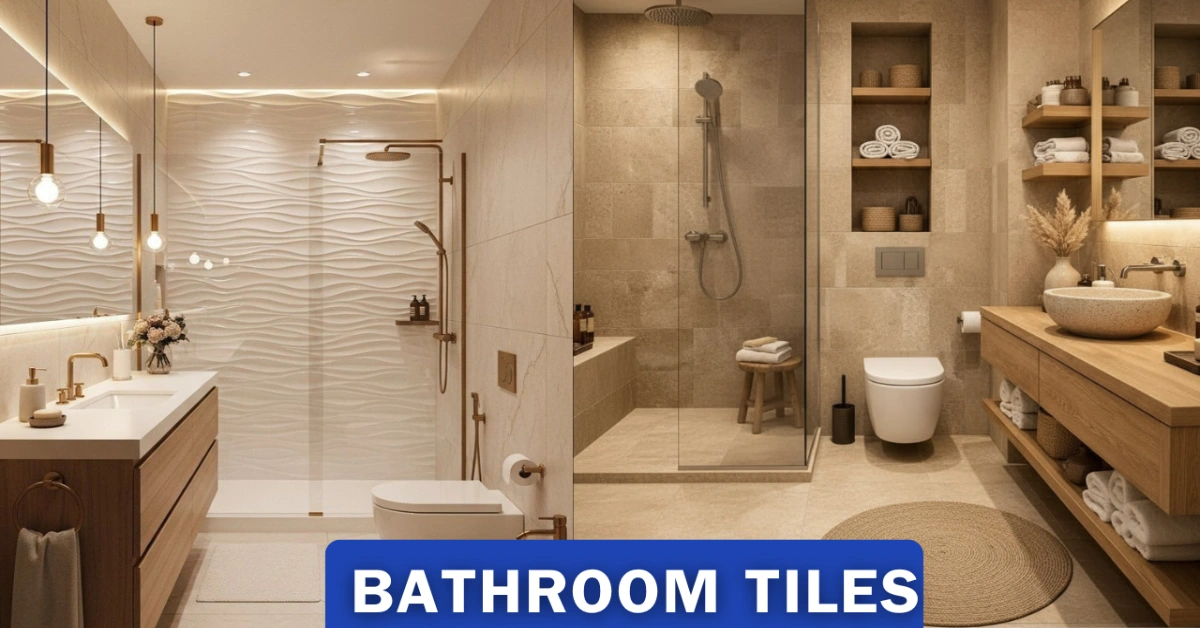
- Large-format tiles (60×60cm or bigger) reduce the number of grout lines across a given area, which reads visually as a larger, cleaner space — genuinely effective in a small bathroom, not just a design cliché.
- Light-colored, matte porcelain reflects more ambient light than dark or heavily glossy surfaces, adding to the sense of space.
- Continuing the same floor tile into the shower area (where waterproofing allows) removes a visual break that can make a small bathroom feel chopped up into smaller zones.
- Smaller tiles genuinely help in showers specifically despite the general rule above — more grout lines per square foot means more texture and grip exactly where slip risk is highest.
Popular Styles and What They Actually Suit
- Marble-look and stone-look porcelain: Gets the visual luxury of natural stone without the higher maintenance (natural marble is porous and needs periodic sealing; porcelain doesn’t).
- Wood-look porcelain: Brings warmth to a bathroom without the water-damage risk real wood flooring would have in a wet room.
- Subway tiles (stacked or herringbone): A durable, classic choice for walls — timeless enough that it rarely looks dated even years later.
- Hexagon and geometric patterns: Work well in small bathrooms specifically because the shape itself adds visual interest without needing bold color to do the same job.
- Dark floor, light wall combinations: Create depth and can visually “ground” a small room rather than making every surface compete for attention.
What Bathroom Tiling Costs in the UAE
| Item | Typical Cost (AED) |
|---|---|
| Ceramic tile (material, 20×20cm) | 25–35/sqm |
| Porcelain Grade A (material, 60×60cm) | 65–120/sqm |
| Natural stone (travertine) | 120–180/sqm |
| Basic floor tile installation (labor) | 50–60/sqm |
| Bathroom/kitchen tile installation (labor) | 75–90/sqm |
| Waterproofing (essential, often overlooked in quotes) | 1,500–3,000 total |
A standard 15 sqm bathroom typically runs AED 2,000–4,000 for complete tiling including labor and materials, before natural stone or premium finishes. Waterproofing is not optional in a wet room — confirm it’s included in any renovation quote, since it’s sometimes left out to make a bid look more competitive.
Frequently Asked Questions
What slip rating should bathroom floor tiles have?
Look for a wet DCOF of at least 0.42, or an R10–R11 rating on the European scale. A tile that looks safe or has grip when dry can still be dangerously slick once wet — always ask for the specific rating rather than judging by appearance or texture alone.
Can I use the same tile on the floor and walls?
Only if the tile is specifically rated for floor use (adequate slip resistance and wear/impact rating). Many tile lines offer matching floor and wall versions of the same look — check that the floor version carries the appropriate DCOF or R-rating before assuming a wall tile will work underfoot.
Do large tiles or small tiles work better in a small bathroom?
Large-format tiles on the main floor and walls reduce grout lines and make the room feel bigger and cleaner. Smaller tiles specifically in the shower area are actually the better choice there, since more grout lines mean more texture and grip exactly where slip risk from standing water is highest.
How much does it cost to tile a bathroom in the UAE?
A standard 15 sqm bathroom typically costs AED 2,000–4,000 for complete tiling with mid-range porcelain, including labor. Natural stone, premium marble, or larger-format specialty tiles push costs higher, and waterproofing (AED 1,500–3,000) should be budgeted as a separate, non-optional line item.
Editorial note: Slip-resistance ratings (DCOF, R-rating) reflect current international tile safety standards. AED cost figures reflect current UAE tiling market data as of 2026 and vary by contractor, tile brand, and finish quality.