How To Differentiate Blackout Curtains And Linen Curtains?
Quick answer: Linen and blackout curtains solve different problems, not competing versions of the same one. Linen is a light-filtering, breathable natural fiber that lets in a soft, diffused glow and looks elegant, but it provides minimal privacy at night with a light on behind it and essentially no meaningful light-blocking or thermal benefit. Blackout curtains use a tightly woven, layered, or coated fabric specifically engineered to block light and reduce heat transfer — the right choice wherever darkness, privacy, or energy savings actually matter, regardless of what color the fabric is. Many rooms genuinely benefit from both, layered together, rather than picking one.
What Each Fabric Actually Is
- Linen curtains: Woven from natural flax fiber, prized for a breathable, slightly textured, elegant look. Linen filters and softens incoming light rather than blocking it — a room with linen curtains stays noticeably bright during the day, just with harsher direct sun diffused into a softer glow.
- Blackout curtains: Constructed from a tightly woven synthetic fabric, often multi-layered or backed with an opaque coating, specifically engineered to block light and add a thermal barrier. See our full blackout curtains guide for the real difference between 100% blackout and 95% “room darkening” grades.
Light Control: A Genuine, Large Gap
This is the single biggest practical difference. Linen, even in a heavier weight, still lets meaningful light through — it’s a light-filtering fabric by nature, not a barrier. Blackout fabric is engineered specifically to stop light almost entirely. If a room needs actual darkness (a bedroom for a light-sensitive sleeper, a home theater, a nursery), linen alone doesn’t get there regardless of color or weight — a common misconception is that a darker linen curtain blocks more light than a lighter one. In practice, color has little effect on how much light gets through a naturally loose-weave fabric; the weave density and any backing layer are what actually determine light control, not the dye.
Privacy: Linen’s Real Limitation
Because linen is semi-transparent, especially with a light source on behind it at night, it doesn’t give the same privacy as blackout fabric — anyone outside can often see silhouettes or shapes through the fabric once a lamp is on inside. This matters most for street-facing bedrooms and bathrooms, where blackout (or at minimum a lined, heavier linen) is the more realistic choice for genuine nighttime privacy.
Thermal Performance and Energy Impact
Blackout curtains with a proper lining genuinely reduce heat transfer through the window — helpful for easing air conditioning load in a hot climate, and this is a real, measurable effect, not just marketing language (see our blackout guide for the actual percentage figures). Linen, being an open, breathable weave, provides essentially no comparable thermal insulation — it’s chosen for aesthetics and airflow, not energy performance.
Maintenance: A Real Practical Difference
- Linen: A more delicate natural fiber that wrinkles easily and can require gentler washing or occasional professional cleaning to maintain its look, particularly for higher-end weaves.
- Blackout: Generally easier day-to-day — most synthetic blackout fabrics tolerate spot cleaning or machine washing (check the specific care label) without the same fussiness as natural linen.
Where Each Actually Fits Best
- Linen: Living rooms, dining areas, and any space where the goal is a bright, airy, elegant feel and full privacy or darkness isn’t the priority.
- Blackout: Bedrooms, home theaters, media rooms, and nurseries — anywhere darkness, privacy, or thermal control genuinely matters.
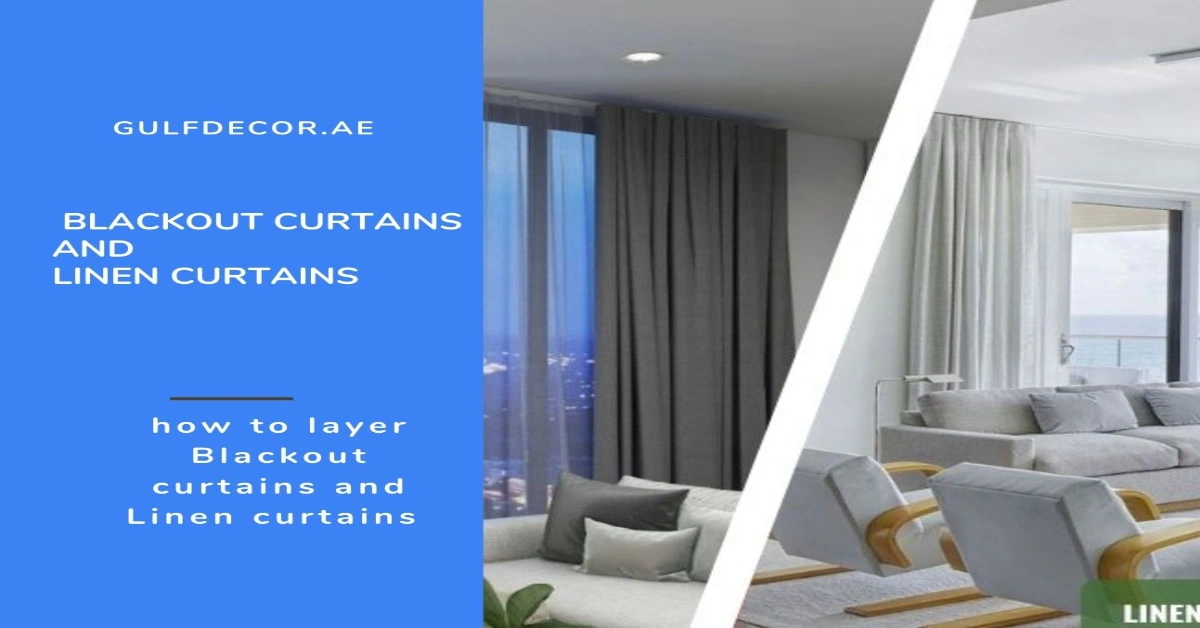
- Both, layered: A sheer or linen layer for daytime light and texture, with a separate blackout layer drawn at night — this is a genuinely practical solution rather than a compromise, giving a room the aesthetic benefit of linen and the functional benefit of blackout without picking one at the expense of the other.
How to Actually Decide
- Start with the room’s real purpose. A living or dining room used mainly during the day leans linen; a bedroom, media room, or nursery leans blackout.
- Factor in the climate. In the UAE specifically, a sun-facing room benefits meaningfully from blackout’s thermal properties, independent of whether darkness itself is the goal.
- Consider layering if you want both the look of linen and the function of blackout — it’s a standard, practical setup, not an unusual one.
- Don’t rely on color to predict blackout performance — a dark-colored linen curtain still lets meaningful light through; a light-colored true blackout fabric still blocks it. The construction (weave density, backing, layering) is what determines performance, not the shade.
Frequently Asked Questions
Do darker-colored curtains block more light than lighter ones?
Not meaningfully, if the fabric itself isn’t engineered for blackout. A dark linen curtain still lets significant light through because linen is a naturally open weave — color barely changes that. True blackout performance comes from the fabric’s construction (tight weave, multiple layers, or an opaque backing coating), not its color.
Can I use linen curtains in a bedroom?
Yes, if you’re not especially light-sensitive and don’t need full nighttime privacy from outside. For a bedroom where darkness or street-facing privacy genuinely matters, either switch to blackout or layer a blackout liner behind the linen for the best of both.
Do blackout curtains actually save on energy bills?
Yes, with a proper lining — they reduce heat transfer through the window, which can meaningfully ease AC load in a sun-facing room. Linen provides no comparable thermal benefit, since it’s an open, breathable weave by design.
Which curtain type is easier to maintain?
Blackout, generally — most synthetic blackout fabrics tolerate spot cleaning or machine washing well. Linen is a more delicate natural fiber that wrinkles easily and sometimes needs gentler care or professional cleaning to keep its look.
Editorial note: Fabric performance characteristics reflect standard textile industry data current as of 2026. For exact blackout percentage grades and verified energy-saving figures, see our dedicated blackout curtains guide.