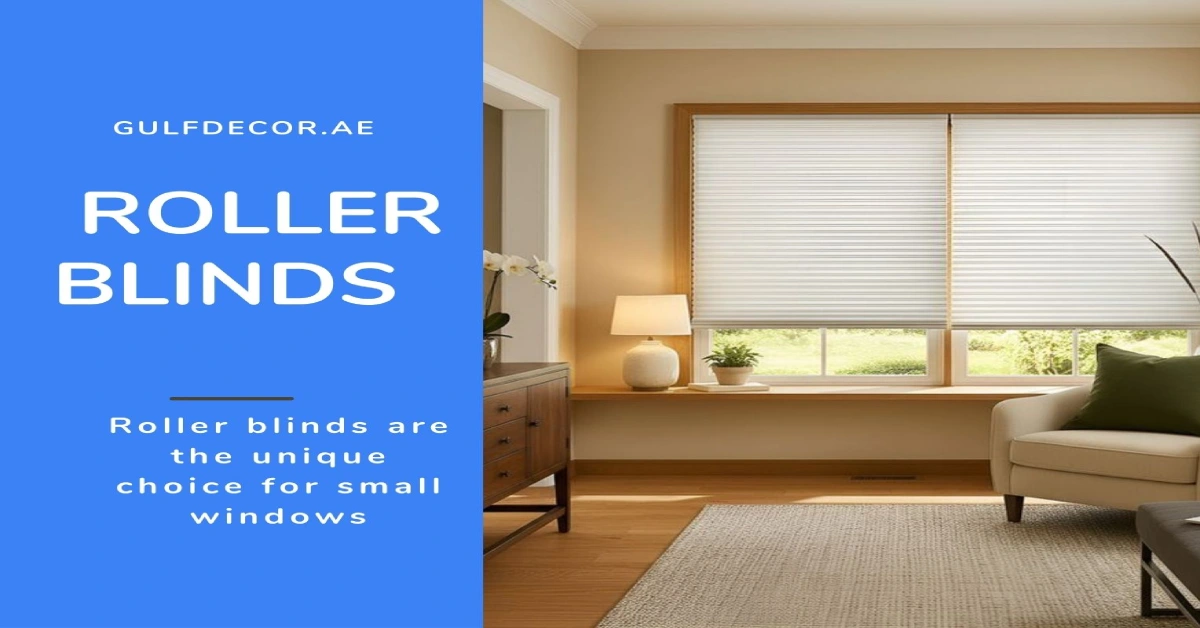
Tips And Tricks To Select Roller Blinds For Small Windows
Quick answer: A small window’s biggest ally is an outside-mount roller blind extended about 1.5–3 inches beyond the frame on each side, with at least 2 inches of clearance above for the headrail — this genuinely makes the window read as larger while closing the light gaps a small inside-mount blind would leave. If you prefer an inside mount for a cleaner, flush look, confirm your window recess is at least 1.5 inches deep, since anything shallower won’t fit a standard roller mechanism. For fabric types and openness factor by room, see our full roller blinds guide — this one focuses specifically on fitting a small window correctly.
Inside Mount vs. Outside Mount: The Decision That Matters Most for Small Windows
- Inside mount: The blind sits inside the window frame/recess for a clean, minimalist, flush look. Requires a recess depth of at least 1.5 inches to fit a standard roller mechanism — measure the frame’s depth from front edge to glass before ordering, since a recess that’s too shallow simply won’t accommodate the tube and headrail.
- Outside mount: The blind mounts on the wall or trim outside the window opening, covering the full frame and extending beyond it. Many designers actually prefer this for small windows specifically, since it visually increases the apparent height and width of the window and eliminates the light gaps around the edges that an inside mount can leave on an already-small opening.
If your small window has a shallow or non-existent recess, outside mount isn’t just preferred — it’s often the only option that works at all.
Exact Measurements for Outside Mount
- Side extension: Extend the blind roughly 1.5–3 inches beyond the window frame on each side (more if you specifically want extra light-blocking or a larger visual footprint).
- Top clearance: Allow at least 2 inches of vertical space above the window frame for the headrail/bracket mounting — measure this before ordering, not after the blind arrives.
- These are baseline minimums — going further out (say, 4–5 inches to each side) makes a genuinely small window look noticeably larger, at the cost of covering more wall space around it.
Exact Measurements for Inside Mount
- Minimum recess depth: 1.5 inches for a standard roller shade mechanism — less than this and the blind physically won’t fit inside the frame.
- Don’t self-deduct clearance: Provide the manufacturer with your exact opening measurements; most factories already build in a standard 1/4 to 1/2 inch clearance deduction so the blind doesn’t rub against the frame sides. Deducting extra on your own typically results in a blind that’s too narrow and leaves visible light gaps on both edges — a particularly noticeable problem on a small window where every inch of coverage matters.
Minimizing Bulk on a Small Window
- Cassette (closed headrail) systems enclose the rolled fabric in a neat housing at the top, reducing the visible bulk and closing the light gap that an open-roll bracket system leaves above the fabric — a genuinely worthwhile upgrade specifically on a small window, where an exposed roll takes up a disproportionate share of the visible glass.
- Thinner, lighter-weight fabrics roll more tightly around the tube than heavy blackout material, leaving less roll bulk at the top of a small window — worth factoring in if the window is short enough that the rolled fabric would otherwise eat into the usable glass area.
Fabric and Color Choices That Help a Small Window
- Light colors (white, beige, light grey) reflect more heat than dark colors and visually open up a small window rather than making it feel like a dark, enclosed frame — dark blinds absorb noticeably more heat, a real factor in a hot climate, not just a style preference.
- Sunscreen fabric works well for small living areas or kitchens where some daylight is still wanted alongside glare control.
- Blackout fabric makes sense for a small bedroom or bathroom window where privacy and full light control matter more than daylight.
- Dual/double blinds (sheer plus blackout on one mechanism) give flexibility on a small window without needing two separate installations, which would add visual clutter around an already-small opening.
Motorization for Hard-to-Reach Small Windows
Small windows placed high, in a stairwell, or above a kitchen sink are often genuinely hard to reach for a manual chain or wand — motorized blinds solve this directly, and a scheduling feature means the blind can open and close automatically without needing to physically reach it at all. This is one of the clearer cases where motorization is a functional fix, not just a convenience upgrade.
Maintenance
A simple routine keeps a roller blind performing well long-term: light dusting weekly, a slightly more thorough wipe-down monthly, and a deeper clean every 3–4 months (removing the blind if needed to clean both sides of the fabric and the mechanism itself).
Frequently Asked Questions
Should I choose inside or outside mount for a small window?
Outside mount is often the better choice for small windows — it visually enlarges the window and closes light gaps around the edges. Choose inside mount only if you specifically want a flush, minimalist look and your window recess is at least 1.5 inches deep.
How far should an outside-mount blind extend beyond the window frame?
Roughly 1.5–3 inches on each side, with at least 2 inches of clearance above the frame for the headrail. Extending further creates a more dramatic size-enlarging effect if that’s the goal.
What’s the minimum window recess depth for an inside-mount roller blind?
1.5 inches for a standard roller shade mechanism. Measure the frame’s depth from the front edge to the glass before ordering — a shallower recess won’t physically fit the roll and bracket.
Do dark-colored blinds really make a room hotter?
Yes — dark colors absorb more heat than light colors, a real factor in direct sun exposure, not just a visual preference. Light shades (white, beige, light grey) both reflect more heat and help a small window feel more open rather than enclosed.
Editorial note: Measurement and clearance figures reflect standard window covering industry sizing guidance current as of 2026. Always measure your specific window’s recess depth and frame dimensions before ordering, since exact requirements can vary slightly by manufacturer and mechanism.