How to Remove Odors From Carpet Naturally: 8 Proven Methods (2026)
Does your sofa smell? Is your rug reeking, or has your carpet just started to stink no matter what you do? Odors like these usually come from a handful of common culprits: pet accidents, lingering smoke, spilled food or drinks, and dampness that’s settled into the fibers. In a humid climate like the UAE’s, that last one deserves extra attention — carpets and rugs here pick up mustiness faster than they would somewhere dry, especially during the summer months when air conditioning runs constantly and moisture gets trapped indoors. The U.S. EPA recommends keeping indoor relative humidity below 50% to stop mold and musty odors from establishing themselves in fibers in the first place — a cheap hygrometer is a worthwhile check if a smell keeps returning no matter how often you clean.
Quick answer: for fresh, everyday smells, baking soda and white vinegar handle most odors within a day. For pet urine specifically, natural remedies only mask the smell — you need an enzymatic cleaner to actually break down the compounds causing it, or the odor tends to come back once humidity rises. The full breakdown of when to use each method is below.
This guide was refreshed for 2026 with an enzymatic-cleaner method for pet odors that the original natural remedies can’t fully solve, a pet-safety warning on essential oils that’s genuinely important if you share your home with a cat, and UAE-specific notes on managing odor in an air-conditioned, humid climate.
In This Guide
- Quick comparison: which method for which odor
- 1. Baking soda
- 2. White vinegar
- 3. Essential oils
- 4. Coffee grounds
- 5. Open a window
- 6. Onions
- 7. Indoor plants
- 8. Enzymatic cleaner (for pet odors)
- How to find hidden odor sources
- When natural methods aren’t enough
- FAQ
Quick Comparison: Which Method For Which Odor
Not every odor needs the same fix. Here’s the fast version before the detail below.
| Method | Best For | How It Works | Time Needed |
|---|---|---|---|
| Baking soda | General mustiness, mild everyday smells | Absorbs moisture, neutralizes odor at the source | Overnight |
| White vinegar | Food, smoke, mild pet smells | Mild acid breaks down odor-causing compounds | A few hours |
| Essential oils | Freshening after cleaning (not pet-safe) | Masks odor, mild antibacterial effect | Ongoing |
| Coffee grounds | Masking musty or stale smells | Strong scent overrides weaker odors | Overnight |
| Open a window / ventilate | General staleness, everyday freshening | Exchanges stale indoor air for fresh air | Ongoing, daily habit |
| Onions | Absorbing odors from a single room fast | Draws odor molecules out of the air | 1–2 days |
| Indoor plants | Long-term air quality, not a fast fix | Filters some airborne toxins over time | Weeks, cumulative |
| Enzymatic cleaner | Pet urine, deep-set organic odors | Breaks down the actual proteins causing the smell | A few hours to a day |
1. Baking Soda
Baking soda is one of the most reliable odor-removal tools carpet cleaning professionals use, and for good reason. It absorbs moisture and neutralizes smells at the source rather than covering them up, which makes it especially effective against musty or moldy odors.
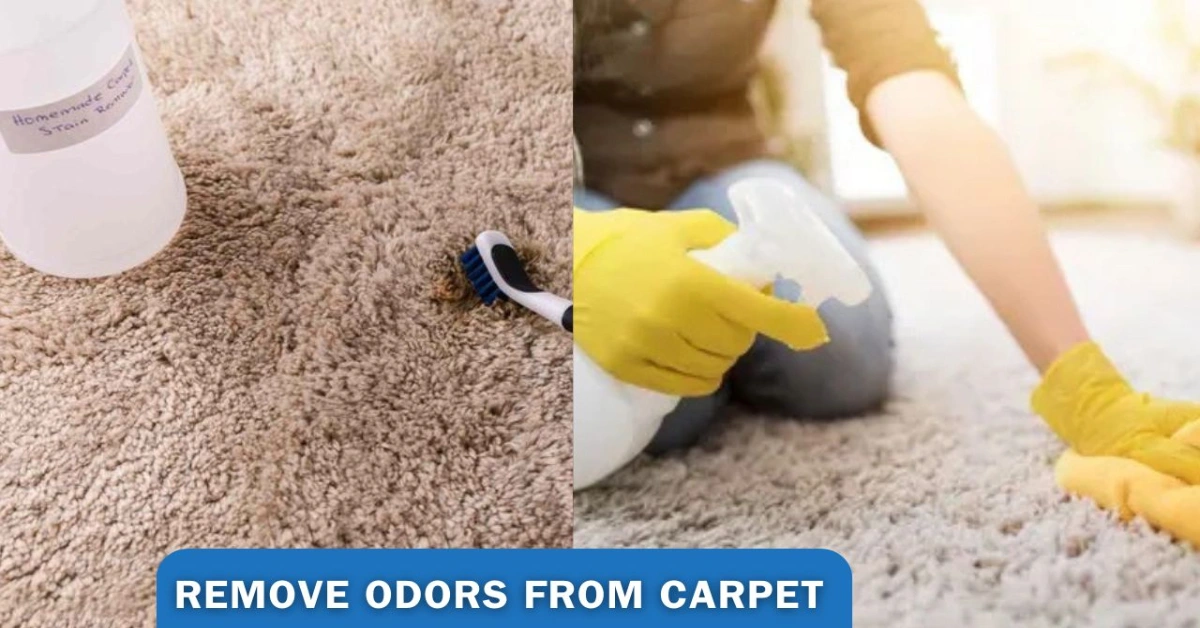
Sprinkle it liberally over the carpet or sofa. Work it into the fibers with your fingers or a carpet brush, then leave it overnight before vacuuming thoroughly. If the smell lingers, just repeat the process. It’s cheap enough that a second round costs you almost nothing.
How long should baking soda sit on carpet before vacuuming? Overnight (6–8 hours) is enough for most everyday odors. For a strong or long-standing smell, leaving it a full 24 hours gives it more time to draw moisture and odor out of the fibers.
2. White Vinegar
White vinegar is cheap, safe to use, and has natural antibacterial properties, which makes it one of the better eco-friendly options on this list. It’s also fully biodegradable, so you’re not adding anything harsh to your home’s air or your drains.
Pour it into a spray bottle and mist the smelliest areas lightly. Let it sit for a few hours, then vacuum once it’s dry — vacuuming a damp carpet can push moisture deeper into the pad. Repeat as often as needed. The smell can be strong while it’s wet, so if that bothers you, dilute it with a little water — just know that weakening it also weakens the effect.
3. Essential Oils
Essential oils double as natural air fresheners and mild antibacterial agents. Lemon, eucalyptus, orange, lavender, and peppermint are among the most commonly recommended. Add 10–20 drops to a spray bottle of white vinegar and mist the affected areas, or mix the same amount into a bowl of baking soda and work it deep into the carpet pile before vacuuming — this gets the scent further into the fibers than a surface spray alone.
Are essential oils safe to use around pets? Not for cats. Cats lack the liver enzyme needed to safely process most essential oils, including several of the ones commonly recommended for odor control — lavender, citrus oils, peppermint, and eucalyptus among them. Tea tree oil is especially dangerous and has been linked to serious neurological symptoms in cats. If there’s a cat in the house, skip essential oils on carpet and rugs entirely and stick to baking soda, vinegar, or ventilation instead. Dogs tolerate most essential oils better in small, diluted amounts, but it’s still worth keeping any treated area off-limits until it’s fully dry.
4. Coffee Grounds
Coffee grounds work by masking rather than neutralizing odors, so this one’s really about personal taste. If you don’t mind your bedroom smelling like a coffee shop, it’s an easy fix for musty or stale smells. Just place some grounds in an open container near the affected area and leave overnight.
Some people take this further and melt the grounds into a DIY candle. It’s a nice touch if you genuinely love the smell of coffee, but honestly, that’s really only worth it for die-hard fans — everyone else will find it overwhelming after a day or two.
5. Open A Window
This might sound obvious, but it’s backed by real numbers. The U.S. EPA notes that indoor air pollutant levels are often two to five times higher than outdoor levels. Simple ventilation genuinely helps.
Opening a window lets fresh air push stale, odor-carrying air out. For rugs, duvets, or cushions, airing them outside on a sunny day works even better, since sunlight has a mild disinfecting effect alongside the moving air.
Does air conditioning remove carpet odor? Not on its own. Most AC systems recirculate indoor air rather than exchanging it for fresh air, so running the AC harder doesn’t clear odor the way opening a window does. What it does help with is humidity — and in the UAE, lower indoor humidity means carpets and rugs stay drier and pick up musty smells more slowly. During the hottest months, a short burst of real ventilation (even 10–15 minutes with the AC off) before returning to a cooled, dehumidified room gets you the benefit of both.
6. Onions
This one might bring a tear to your eye, and not because of the smell it removes. Cut an onion in half and leave it in the room. Onions absorb odors from the air around them, which is why the technique shows up on film sets when a location needs to smell better fast.
Leave the halves out for a day or two, and the odor should fade as the onion takes it on. Just don’t watch anything tear-jerking nearby, or you won’t know which smell made you cry.
7. Indoor Plants
NASA’s well-known Clean Air Study found that houseplants can help remove airborne toxins including formaldehyde, benzene, and ammonia, alongside their normal job of absorbing carbon dioxide and releasing oxygen. Snake plants, Boston ferns, and peace lilies are three of the easier ones to keep alive while doing this.
Worth being upfront about, though: that study was done in sealed lab chambers, not open homes, and some researchers argue you’d need dozens of plants per room to get a similar effect in real life. Plants are still worth having for general air quality and a fresher-feeling room — just don’t expect a single peace lily to erase a pet-accident smell on its own.
8. Enzymatic Cleaner (For Pet Odors)
This is the method the natural remedies above genuinely can’t replace, and it’s worth adding to any odor-removal list: for pet urine specifically, an enzymatic cleaner is the closest thing to a real fix.
Why won’t vinegar or baking soda get rid of pet urine smell? They only work on the surface. Pet urine leaves behind uric acid crystals deep in the carpet fibers and pad, and vinegar or baking soda can neutralize the smell temporarily without actually breaking those crystals down. That’s why a spot that seemed fixed often starts smelling again once humidity rises — moisture reactivates the crystals. An enzymatic cleaner works differently: it contains live bacteria cultures that produce enzymes to digest the proteins and uric acid at a molecular level, converting them into odorless compounds instead of just masking or absorbing them.
To use one, soak the affected area thoroughly (not just mist it — the enzymes need to reach as deep as the urine did), then let it air dry undisturbed, usually 24 hours, without vacuuming or walking on it. Reapplying once for old or heavily soaked stains is common and normal.
If a pet odor keeps returning after you’ve tried baking soda, vinegar, or a store-bought air freshener, this is very likely why — see our full guide to getting urine smell out of carpet for a step-by-step walkthrough.
How To Find Hidden Odor Sources
How do you find a hidden pet stain in carpet? A UV blacklight (sold cheaply as a “pet urine detector”) is the most reliable way. Dried urine fluoresces under UV light even when it’s invisible in normal light and the smell only shows up in humid weather. Darken the room, run the light slowly across the carpet, and mark any glowing patches with tape before treating each one — this stops you from guessing at the source, which is the most common reason DIY odor removal fails on pet stains.
When Natural Methods Aren’t Enough
Reaching for a shop-bought air freshener feels like the fastest fix, but it usually just masks the smell rather than removing it, and regular use of some chemical-based products has been linked to indoor air quality concerns. Natural methods and enzymatic cleaners tend to deal with the actual source of the odor instead.
That said, if you’ve tried these approaches and the smell won’t budge, it’s worth calling a local professional carpet cleaner. Some odors — especially deep pet stains, long-standing damp, or anything that’s soaked into the underlay or subfloor — sit below where any amount of baking soda, vinegar, or even an enzymatic spray can reach. A professional hot-water extraction or steam clean gets deeper into the pile and pad than any DIY method, and it’s worth calling one sooner rather than later if a carpet has been through a proper flood or leak — see our guide on drying water-damaged carpet if that’s what you’re dealing with.
Frequently Asked Questions
How often should I deep-clean carpets to prevent odor in a humid climate?
Every 6–12 months for a full clean, with a quick baking-soda refresh monthly. In consistently humid conditions, more frequent light maintenance prevents musty smells from setting into the fibers in the first place.
Can I use baking soda and vinegar on carpet at the same time?
Not at the same time — they neutralize each other on contact, which wastes both. Use one, let it fully work and dry (or vacuum, in baking soda’s case), and only then apply the other if you still need it.
What actually removes cigarette smoke smell from carpet?
Baking soda left on overnight handles light smoke smell well. For heavy, long-term smoke odor, the smell has usually bonded to fibers deeply enough that only a professional steam clean, or in severe cases replacing the pad underneath, fully removes it.
Do carpet odors come back after cleaning?
They can, usually for one of two reasons: the source wasn’t fully treated (common with pet urine that’s soaked into the pad), or humidity is reactivating leftover residue. If a smell returns in the same spot repeatedly, that’s a sign to move from surface cleaning to an enzymatic treatment or a professional clean.
When should I call a professional instead of cleaning it myself?
If you’ve tried baking soda, vinegar, and an enzymatic cleaner on a specific spot and the smell is still there after a few attempts, or if the odor followed a flood, major leak, or long-term dampness, it’s time to call a professional — the problem is likely in the pad or subfloor, which DIY methods can’t reach.
Are natural odor remedies safe to use around babies and pets?
Baking soda and vinegar are generally safe once fully dry and vacuumed or wiped away — keep crawling babies and pets off the area while it’s still wet. Essential oils are the exception: they’re not safe for cats at any concentration, and should be used cautiously, if at all, around dogs and young children.
What indoor humidity level keeps carpet odor from coming back?
The EPA’s general guidance is to keep indoor relative humidity under 50%. Above roughly 60%, mold and mildew get the conditions they need to establish themselves in carpet fibers and pad, which is when musty smells become recurring rather than occasional — a real consideration for AC-dependent homes in the UAE.
Final Thoughts
Most everyday carpet odors respond well to baking soda, vinegar, and simple ventilation — cheap, natural, and genuinely effective for food smells, general staleness, and mild mustiness. Pet urine is the one exception worth treating differently from the start: it needs an enzymatic cleaner to actually break down rather than just mask, and finding every hidden spot with a UV light saves you from re-treating the same area over and over.
If a smell has resisted everything on this list, that’s usually a sign it’s sitting deeper than a DIY method can reach — and at that point, a professional clean is worth the cost. For more carpet care guides, see our posts on getting rid of carpet beetles and removing coffee stains.