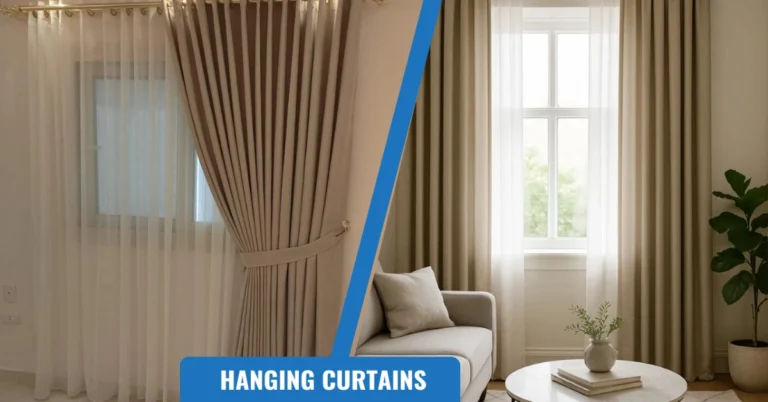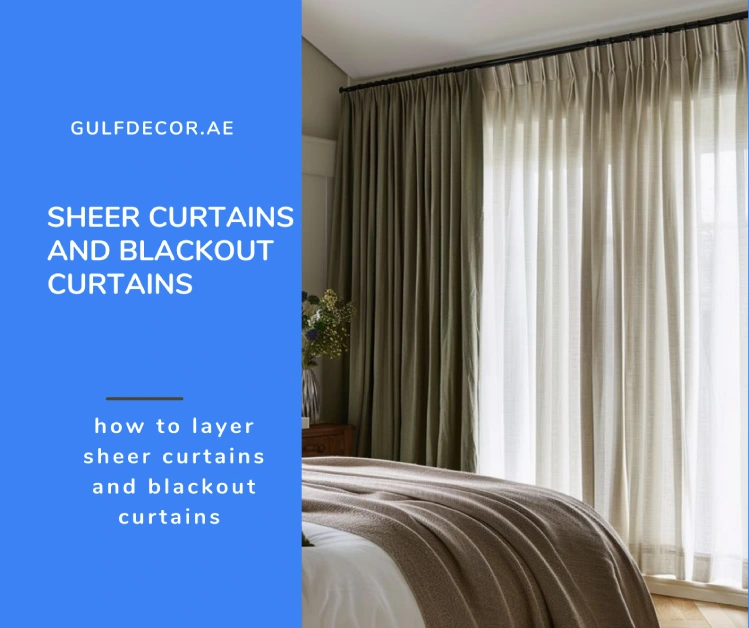
How To Layer Sheer curtains And Blackout Curtains
Quick answer: Layering sheer and blackout curtains gives you daytime light with nighttime darkness on the same window — the sheer layer stays closed (or open) for filtered daylight and privacy, while the blackout layer draws separately at night or when full darkness is needed. Use a double curtain rod bracket, which typically projects the two rods about 3 inches apart, so the blackout (outer, front) and sheer (inner, back) layers move independently without snagging. One correction worth making before you buy: fabric color does not determine how much light a curtain blocks — a dark sheer still lets light through, and a light-colored true blackout fabric still blocks it. Construction (weave density, layers, backing) is what actually matters.
Layering is a genuinely practical solution, not just a styling flourish — it solves the real trade-off between wanting natural light during the day and full darkness or privacy at night, without needing two separate window treatments installed at different times.
Why Layering Actually Works
- The sheer layer filters daylight into a softer, diffused glow and gives some daytime privacy without full darkness.
- The blackout layer, drawn separately, delivers full darkness and privacy exactly when needed — at night, during a nap, or for a home theater session.
- Because they’re on separate rods, either layer can be used alone or both together, which is more flexible than committing to one fabric permanently.
Choosing Fabric — And the Color Myth to Ignore
- Sheer layer: Lightweight, see-through fabrics like organza, voile, or lightweight cotton — chosen for how they filter light and drape, not for color-based performance.
- Blackout layer: Velvet, faux silk, or a dedicated triple-weave blackout fabric — chosen specifically for weave density and any opaque backing layer, which is what actually determines light-blocking performance. See our full blackout curtains guide for the real difference between 100% blackout and 95% room-darkening grades.
- The color myth: A common claim is that darker curtains block more light — this isn’t really true for fabric performance. A dark sheer curtain is still a sheer, light-filtering fabric regardless of color; a light-colored true blackout fabric still blocks light effectively because of its weave and backing, not despite its color. Choose color for aesthetics and contrast, not as a proxy for light-blocking ability.
Step-by-Step: How to Actually Install Layered Curtains
- Get a double curtain rod bracket set. These typically project the two rods about 3 inches apart — enough clearance that the inner (back) and outer (front) layers slide independently without catching on each other. A single rod can technically hold both, but the added weight of a blackout layer is better supported on its own dedicated rod, and a single rod makes opening one layer without disturbing the other much harder.
- Hang the sheer layer on the inner (back) rod, positioned closest to the window glass. Let it fall to the floor for a clean, finished look.
- Hang the blackout layer on the outer (front) rod, positioned in front of the sheer layer — this outer position is what allows it to fully cover the window and block light when drawn.
- Adjust both layers so the pleats or folds fall evenly, and consider a tieback for each layer so they can be held open independently during the day.
For the general rules on rod height, width, and fabric fullness that apply to each individual layer, see our curtain hanging guide.
Common Mistakes That Undercut the Setup
- Using a single rod for both layers — technically possible, but it makes independent operation difficult and puts unnecessary strain on one rod and bracket set.
- Mismatched curtain lengths — if one layer is noticeably shorter than the other, the mismatch is visually obvious and looks unfinished rather than intentional.
- Choosing color as a proxy for performance — as covered above, buying a “dark sheer” expecting better light-blocking, or assuming a lighter blackout fabric won’t work as well, leads to disappointment that has nothing to do with the actual fabric construction.
- Skipping the lining check — confirm the blackout layer actually has the lining or backing that gives it its light-blocking property, rather than assuming any curtain labeled “blackout” performs identically (see our blackout guide for the 100% vs 95% distinction).
- Neglecting regular cleaning — two layers means two fabrics collecting dust; check the care label for each separately, since sheer and blackout fabrics often have different washing requirements.
Where Layering Makes the Most Sense
- Bedrooms: The most common and practical use case — daylight during the day, full darkness at night, without switching curtains.
- Living rooms: Filtered daytime light and an airy feel, with the option to close the blackout layer for movie nights or added evening privacy.
- Dining rooms and offices: Similar flexibility — bright and open most of the time, with a fast option for full privacy or glare control when needed.
Frequently Asked Questions
Do I need a double rod to layer sheer and blackout curtains?
It’s strongly recommended. A double rod bracket set (typically projecting the two rods about 3 inches apart) lets each layer move independently and properly supports the added weight of the blackout layer. A single rod can technically hold both, but makes independent operation and long-term support noticeably harder.
Does a darker curtain block more light than a lighter one?
No — this is a common misconception. Light-blocking performance comes from the fabric’s construction (tight weave, multiple layers, opaque backing), not its color. A dark sheer curtain still lets substantial light through; a light-colored true blackout curtain still blocks it effectively.
Which layer goes in front — sheer or blackout?
The blackout layer goes on the outer (front) rod, closest to the room, so it fully covers the window and blocks light when drawn. The sheer layer goes on the inner (back) rod, closest to the glass.
Can I use layered curtains in a living room, not just a bedroom?
Yes — living rooms, dining rooms, and offices all benefit from the same flexibility: bright and airy most of the time, with a fast option to close the blackout layer for movie nights, glare control, or added privacy when needed.
Editorial note: Installation and hardware guidance reflects standard window treatment practice current as of 2026. For verified blackout percentage grades and light-blocking fabric construction details, see our dedicated blackout curtains guide.