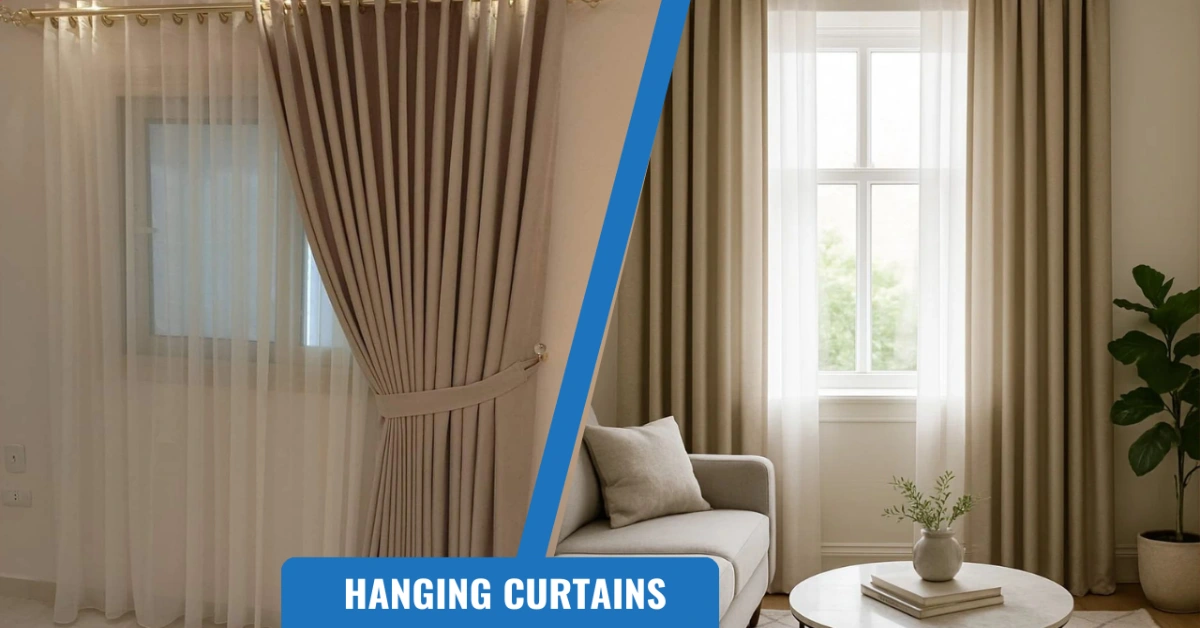
Simple Method of Hanging Curtains Like a Pro
Quick answer: Two measurements determine whether curtains look professionally hung or slightly off: mount the rod about 6 inches (15cm) above the window frame — closer to 8 inches on a high ceiling — and extend it 3 to 6 inches past each side of the frame, up to about one-third of the window’s width beyond it. For fabric, buy roughly 2 to 2.5 times the width of the rod for proper fullness (sheers can go up to 3x) — anything less looks flat and skimpy no matter how good the fabric is.
The fabric itself rarely makes or breaks how curtains look — placement does. Curtains hung too close to the window frame or too narrow for the fabric width read as an afterthought; the same curtains hung correctly can make a ceiling look higher and a window look wider. Here’s the actual method.
Tools You’ll Need
- Measuring tape
- Drill with the correct bit for your wall type — most UAE homes have concrete or block walls behind plaster, which needs a masonry bit and wall plugs, not the standard bit and anchors made for drywall
- Screwdriver
- Curtain rod, brackets, and rings (sized to match — see below)
- Pencil for marking
- A spirit level, even a phone app one, to keep brackets even
Step 1: Choose the Right Curtain for the Room’s Job
Sheer curtains let in natural light while still giving some privacy — a good choice for living rooms where you want brightness during the day. Blackout curtains matter most in bedrooms, home theaters, or any room where light control affects sleep or screen visibility. Layering both (a sheer underneath, blackout on top on a double rod) gives you flexibility between the two rather than committing to one.
Step 2: Measure the Window Correctly
- Rod width: Extend the rod 3–6 inches past each side of the window frame — this lets curtains fully clear the window and window frame when open, so they don’t block any light or view during the day. Don’t exceed roughly one-third of the window’s width beyond the frame on generously sized windows, or the proportions start to look off.
- Rod height: Mount the rod about 6 inches (15cm) above the top of the window frame on a standard ceiling. With a high ceiling, you can go up to about 8 inches above the frame — hanging rods closer to the ceiling than the window is one of the most reliable tricks for making a room feel taller.
- Curtain length: Measure from the rod down to where you want the hem — just above the floor for a clean, tailored look, or a slight “puddle” onto the floor for a softer, more formal look. Blackout curtains especially benefit from reaching the floor, since it closes the gap that would otherwise let light in underneath.
Step 3: Choose Rod, Brackets, and Rings to Match the Fabric Weight
Hardware needs to match what it’s holding, not just the room’s style:
- Metal rods handle heavy fabric (blackout, velvet, lined curtains) without sagging in the middle over time.
- Wood or plastic rods are fine for lightweight sheers and unlined curtains, but will bow under heavier fabric across a wide window.
- Brackets need to be rated for the combined weight of the rod and fully hung curtains — check the packaging rating rather than assuming any bracket works with any rod.
- Rings should be roughly 1–2cm larger in diameter than the rod, so they slide smoothly without sticking or scratching the finish.
Step 4: Mount and Hang
- Mark bracket positions with a pencil, using a level to make sure both sides are even — an off-level rod is one of the most visible mistakes from across a room.
- Drill using the bit matched to your wall material (masonry bit for concrete/block, standard bit for drywall or wood stud).
- Insert wall plugs or anchors rated for the combined weight of rod, rings, and curtains — undersized anchors are the most common reason a curtain rod eventually pulls out of the wall.
- Screw the brackets in place, then rest the rod on the brackets.
- Thread curtains onto rings or the rod, then arrange the pleats evenly across the width.
Step 5: Finish the Styling
- Check that both sides hang evenly and the pleats or folds fall consistently across the width.
- Steam or iron out shipping creases before final styling — wrinkled fabric undermines an otherwise correct installation.
- Curtain tiebacks or holdbacks add a finished, designer look when curtains are open during the day, and keep fabric off the floor and out of foot-traffic areas.
Common Mistakes to Avoid
- Mounting the rod directly on top of the window frame instead of above it — this is the single most common mistake and the one that most visibly makes a room look shorter.
- Using a fabric width equal to the rod width (“1x fullness”) — this reads as flat and thin instead of full and tailored. Aim for 2–2.5x.
- Using a lightweight rod for heavy blackout or lined fabric — sagging in the center happens within weeks, not months.
- Standard drywall anchors on a concrete or block wall — they won’t hold, and the rod will eventually pull loose under the curtain’s weight.
Frequently Asked Questions
How high above the window should curtain rods be mounted?
About 6 inches (15cm) above the top of the window frame on a standard ceiling height, and up to 8 inches with a higher ceiling. Mounting higher rather than lower makes the ceiling read as taller and the window as larger.
Should blackout curtains touch the floor?
Yes — reaching the floor (or very close to it) closes the gap that would otherwise let light leak in underneath, which matters most for bedrooms and home theaters where full light control is the point of choosing blackout fabric in the first place.
How much wider than the window should curtains be?
For fabric width, aim for roughly 2 to 2.5 times the rod’s width for proper fullness — sheers can go up to about 3x for a soft, layered look. For rod width itself, extend 3–6 inches past each side of the window frame so curtains fully clear the glass when open.
What kind of wall anchors do I need for concrete walls?
Most homes in the UAE have concrete or block walls behind plaster, which need a masonry drill bit and wall plugs (plastic or metal expansion anchors) rated for the combined weight of your rod, rings, and curtains — standard drywall anchors won’t hold in concrete and are a common reason a curtain rod eventually comes loose.
Editorial note: Rod height, width, and fullness figures reflect standard interior design and drapery industry guidance current as of 2026. Always confirm bracket and anchor weight ratings against your specific rod and fabric combination before drilling.