Transform Commercial & Residential Areas With Top 10 Best Blackout Curtains
Quick answer: Blackout is not one standard. True 100% blackout fabric (usually a triple-weave with an opaque foam or acrylic backing) eliminates essentially all light. Room darkening fabric blocks roughly 95% and still lets in a dim glow, which matters if you are buying specifically for shift-work sleep or a home theater rather than general bedroom comfort. Beyond light blocking, medium-colored curtains with a reflective backing can cut heat gain by up to 33% on a sun-facing window, a genuinely useful energy factor in a climate where AC runs most of the year. For how to actually hang curtains correctly (rod height, width, fullness), see our curtain hanging guide; this one covers what to actually buy.
100% Blackout vs. Room Darkening: The Difference That Actually Matters
These terms get used loosely by retailers, but the practical difference is real:
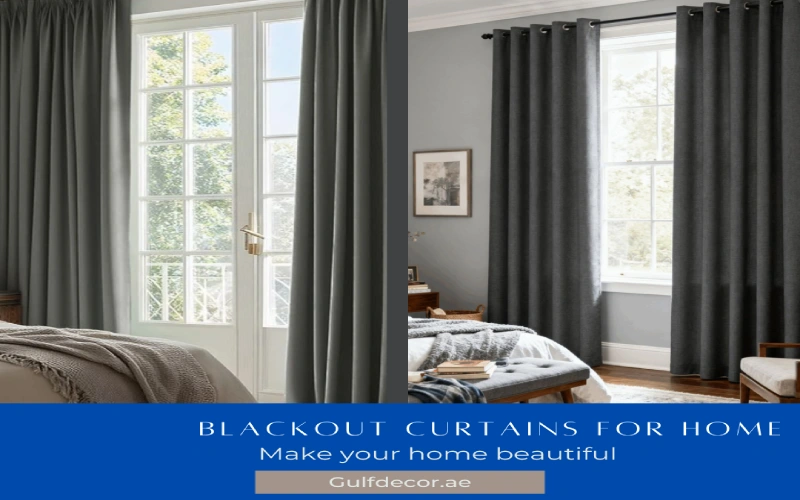
- 100% blackout: Constructed with a triple-weave fabric and an opaque backing layer that blocks essentially all external light. This is what you want for day-sleepers (shift workers), home theaters, or a nursery where nap-time darkness matters.
- Room darkening (roughly 95% blackout): Blocks the large majority of light but allows a faint glow around edges or through the weave, enough for most people’s normal sleep needs, but noticeably different from true blackout if you’re sensitive to any residual light.
If full darkness is the actual goal, ask specifically whether a curtain is rated “100% blackout” rather than assuming any curtain marketed with the word “blackout” performs the same way. The gap between the two levels is real, not just marketing language.
Fabric and Construction: What’s Actually Doing the Work
- Triple-weave blackout: Three layers woven together (a face fabric, a black center layer, and a backing). This is what achieves true 100% blackout without a separate lining, and tends to hold up well over years of use.
- Foam or acrylic-backed curtains: A regular decorative fabric with an opaque coating applied to the back, effective for blocking light, though the coating can be less durable over time than a true triple-weave.
- Thermal-lined curtains: Add an insulating layer specifically for temperature control rather than just light blocking, useful in rooms with a lot of direct window heat gain, working alongside (not instead of) the AC.
- Velvet: Naturally dense and heavy, which blocks light well and also has real sound-dampening properties from the fabric’s thickness, a reasonable double-duty choice for a bedroom that’s also noisy from outside traffic.
The Real Energy Case for Blackout/Thermal Curtains
This isn’t just a comfort claim, it’s measurable. Medium-colored draperies with a reflective backing can reduce heat gain through a window by up to 33%, and a well-managed combination of window coverings can cut heat gain by up to 77% in the highest-gain scenarios. The effectiveness depends heavily on actually keeping curtains closed during peak sun hours and mounting them close to the glass (rather than several inches back) to reduce the gap that lets heat bypass the fabric. In the UAE specifically, this translates directly into AC load, a real, ongoing cost factor, not just a one-time comfort upgrade.
Noise Reduction: A Genuine Secondary Benefit
Dense fabrics (velvet, heavy triple-weave blackout) absorb some sound simply through their mass and weave density, noticeable for reducing echo and dampening street noise, though curtains alone won’t match dedicated soundproofing for a genuinely loud environment. If noise reduction is a real priority (a bedroom facing a busy road), prioritize the heaviest, most densely woven option available rather than a lighter blackout fabric chosen mainly for light-blocking.
Choosing by Room and Use Case
- Bedrooms (general sleep): Room darkening (95%) is usually sufficient. Full blackout is worth the extra cost mainly for shift workers or anyone highly sensitive to light while sleeping.
- Home theaters: True 100% blackout is worth prioritizing, since even a small amount of ambient light noticeably affects screen contrast and picture quality.
- Nurseries: Full blackout supports consistent daytime nap schedules, which matters more for infants than for adults.
- Living rooms and studies: A double-layer setup (sheer layer for daytime light control, blackout layer for evening privacy and glare control) offers more flexibility than committing to one fabric full-time.
- Offices or shared spaces: Eyelet-style blackout curtains open and close smoothly and look tidy, which matters more in a professional or shared setting than in a private bedroom.
Smart/Motorized Blackout Curtains
Motorized tracks controlled by app or remote are a genuine convenience upgrade for large or multiple windows, or for anyone who wants curtains to close automatically at a scheduled time (useful for maintaining the energy-saving “closed during peak sun” habit above without remembering to do it manually). The trade-off is cost and a mechanical component that can eventually need servicing, worth it for large-scale installations, less necessary for a single standard window.
Frequently Asked Questions
What’s the actual difference between blackout and room-darkening curtains?
True 100% blackout fabric (typically triple-weave with an opaque backing) blocks essentially all light. Room darkening fabric blocks roughly 95%, allowing a faint glow around edges, sufficient for most people’s normal sleep needs, but a real difference for anyone needing complete darkness.
Do blackout curtains actually reduce energy bills?
Yes, measurably. Medium-colored curtains with a reflective backing can cut heat gain through a window by up to 33% when kept closed during peak sun hours and mounted close to the glass. The saving depends on consistent use; curtains left open during the hottest part of the day won’t deliver the benefit.
Do blackout curtains actually reduce outside noise?
Somewhat. Dense fabrics like velvet or heavy triple-weave blackout absorb sound through their mass, noticeably reducing echo and dampening some traffic noise. They’re a genuine secondary benefit, not a substitute for dedicated soundproofing if noise is a serious problem.
Should I buy 100% blackout or room-darkening curtains for a bedroom?
Room darkening (95%) is enough for most people’s normal sleep. Full 100% blackout is worth the extra cost specifically for shift workers sleeping during the day, home theaters, or anyone highly sensitive to even small amounts of residual light.
Editorial note: Light-blocking percentages and energy-saving figures reflect standard textile industry and window-covering research current as of 2026. Actual energy savings depend on consistent use, window orientation, and how closely the curtain is mounted to the glass.