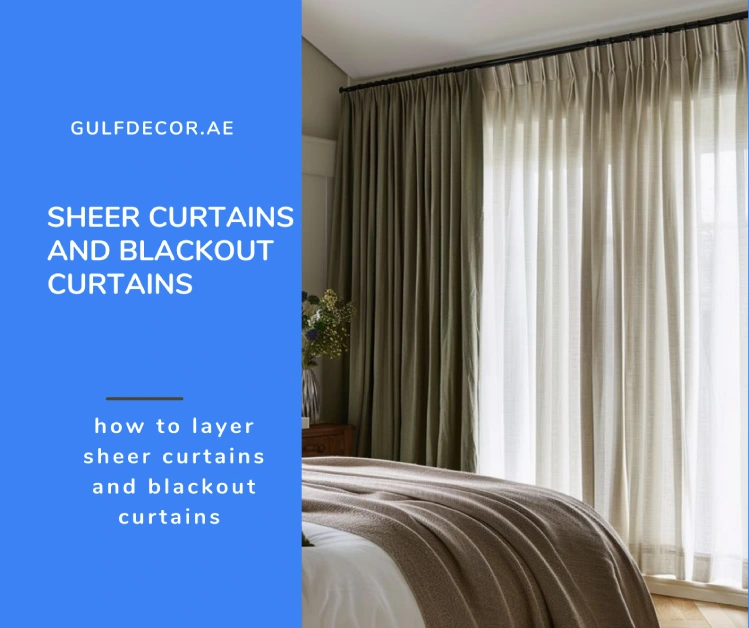
Do Curtains And Blinds Go Together? A Comprehensive Guide
Quick answer: Yes, curtains and blinds work well together, and it’s a genuinely practical combination, not just a layered look. Blinds mount close to the window (inside the frame for the cleanest finish) and handle precise daily light and privacy control; curtains hang in front, extended 3–6 inches beyond the window frame on each side, and add softness plus a second, heavier layer of light-blocking or insulation when drawn. The pairing matters most in a hot climate: light-filtering blinds plus blackout-lined curtains meaningfully reduce heat gain and glare together, more than either alone.
Why the Combination Actually Works
Blinds and curtains solve different problems. Blinds — especially venetian or roller styles with adjustable slats or fabric — give precise, repeatable control over exactly how much light and visibility comes through at any moment. Curtains add softness, texture, and (with the right lining) a second layer of insulation and light-blocking when fully drawn. Used together, you get fine daily control from the blinds and a heavier, more complete block from the curtains when you actually need full darkness or privacy — genuinely more flexible than either alone, not just visually layered.
Choosing Blind Type First
- Roller blinds: Sleek and modern, pairs easily with almost any curtain style. See our roller blinds guide for fabric openness factor and UV-blocking specifics.
- Venetian blinds: Wood or aluminum slats give adjustable, directional light control — good for offices and living rooms where light angle matters as much as amount.
- Roman blinds: Fabric-based and more textured than roller or venetian styles, closer in feel to a curtain themselves — a strong pairing with simpler, flowing curtain panels rather than another heavy fabric.
- Vertical blinds: Best suited to large windows and sliding doors, where roller or venetian styles would need an impractically wide single panel.
Choosing Curtains to Complement the Blinds
- Roller blinds + sheer curtains: Daytime natural light through the sheer layer, full blind coverage for nighttime privacy — a clean, low-maintenance pairing.
- Wooden blinds + linen curtains: A natural, organic material pairing that works well in living rooms and dining spaces going for a warmer, textured look.
- Blackout-lined curtains + light-filtering blinds: The blinds handle daily light control; the curtains provide a heavier block plus genuine thermal benefit when fully closed — see our blackout curtains guide for the actual energy-saving figures.
Installation: Getting the Layering Right
- Mount blinds inside the window frame where the recess depth allows it — this gives the cleanest, most streamlined look and leaves the curtains to do the visual “softening” work in front.
- Mount the curtain rod outside and above the window frame — extend it roughly 3–6 inches beyond the frame on each side (see our curtain hanging guide for the full height and width rules), which lets curtains clear the window entirely when open and makes the window read as larger.
- Keep enough depth between the two so blinds and curtains don’t physically interfere with each other when both are in use — a few inches of clearance between the blind and the curtain rod avoids the curtains catching on the blind’s headrail or slats.
Color Coordination
Natural, neutral tones across both layers give a cohesive, calm look — a common and low-risk choice. A deliberate contrast (a bold curtain color against neutral blinds, or vice versa) can work well too, but treat it as a considered design choice rather than a default, since it draws more visual attention to the window than a coordinated palette would.
Pairings by Room
- Living room: Roman blinds with flowing, lighter curtain panels — enough softness and light control without the heavier privacy needs of a bedroom.
- Bedroom: Blackout roller blinds with blackout-lined curtains for maximum privacy and darkness — the pairing most worth investing in for actual light-blocking performance, not just style.
- Bathroom and kitchen: Moisture-resistant blinds (PVC or similar) paired with easy-to-clean curtain fabric — practicality matters more than heavy texture in high-moisture, high-use rooms.
- Home office: Venetian blinds for adjustable, glare-reducing light control, paired with sheer curtains for a softer overall look without sacrificing the venetian slats’ functional control.
Frequently Asked Questions
Do curtains and blinds actually work well together, or is it too much?
They work well together functionally, not just aesthetically — blinds give precise daily light control, and curtains add a heavier layer for full privacy, darkness, or insulation when drawn. The combination is common in practice, not an unusual or overdone choice.
Should blinds or curtains be mounted closer to the window?
Blinds mount closest to the window, ideally inside the frame where the recess depth allows. Curtains mount outside and above the frame, extending 3–6 inches beyond it on each side, so they can fully clear the window when open.
What’s the best curtain-and-blind pairing for a hot climate like the UAE?
Light-filtering blinds (roller or venetian) for daily use, paired with blackout-lined curtains for when full darkness or maximum heat reduction is needed — together they reduce both glare and heat gain more effectively than either alone.
Do the colors of curtains and blinds need to match?
Not strictly — natural, coordinated tones give a cohesive look and are the lower-risk choice, but a deliberate contrast between the two can also work well as an intentional design statement rather than a mismatch.
Editorial note: Installation and mounting guidance reflects standard window treatment practice current as of 2026. For exact blind fabric openness ratings and curtain hanging measurements, see our dedicated roller blinds and curtain hanging guides.