Top 10 Types Of Bathroom Curtains
Quick answer: Standard shower curtains and liners run 70–72 inches wide by 72 inches long — check this against your shower or tub width before buying, since an undersized curtain leaves gaps that let water splash out. For the in-shower curtain itself, PEVA or EVA (PVC-free) fabric is the more sensible choice over standard vinyl, since it avoids the plastic off-gassing smell vinyl is known for and is genuinely just as waterproof. A separate, decorative fabric curtain works well for a bathroom window (not in direct water contact) but always needs a waterproof liner behind it if it’s anywhere near shower spray, or mold becomes a real risk.
Shower Curtains vs. Window Curtains: Two Different Jobs
Worth separating clearly before choosing anything: an in-shower curtain needs to be genuinely waterproof and mold-resistant, since it’s in direct, repeated contact with water. A bathroom window curtain is a different category — decorative fabric that benefits from a humidity-tolerant material but isn’t handling direct water spray, so the priorities (light control, style, privacy) look more like a bedroom curtain than a shower curtain.
In-Shower Curtain Materials
- Fabric shower curtains (cotton, polyester, linen): A more upscale look than plastic, but they need a separate waterproof liner behind them — the decorative fabric itself isn’t meant to be the water barrier. Machine washable, which makes maintenance straightforward.
- Plastic (vinyl) shower curtains: Budget-friendly and genuinely waterproof on their own. The trade-off: standard PVC vinyl can have a noticeable plastic smell when new, and some health-conscious buyers prefer to avoid PVC specifically.
- PEVA and EVA curtains: PVC-free alternatives that are just as water-resistant as vinyl, without the associated off-gassing smell. A reasonable middle ground for anyone who wants plastic’s practicality without the vinyl-specific downsides.
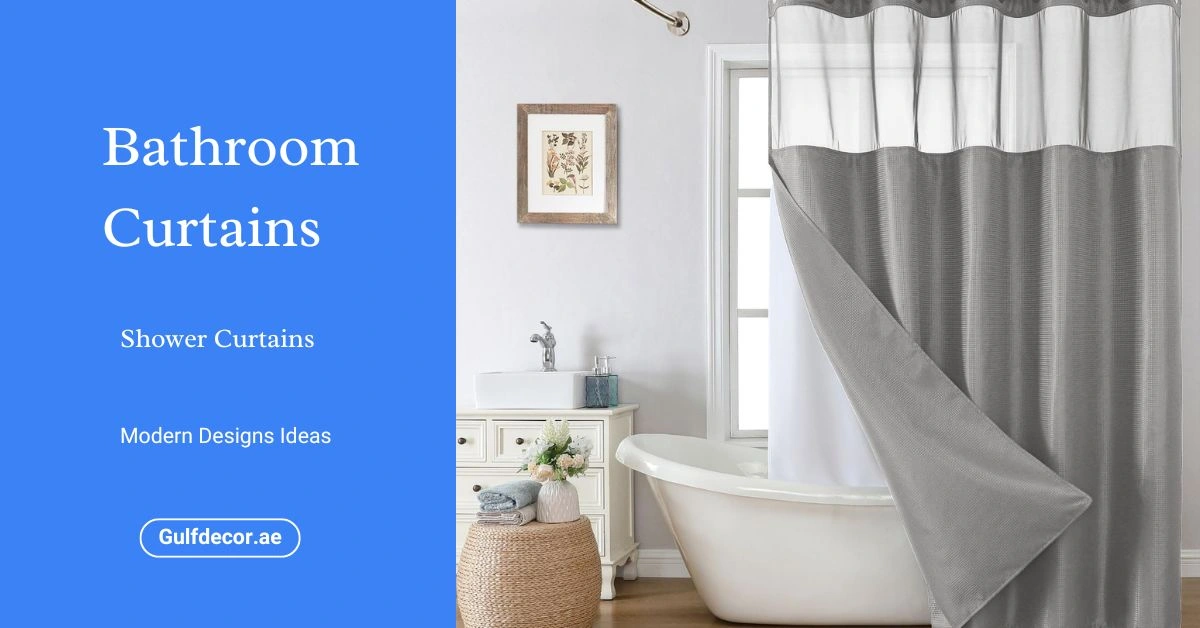
- Double shower curtains: A waterproof inner liner paired with a decorative, swappable outer layer — genuinely practical, since the outer style can be changed without touching the functional inner layer, and both layers typically wash and dry quickly.
Sizing: Get This Right Before Anything Else
Standard shower curtains and liners are typically 70–72 inches wide by 72 inches long — measure your shower or tub opening against this before buying, since a curtain that’s too narrow leaves gaps at the sides that let water splash onto the floor regardless of how good the fabric or waterproofing is. Custom-made curtains are worth considering for a non-standard shower size or an unusually shaped bathroom layout, where an off-the-shelf size genuinely won’t fit properly.
Preventing Mold — The Real Risk With Bathroom Curtains
- Make sure the curtain or liner doesn’t rest directly against the tub or shower wall after use — some airflow between the curtain and any damp surface reduces trapped moisture that leads to mold.
- Fabric curtains and liners should be washed periodically, not left indefinitely — mold and mildew develop in the folds and hem where moisture lingers longest.
- A weighted or magnetic hem (common on liners) helps the curtain hang close to the tub during use, reducing splash-out, but make sure it’s not left bunched against a wet surface between uses.
- For a window curtain anywhere near shower spray or high ambient humidity, a waterproof liner behind the decorative fabric is not optional — skipping it is one of the more common causes of mold developing behind an otherwise nice-looking curtain.
Style Options Worth Knowing
- Hookless curtains: Built-in rings mean no separate shower hooks to buy or lose — a genuinely simpler installation and a cleaner look on the rod.
- Frosted or semi-transparent curtains: Let more light through than a solid curtain, which can make a small bathroom feel more open, while still offering a reasonable level of privacy.
- Waffle-weave curtains: A textured, hotel-style look in durable polyester or cotton — a step up visually from a flat vinyl curtain at a similar practical waterproof performance level (when paired with a liner).
- Bamboo or wooden curtains: More of a room-divider or privacy-screen option than a true shower curtain — works well for zoning a larger bathroom layout rather than as the water barrier itself.
Frequently Asked Questions
What size shower curtain do I need?
Standard shower curtains and liners are 70–72 inches wide by 72 inches long. Measure your specific shower or tub opening against this before buying — a curtain too narrow for the opening leaves gaps that let water splash out regardless of the fabric quality.
Is PEVA or vinyl better for a shower curtain?
Both are genuinely waterproof, but PEVA (and EVA) are PVC-free and avoid the plastic off-gassing smell standard vinyl curtains are known for when new. PEVA is a reasonable upgrade if that smell has bothered you with a vinyl curtain in the past.
Do I need a liner behind a fabric shower curtain?
Yes — decorative fabric alone (cotton, linen, polyester) isn’t a genuine water barrier. A separate waterproof liner behind it is what actually protects against water getting past the curtain and onto the floor or into the fabric itself.
How do I stop mold from developing on my bathroom curtain?
Wash fabric curtains and liners periodically, avoid leaving the curtain bunched against a wet tub or wall after use, and make sure any window curtain near shower spray has a proper waterproof liner behind it — mold most often develops in folds and hems where moisture sits the longest.
Editorial note: Sizing and material guidance reflects standard bathroom textile industry data current as of 2026. Measure your specific shower or window dimensions before ordering, and check care labels for washing and liner requirements by material.