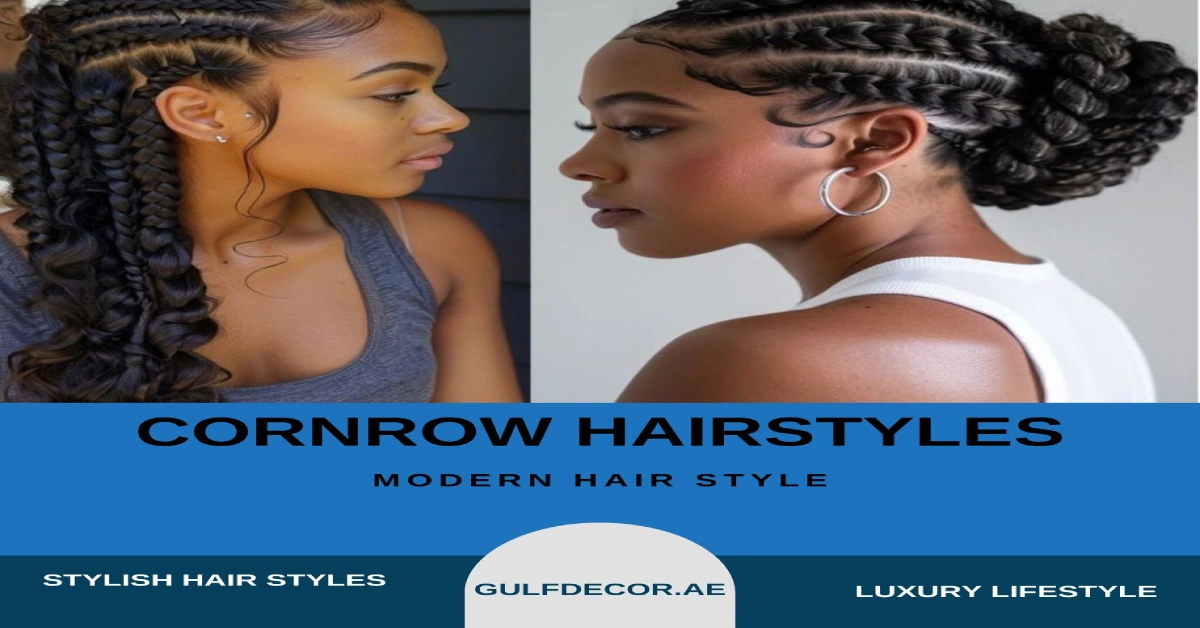
15 Beautiful Cornrow Hairstyles
Cornrows are one of the oldest and most versatile braided styles in existence. Woven flat against the scalp in neat, continuous rows, they hold up well through workouts, humidity, and everyday wear, which is exactly why they’ve stayed popular across generations and hair textures. Because the braids protect the hair shaft from daily manipulation, heat, and friction, cornrows are also considered a protective style one that can help minimize breakage from constant brushing, styling, and exposure while your natural hair grows underneath. What makes cornrows especially appealing is their range. The same basic technique can be dressed up into an elegant bun for a formal event or kept simple with a straight-back pattern for the gym. Below are 15 cornrow styles worth trying, along with practical notes on who each one suits and how to keep it looking sharp.
1 High Bun
A high bun turns cornrows into a polished, all-day style with almost no upkeep. Gather the braided ends at the crown of your head, twist them around each other into a coil, and secure the bun with bobby pins or a strong hair tie. This style works well for both office settings and workouts, since the height keeps hair off your neck and the twist holds securely through movement.
2 Half-Up Ponytail
This style combines the structure of cornrows with the softness of loose hair. Braid a section at the crown into small, neat cornrows, then gather that braided section into a ponytail secured with a scrunchie, letting the rest of your hair fall naturally underneath. It’s a good middle-ground option if you want the low-maintenance benefit of braids without committing your entire head to them.
3 Fulani Cornrows
Fulani cornrows are a traditional West African style built around a single braid running front to back along the center of the head, flanked by cornrows on either side and finished with accent beads or cuffs. The center braid is often left slightly raised for dimension. This style is a strong choice when you want cornrows that feel decorative and finished on their own, without needing to add a bun or ponytail on top.
5 Double Ponytail
Splitting cornrows into two ponytails, one on each side of the head, gives the style a playful, youthful edge. Keep the part between the two sections even for a balanced look, then finish with matching clips or hair cuffs. This works particularly well for casual outings or as a fresh take on a style you already wear frequently.
5 High Ponytail
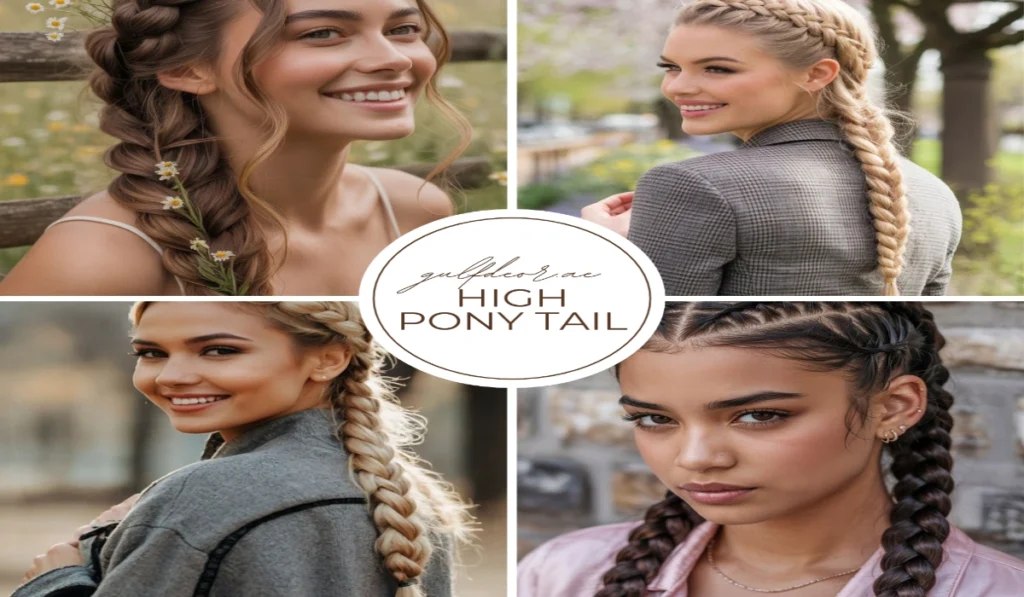
For a quicker version of an updo, braid your cornrows upward toward the crown rather than straight back, then gather them into one high ponytail and secure with a statement hair tie. Because the braids are already directed toward a single point, this style takes less time to put together than a bun.
6 Cornrow Mullet
A cornrow mullet plays with contrast: braids at the front and crown, with more texture or length left loose at the back. You can either cornrow the front section and leave natural hair out at the back, or pair front cornrows with loose box braids behind them. Adding extra hair to the front rows gives the style more volume and definition. This is a bolder option best suited to those comfortable standing out.
7 Low Bun
For a simpler, more understated finish, pull the cornrows into a low ponytail at the nape of the neck, wrap the length around itself, and pin it into place. It’s fast to create and tends to read as more formal than a high bun, making it a solid choice for work or evening events.
8 Small Cornrows
Thinner, more tightly woven cornrows create more rows across the scalp and a more intricate overall pattern. This look generally requires a stylist’s precision, since even, thin parts are harder to maintain by hand. Because thinner braids pull on smaller sections of hair, pay extra attention to tension at the hairline — braids that feel tight rather than snug can stress the edges over time.
9 Zig-Zag Cornrows
Instead of straight parts, zig-zag cornrows use angled, jagged partings to create movement across the scalp. The pattern adds visual interest to an otherwise classic braid-back style. Because the parting itself is the focal point, this is a style where going to an experienced braider makes a real difference in how clean the final result looks.
10 Waist-Length Cornrows
If you want dramatic length, cornrows can be braided down to waist length, with extensions added if your natural hair doesn’t reach that far on its own. This style takes longer to install and is heavier to wear, so it’s worth considering how much weight your scalp can comfortably handle before committing to it.
11 Straight Back Cornrows
The most classic version of the style: braids run straight back from the hairline to the nape, with no bun, ponytail, or added pattern. It’s low-maintenance, quick to install, and pairs easily with any outfit, which is part of why it has remained a go-to option for so long.
12 Side-Swept Cornrows
A deep side part divides the hair into two uneven sections, with the larger section braided into fine, closely spaced rows running parallel to the part, and the smaller section left loose for movement. This style softens the geometric look of straight cornrows and works well for a more feminine finish.
13 Multi-dimensional Cornrows
Mixing braid sizes across the head, alternating thick and thin rows, adds texture and depth that a single uniform braid size can’t achieve. It’s a good option if you want a personalized pattern rather than a strictly symmetrical one.
15 Accent Braids
Here, smaller, more detailed braids are used to highlight one larger braid. Part the hair in half, create fine, intricate braids along the top of one section, then combine them into one larger braid (extensions can be added for length), and repeat on the other side. The result is a style with more craftsmanship and detail than a standard cornrow set.
15 Shuruba Cornrows
Shuruba is an Ethiopian braiding style featuring tight cornrows that wrap toward the crown of the head and are fastened there, with the remaining hair left loose below. Angled sections, a thicker center braid, or decorative clips at the crown all add visual interest to this style, which has deep cultural roots and a distinct silhouette compared to more common straight-back patterns.
Choosing the Right Cornrow Style for You
Not every cornrow style suits every schedule or hair type. A few practical points to weigh:
For low maintenance: straight-back cornrows or a simple low bun require the least daily styling.
For special occasions: high buns, Fulani cornrows, and Shuruba styles tend to look more finished and intentional without extra accessories.
For length or drama: waist-length cornrows and accent braids deliver the most visual impact but take longer to install and require more careful upkeep.
For sensitive edges: avoid very small, tightly parted cornrows and ask your braider to keep tension moderate, especially around the hairline.
Caring for Cornrows
Cornrows can typically stay in for two to six weeks, depending on how they were installed and how well they’re maintained. To keep both the style and your natural hair healthy:
Moisturize your scalp regularly with a lightweight oil or leave-in spray to prevent dryness and itching. Wrap your hair at night with a satin or silk scarf to reduce friction and frizz.
Avoid leaving cornrows in for longer than recommended, since prolonged tension can lead to breakage or thinning at the hairline over time.
If your scalp feels sore, tight, or itchy in the days after installation, that’s a sign the braids were done too tightly and may need to be loosened.
Frequently Asked Questions
How long can cornrows safely stay in?
Most cornrows last two to six weeks depending on installation and upkeep, but the real limit is your scalp, not the calendar. Take them out sooner if you notice soreness, flaking, or visible thinning at the hairline.
Do cornrows damage hair?
Done at a comfortable tension, cornrows protect hair by reducing daily manipulation. Damage comes from braids installed too tightly or left in too long, not from the style itself.
Can any hair type wear cornrows?
Yes, though the technique and how long the style holds varies by texture. Coarser, curlier hair typically holds a cornrow pattern longer without added product than straighter hair.
What’s the difference between cornrows and box braids?
Cornrows are braided flat against the scalp in a continuous row; box braids are individual braids that hang free from the root. Cornrows tend to last longer and put less overall weight on the scalp.
Conclusion!
Cornrows remain popular because they adapt so easily the same core technique can look completely different depending on the pattern, size, and finishing style you choose. Whether you want something simple enough for everyday wear or intricate enough for a special event, there’s a version of this style that fits, and a good braider can help translate any of the looks above to your specific hair type and length.