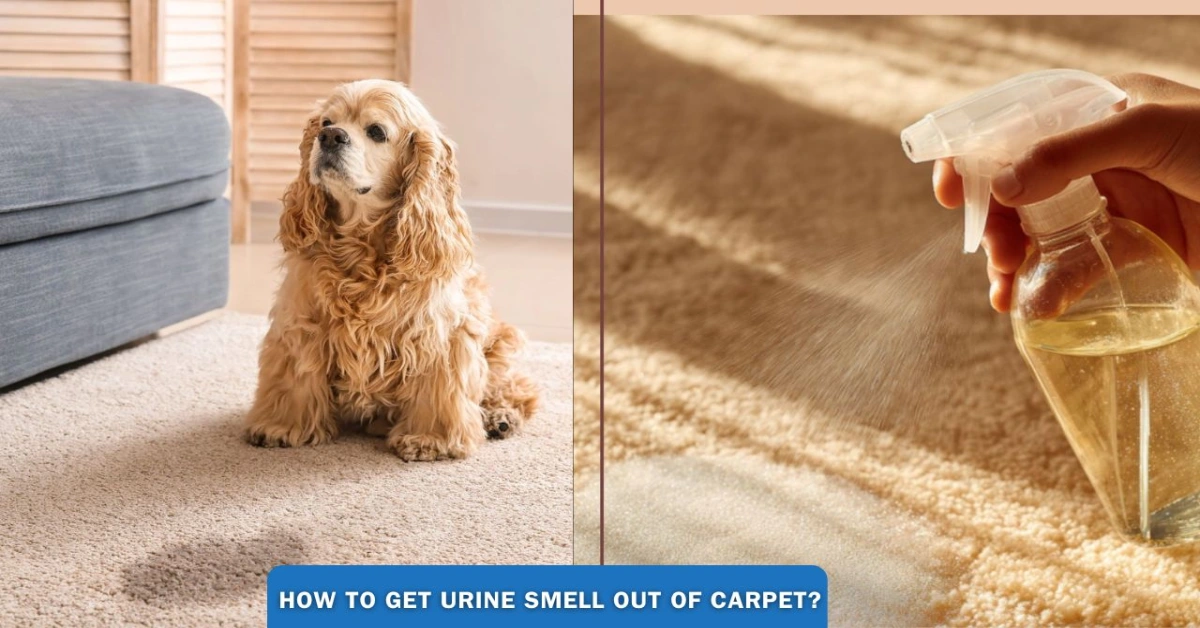
How To Get Urine Smell Out of Carpet?
If a spot keeps smelling like urine no matter how many times you’ve cleaned it, there’s a reason: surface cleaning and pet urine odor solve two different problems. The smell isn’t sitting on top of your carpet — it’s bonded to the fibers, the backing, and often the pad underneath, and most home fixes only ever reach the first layer.
Quick answer: baking soda and vinegar can mask fresh, mild urine smell temporarily, but they don’t break down the actual compound causing it. An enzymatic cleaner is the only method that reliably removes old or set-in urine odor, because it digests the uric acid crystals rather than just absorbing or covering the smell. The full process, including how to find every hidden spot, is below.
In This Guide
- Why urine smell keeps coming back
- Finding every hidden spot first
- Step-by-step removal process
- If the stain is fresh, not old
- Preventing it from setting in next time
- When to call a professional
- FAQ
Why Urine Smell Doesn’t Leave Easily
Urine contains uric acid, and as it dries, that acid forms crystals that bond tightly to carpet fibers and the pad beneath. Those crystals are what actually cause the smell — not the liquid itself, which is why a spot can look and feel completely dry and clean while still smelling the moment humidity rises. Baking soda and vinegar can neutralize surface odor temporarily, but neither one breaks the crystals down, so the smell returns once moisture reactivates them.
Finding Every Hidden Spot First
Treating the spot you can see and missing the one you can’t is the most common reason this problem drags on. A UV blacklight (sold cheaply as a “pet urine detector”) makes old, dried urine fluoresce even when it’s invisible under normal light and the smell has faded to nothing. Darken the room, run the light slowly across the whole carpet — not just the area you suspect — and mark every glowing patch with tape before you start treating anything. Skipping this step means you’ll likely re-treat the same visible spot while an untreated one nearby keeps the smell alive.
Step-By-Step Removal Process
Step 1: Blot, Don’t Scrub
If the area is still damp, blot it with a clean cloth or paper towels, pressing down rather than rubbing. Scrubbing pushes urine further into the backing and pad instead of lifting it out.
Step 2: Choose An Enzymatic Cleaner
Look for a product labeled specifically for pet urine or “enzymatic” on the bottle — these contain live bacterial cultures that produce enzymes to digest the uric acid itself, converting it into odorless compounds rather than masking or absorbing it. General-purpose carpet cleaners and vinegar-based sprays don’t do this.
Step 3: Saturate, Don’t Just Mist
This is the step most people get wrong: the enzymes need to reach as deep as the urine originally soaked, so a light surface spray isn’t enough for anything beyond a very fresh, small spill. Pour the cleaner directly onto the marked spot until it’s genuinely saturated, not just damp on top.
Step 4: Let It Sit, Undisturbed
Cover the area if the product label suggests it (some recommend a plastic sheet to slow evaporation and give the enzymes more working time), and leave it undisturbed for the time stated on the bottle — usually a few hours to a full 24 hours for old or heavily soaked spots. Walking on it or vacuuming too early interrupts the process before the enzymes finish working.
Step 5: Blot And Air Dry
Blot up the excess liquid with clean towels, then let the area air-dry completely, ideally with a fan or open window to speed things along. Trapped moisture in a still-damp carpet invites the smell right back.
Step 6: Reapply If Needed
For old, heavily soaked, or large stains, one treatment often isn’t enough to reach every crystal. A second full soak-and-dry cycle a few days later is common and normal — it’s not a sign the product failed.
If The Stain Is Fresh, Not Old
A urine accident caught within the first hour or two is a different, easier problem: blot up as much liquid as possible immediately, then treat with an enzymatic cleaner the same way described above. Fresh accidents haven’t had time to bond as deeply, so a single treatment usually resolves them without needing to hunt for hidden spots with a UV light first.
Preventing It From Setting In Next Time
- Treat any accident within the first hour if at all possible — the longer urine sits, the deeper the crystals bond into the pad.
- Keep an enzymatic cleaner on hand rather than reaching for a general carpet spray first; it saves you a second, more thorough treatment later.
- Check likely repeat spots (near doors, favorite pet resting areas) with a UV light periodically, since pets often return to a spot they’ve marked before even after it’s been cleaned.
- Address the humidity in the room where possible — carpets in consistently humid spaces reactivate old residue more easily than carpets in a well-ventilated, air-conditioned room.
When To Call A Professional
If the smell has been present for months, covers a large area, or has clearly reached the underlay or subfloor (a strong smell with no corresponding visible surface stain is the giveaway), a professional hot-water extraction clean reaches deeper into the pile and pad than any DIY enzymatic treatment can. It’s also worth calling a professional if the odor followed a larger accident that soaked through to the pad — replacing that section of pad is sometimes the only complete fix. For general odor upkeep once the urine problem itself is resolved, see our guide on removing carpet odors naturally, and for the carpet itself afterward, our carpet steam cleaning guide covers the deeper clean that often follows.
Frequently Asked Questions
Does vinegar actually remove urine smell, or just cover it?
Vinegar’s mild acid can neutralize some surface odor temporarily, but it doesn’t break down the uric acid crystals that cause the smell to return. It’s a reasonable first response for a fresh accident, but not a substitute for an enzymatic cleaner on an old or set-in stain.
How long should enzymatic cleaner sit before I blot it up?
Check the product label, but as a general range: a few hours for a fresh, small stain, up to 24 hours undisturbed for an old or heavily soaked one. Rushing this step is the most common reason a first treatment doesn’t fully work.
Can I use a UV flashlight from home to find old stains?
Yes — a basic UV blacklight sold as a “pet urine detector” works well for this. Darken the room fully for the best results; dried urine fluoresces clearly under UV light even when there’s no visible stain or smell in normal conditions.
Will steam cleaning alone remove urine odor?
Not reliably on its own for urine specifically — heat can actually set some organic stains and doesn’t target uric acid crystals the way an enzymatic treatment does. Enzymatic treatment first, then a steam clean afterward for overall freshness, is the more reliable order.
Why does the smell only show up when it’s humid?
Uric acid crystals are hygroscopic, meaning they absorb moisture from the air. Rising humidity reactivates them chemically, which is why a spot can seem completely resolved on a dry day and smell again once humidity climbs — a strong sign the crystals were reduced but not fully broken down.
Final Thoughts
Old urine smell responds to a specific process, not general cleaning effort: find every hidden spot with a UV light, saturate (not mist) with an enzymatic cleaner, give it real time to work, and repeat for old or heavy stains. Skip the UV step and you’ll likely keep re-treating the one spot you can see while another keeps the smell alive nearby.
If you’ve worked through this process and the smell still won’t budge, that’s a genuine sign it’s reached the pad or subfloor — at that point, a professional treatment is worth the cost rather than repeating the same DIY steps indefinitely.