Short Hair Highlights: How to Choose the Right Technique
Short hair shows off color placement more clearly than long hair does, which is exactly why the wrong highlighting technique looks obvious within weeks, while the right one grows out gracefully for months. The names get thrown around loosely though: balayage, babylights, foilyage, money piece. This guide breaks down what each technique actually is, which one suits which short cut, and what the upkeep really looks like once you’re past the salon chair.
Why Short Hair Needs a Different Highlighting Approach
On long hair, highlights placed lower down the shaft blend into the length as they grow out, buying you months before a touch-up becomes necessary. Short hair doesn’t have that buffer. Every section of color sits close to the root, so regrowth becomes visible faster and any placement mistake reads immediately rather than being hidden a few inches down. If you already have a specific cut in mind, our guides to short hairstyles for Black women and bob, lob, pixie, and shag cuts explained are worth reading first, since the technique that flatters a blunt bob is not always the one that works on a textured pixie.
Balayage: The Lowest-Maintenance Option
Balayage is a hand-painted technique where color is swept onto the surface of small sections, freehand, without foil. The result mimics the way sun naturally lightens hair, concentrated toward the ends and lighter at the tips, which is why it fades out gradually rather than showing a hard line at the root. On short hair, balayage works best on cuts with some length and movement, like a lob or a longer pixie, where there’s enough hair to paint a visible gradient. On a very short crop, there’s not much shaft length left to paint, which is the main limitation.
Because the color is placed away from the root by design, balayage has the slowest regrowth line of any of these techniques and can often stretch to three months between salon visits.
Babylights: Soft, All-Over Dimension
Babylights use the same foil process as traditional highlights but take extremely fine, thin sections rather than thicker weaves. The result is a soft, blended lightness that looks closer to natural sun-kissed hair than the visible contrast of chunkier foil highlights, and because the sections are so fine, the grow-out line is far less noticeable. This makes babylights a strong option for short hair overall, since the technique doesn’t depend on having length to work with the way balayage does; the fine sections can be placed anywhere on a short cut, including close to the root, without looking harsh.
The trade-off is time in the chair. Sectioning and foiling dozens of very fine pieces takes noticeably longer than a balayage application, and colorists typically charge accordingly.
Foilyage: A Middle Ground
Named as a blend of “foil” and “balayage,” as Madison Reed explains, the technique combines both methods.
Foilyage combines both approaches: color is hand-painted onto sections in the balayage style, then those painted sections are wrapped in foil rather than left open to the air. Foil traps heat and processes the lightener faster and more completely, producing a brighter, more noticeable result than balayage while still keeping the soft, painted placement instead of a uniform foil pattern. On short hair, foilyage is a reasonable choice when you want more visible brightness than balayage delivers but don’t want the flatter, more uniform look of traditional full foils. It falls in between on regrowth visibility too, more noticeable than balayage but less than a full head of traditional foils.

Money Piece: Highlights Framing the Face
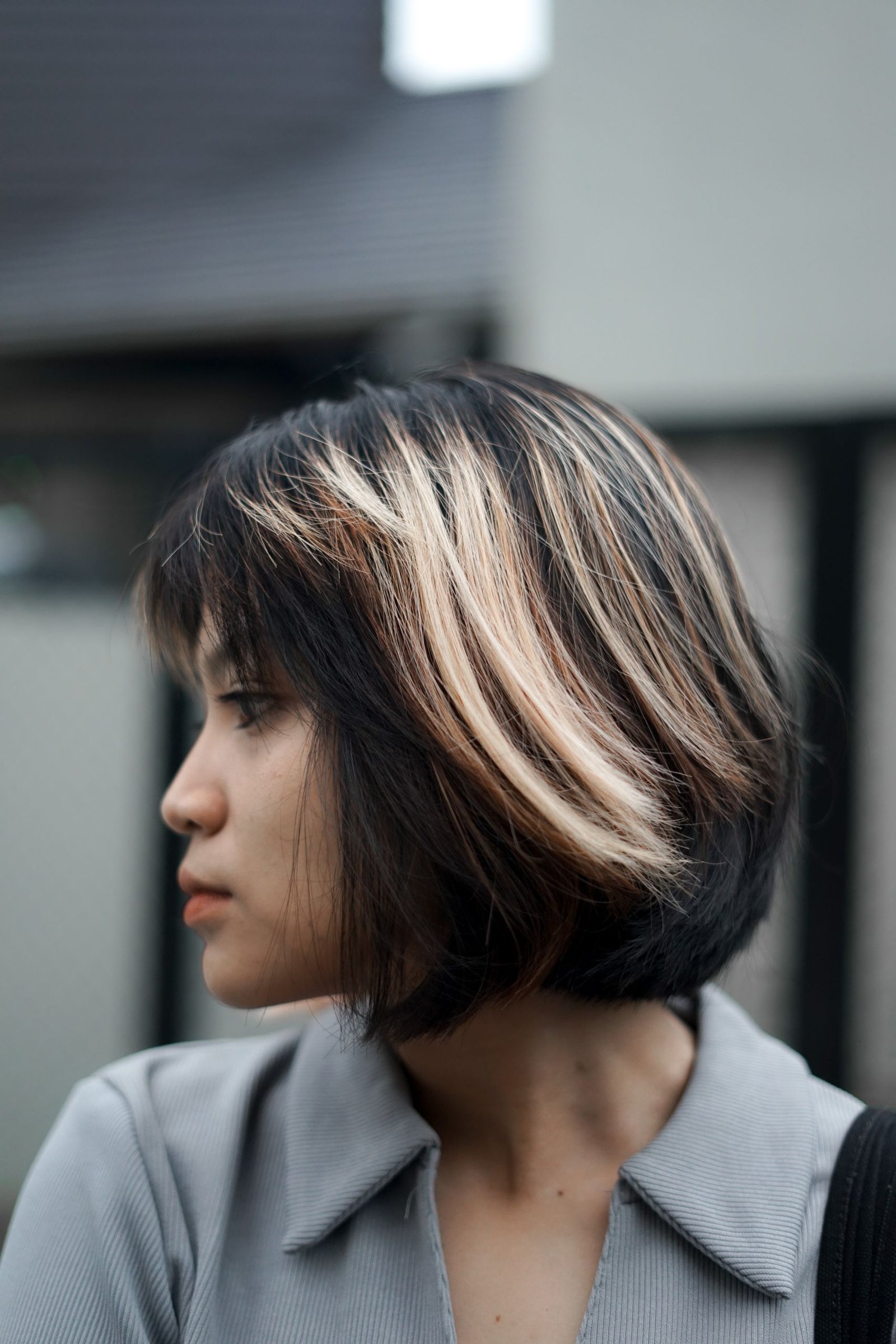
A money piece is not a lightening technique on its own so much as a placement strategy, usually done with balayage, babylights, or foils applied specifically to the pieces of hair framing the face along the part line. On short cuts, especially a pixie or a cropped bob, a money piece reads as a deliberate, styled highlight because short hair puts those face-framing pieces on constant display, unlike on long hair where they can get tucked back. It’s a genuinely low-maintenance way to add brightness without committing to a full head of color, and it grows out forgivingly since the placement follows the natural part.
Matching Technique to Your Hair Length and Cut
| Cut Length | Best-Suited Technique | Why |
|---|---|---|
| Very short crop or TWA | Babylights or money piece | Not enough shaft length for balayage’s painted gradient to show |
| Pixie | Money piece or babylights at the crown | Framing effect reads clearly on short, close-cropped hair |
| Bob or lob | Balayage, foilyage, or full babylights | Enough length for a visible gradient; balayage grows out cleanest |
| Textured or curly short cuts | Babylights | Fine sections blend more naturally with curl pattern than broader painted sections |
How Often You’ll Actually Need a Touch-Up
Regrowth becomes visibly noticeable after roughly six to eight weeks regardless of which technique you choose, though how much that matters depends on the technique’s placement. Full highlights that start close to the root need refreshing every six to eight weeks to avoid an obvious line. Balayage and money-piece placements, which are designed to sit away from the root, can often stretch to ten or twelve weeks before a touch-up feels necessary. Faster-growing hair pushes every technique toward the shorter end of these windows, so if your hair grows quickly, budget for touch-ups on the more frequent side regardless of which technique you pick.
Protecting Hair Health When You Lighten Short Hair
According to Healthline, lightening breaks down the protein structure inside the hair shaft to remove pigment, which is what makes bleached or highlighted hair more prone to dryness, breakage, and frizz than untouched hair. This matters more on short hair, since there’s less length to disguise damage and any breakage shows up as visible shorter, wispy pieces rather than blending into longer strands. A few habits reduce the impact meaningfully: washing two to three times a week rather than daily preserves natural oils that lightened hair needs, using a leave-in conditioner and a nourishing oil like argan or coconut oil helps reseal moisture the lightening process strips away, and reducing heat styling for the first couple of weeks after a lightening service gives the hair shaft time to recover before adding more stress. A gloss or toning treatment between full color appointments also helps keep lightened pieces looking fresh without another full lightening service.
If your hair feels unusually brittle or is breaking noticeably after a lightening service, that’s worth raising with your colorist before your next appointment, since continuing to lighten already-compromised hair tends to accelerate the damage rather than something that resolves on its own.
Cost and Time Factors Worth Knowing
Babylights and foilyage both take meaningfully longer in the chair than balayage because of the finer sectioning and foiling work involved, and pricing at most salons reflects that time. A money piece alone is typically one of the least expensive options, since it targets a small, specific area rather than the whole head. Balayage sits in between: less time-intensive than full foiling techniques, but priced above a simple money piece because it covers more of the head. Getting an accurate quote means bringing a reference photo and discussing your current color and hair health with your colorist, since actual pricing depends heavily on your starting color, how much lift is needed to reach your target shade, and the salon’s own rates.
Frequently Asked Questions
Can You Get Balayage on Very Short Hair?
Balayage works best with at least a few inches of length to paint a visible gradient. On a very short crop or TWA, there often isn’t enough shaft length for the technique’s gradual fade effect to show, which is why babylights or a money piece tend to work better on the shortest cuts.
Which Technique Grows Out the Most Gracefully on Short Hair?
Balayage and money-piece placements grow out the most gracefully since both are designed to sit away from the root rather than starting at it. Full foil highlights or babylights placed close to the root will show a more noticeable line as new growth comes in.
Do Highlights Damage Short Hair More Than Long Hair?
The lightening process itself affects short and long hair the same way at the strand level. The difference is visibility: damage and breakage are simply more obvious on short hair since there’s less length to hide split ends or brittle pieces.
How Much Does It Cost to Get Highlights on Short Hair?
Pricing depends on the technique, your current hair color, and the salon, but a money piece is generally the least expensive option, balayage falls in the middle, and babylights or foilyage tend to cost more due to the additional time required for fine sectioning and foiling.
Can I Combine Two Highlighting Techniques?
Yes, and colorists often do this deliberately, using babylights around the hairline for a soft, blended look while placing balayage or foilyage through the rest of the head for more visible dimension. This combination approach is common precisely because it balances a natural-looking frame with noticeable overall brightness.