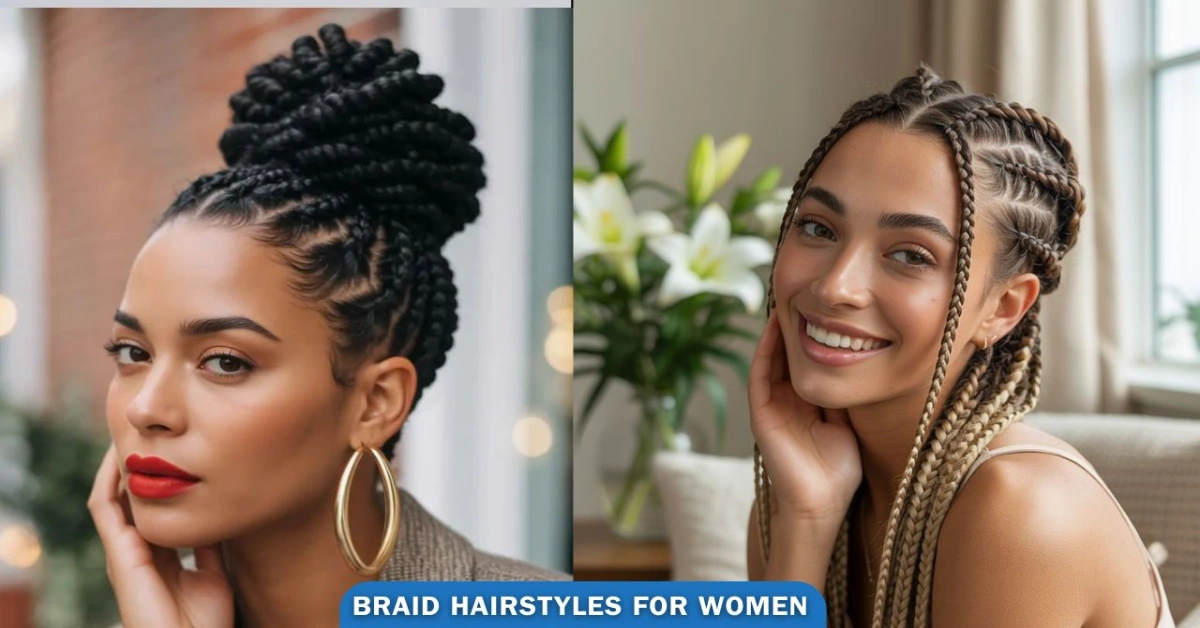
10 Braid Hairstyles for Women (French, Dutch, Fishtail & More)
A braid is one of the few hairstyles that’s genuinely both practical and dressy — it keeps hair secure through a full day and still photographs well at an evening event. These ten cover the real range of techniques, from simple three-strand basics to styles that take real practice.
Braid Basics: The Techniques Behind Every Style
Nearly every braid style below is built from one of three underlying techniques: a standard three-strand braid, a French braid (where you add new hair into each section as you go), or a Dutch braid (the same idea as a French braid, but crossed underneath instead of over, so the braid sits on top of the hair rather than blending into it). Once those three feel comfortable, most of the styles on this list become variations rather than entirely new skills.
1. The Classic French Braid
Sections are woven from the crown down, picking up new hair with each cross so the braid gradually incorporates the whole head. The most versatile braid to learn first, since most of the other styles below build on the same motion.
2. The Dutch Braid
The same weaving technique as a French braid, but each section crosses underneath rather than over, which makes the braid sit raised on top of the hair instead of flat. Reads as slightly bolder and more textured than a French braid.
3. The Fishtail Braid
Hair is split into just two sections, with small pieces alternately crossed from the outer edge of each section into the other. Takes longer than a three-strand braid but creates a finer, more detailed woven texture.
4. The Waterfall Braid
A French braid technique where one strand is dropped and left hanging loose with each cross, while a new strand is picked up to continue the braid. Creates a cascading effect and works especially well as a half-up style, worn with the rest of the hair down.
5. The Rope Braid
Two sections of hair are twisted individually, then twisted around each other in the opposite direction. Simpler to learn than a woven braid and gives a rope-like, spiral texture instead of a flat plait.
6. The Four-Strand Braid
An extension of the standard braid using four sections instead of three, woven in a specific over-under pattern. Produces a thicker, more intricate-looking braid — takes more practice to keep the pattern consistent, but the result reads as noticeably more elaborate.
7. The Braided Crown (Milkmaid Braid)
Two French or Dutch braids, one from each side of the head, crossed over the top and pinned underneath. One of the most secure styles on this list, since the crossed braids anchor each other in place.
8. Boxer Braids
Two Dutch braids running from the front hairline straight back to the nape, rather than a single center braid. Athletic in origin and genuinely practical for workouts, since the tight double-braid keeps hair fully secured.
9. The Ladder Braid
A French braid where small sections are periodically left loose and pulled slightly to the side before being incorporated back in, creating a rung-like pattern along the braid. More decorative than functional — best suited to occasions rather than everyday wear.
10. The Mohawk Braid
A single narrow braid running down the center of the head from front to back, often a French or Dutch braid, with the sides left loose, tucked back, or braided separately underneath. Works on both short and long hair and reads as edgier than a centered braid worn with the rest of the hair down. A dedicated guide to mohawk braid hairstyles covers style variations, installation, and care in more depth.
Choosing a Braid for Your Hair Length and Type
- Shoulder-length or shorter hair — boxer braids or the mohawk braid; both work well without needing extra length to weave with.
- Fine or slippery hair — the Dutch braid or fishtail braid; both hold more securely on hair that tends to slip out of a standard three-strand plait.
- An event or occasion — the waterfall braid or ladder braid; both are more decorative and photograph well.
- Everyday wear or exercise — the braided crown or boxer braids; both stay secure through a full active day.
Making a Braid Last Longer
Braiding hair on the second day after washing, rather than freshly washed, gives the strands more grip and texture to hold the pattern. A light texturizing spray before braiding has a similar effect on freshly washed hair. Braiding damp — not soaking wet — hair and letting it dry in the braid also helps the style hold its shape once undone.
A French braid crosses each new section over the middle, so it blends flat into the rest of the hair. A Dutch braid crosses underneath instead, which makes it sit raised on top of the hair for a bolder, more textured look.
A standard three-strand braid, followed by the rope braid, are the easiest starting points. Both use simple, repetitive motions without the added-hair weaving technique that French and Dutch braids require.
Most of these styles need at least shoulder-length hair, though boxer braids and the mohawk braid can work on slightly shorter hair since they don’t require weaving in as much length. Very short hair generally won’t hold a braid.
Final Thoughts
Once the French and Dutch braid techniques feel natural, most of the styles on this list are just variations on the same underlying motion. Start with a classic French braid or braided crown, and work up to the fishtail or four-strand braid once the basics are comfortable.
For more braid ideas, see our guides to braided hairstyles for Black women, Fulani braids, and tribal braids.