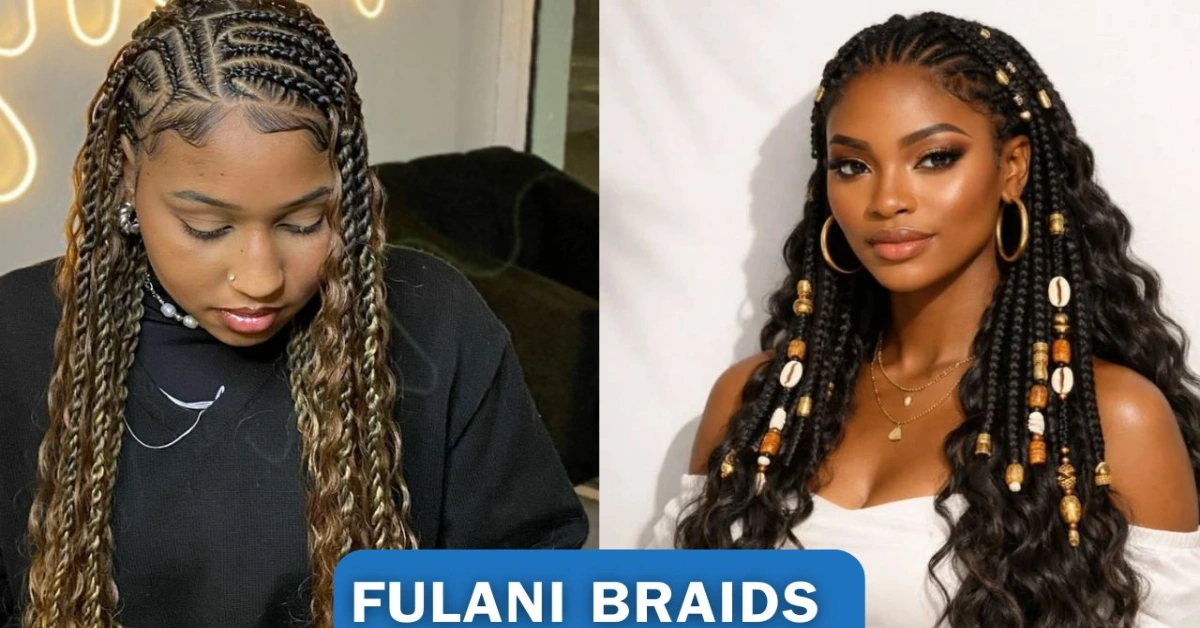
6 Fulani Braid Styles (Plus Where the Name Comes From)
Fulani braids take their name from the Fulani people, a historically nomadic ethnic group spread across West Africa, whose traditional hairstyling influenced the pattern still used today: thin cornrows running from the front hairline toward the back or crown, often finished with beads. The style has since become one of the most recognizable protective styles worldwide, but the core technique traces directly back to that origin.
Below are 6 real variations on the traditional pattern, plus what to know before booking an install.
In This Guide
6 Fulani Braid Variations
1. Traditional Fulani Braids
Cornrows run from the front hairline back toward the crown, with the remaining length left as loose braids or twists, usually finished with beads at the ends. The base pattern that every other variation below builds from.
2. Fulani Braids with Beads
The traditional pattern with beads added along the full length of each braid rather than just the ends, for a more decorated, statement look. Adds noticeably more time to the install since each bead has to be threaded individually.
3. Short Fulani Braids
The same cornrow-and-braid pattern adapted for chin- or shoulder-length hair, usually left without beads to keep the shorter length from looking overly busy. A lower-maintenance option than the long versions.
4. Fulani Braid Ponytail
The full head is braided in the Fulani pattern first, then gathered into a ponytail at the crown or back. Combines the look of the braids with the practicality of hair being fully off the face and neck.
5. Fulani Braids with Curly Ends
Cornrows are done in the traditional pattern with extension hair added, then the ends are left unbraided and curled rather than braided all the way down. Works well on longer lengths where curled ends add movement without losing the structured pattern up top.
6. Fulani Braided Bun
The full Fulani pattern gathered into a bun at the crown once braiding is complete. Takes the longest of the six to install since the full head is braided first, but needs almost no daily maintenance once it’s up.
What to Know Before Booking
- Install time runs 3-6 hours depending on braid thickness, whether beads are added, and hair length — bring something to keep you occupied.
- Expect the style to last 4-6 weeks with proper care, similar to other cornrow-based protective styles.
- Ask about tension. Fulani braids start close to the scalp along the front hairline, which is a common site for traction alopecia if braided too tightly — a stylist should never braid to the point of pain or headache.
- Moisturize the scalp between washes. A light oil applied every 2-3 days along the visible parts prevents the dryness and itching that often lead people to take a protective style out early.
Frequently Asked Questions
From the Fulani people, a historically nomadic ethnic group across West Africa, whose traditional hairstyling — thin cornrows toward the crown, often finished with beads — is the pattern the modern style is based on.
4-6 weeks with proper care, similar to other cornrow-based protective styles, though beaded versions may need to come out sooner if beads start slipping or feeling heavy.
Yes — short Fulani braids adapt the same pattern for chin- or shoulder-length hair, usually left without beads to avoid looking overly busy on a shorter length.
They can be if braided too tightly, since the pattern starts close to the scalp along the front hairline — a high-risk area for traction alopecia. A stylist should never braid to the point of pain, tightness headaches, or visible bumps.
Cost varies by salon, hair length, and whether beads are added, but the style generally falls in the same price range as other multi-hour cornrow and braid installs, with beaded versions costing more due to added install time.
Final Thoughts
Fulani braids work on nearly any hair length and texture, which is part of why the style has stayed popular well beyond its origins — the traditional pattern adapts easily to a ponytail, bun, or curled ends without losing what makes it recognizable. For more braided protective styles, see our full guide to braided hairstyles for Black women.