50 Layered Hairstyles for Gray Hair in 2026
Layers do more for gray hair than for almost any other color. Gray and white strands tend to be coarser and more wiry than pigmented hair, which means a blunt, one-length cut can look heavier and less flattering than the same cut in a warmer, softer shade. Layering breaks up that density, adds movement, and lets the natural texture of graying hair catch light instead of sitting flat. It’s also one of the most effective ways to disguise a gray transition in progress, since layers blend growth lines far better than a single uniform length.
This guide covers how to choose the right layered cut for your gray hair type and face shape, the specific techniques colorists use to help gray hair transition or look more dimensional, how to stop gray hair from yellowing (a problem pigmented hair simply doesn’t have), and what to expect from a layered cut and gray-focused color service in Dubai.
Why Layers Work Differently on Gray Hair
Gray hair changes texture as melanin production stops, often becoming coarser, drier, and more resistant to styling than it was previously. This isn’t universal, some people’s gray hair stays fine and soft, but coarser gray hair is common enough that it shapes how a cut should be approached. A heavy, one-length cut on coarser gray hair can look bulky and triangular rather than sleek, because there’s nowhere for the extra volume to go. Layering removes weight strategically, letting the ends move rather than sit in a solid block, and it softens the visual density that comes with a full head of gray or white hair.
Layers also do practical work during a gray transition. Since new gray growth and older colored or pigmented hair rarely match in tone, layers break up the visual line between the two, spreading the contrast across the whole head instead of leaving it concentrated at the root.
50 Layered Hairstyles for Gray Hair
- Shoulder-Length Shag with Face-Framing Layers — heavy layering throughout with pieces cut around the face for softness.
- Long Layers with a Center Part — subtle, graduated layering that keeps length while removing bulk.
- Textured Pixie with Choppy Layers — short, low-maintenance, and effective at minimizing coarseness.
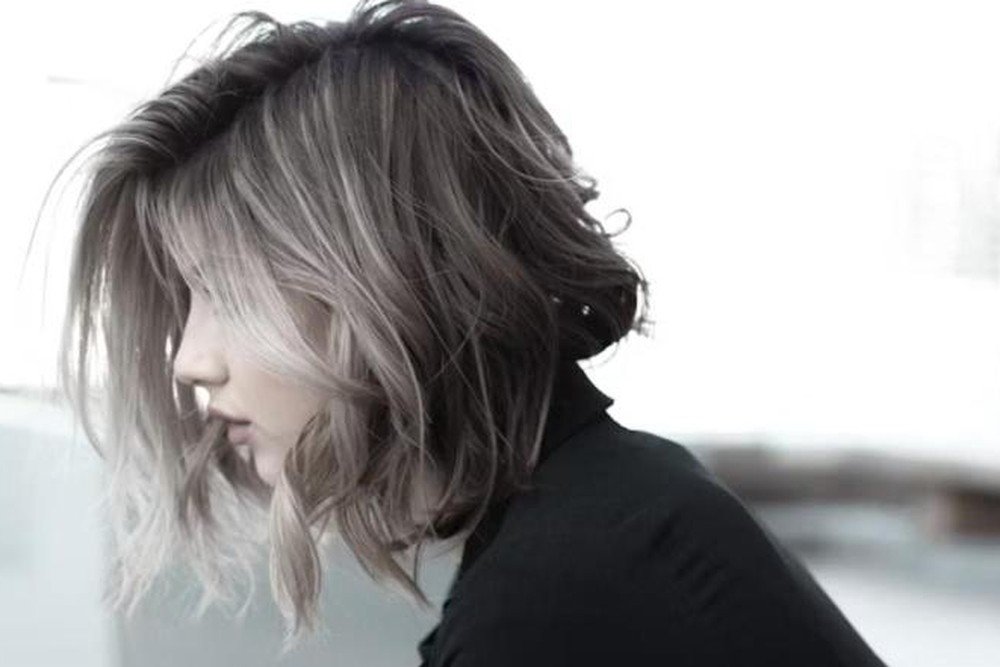
- Bob with Internal Layers — layering cut only on the inside of the cut, keeping a clean outer silhouette with movement underneath.
- Long Bob (Lob) with Feathered Ends — collarbone-length with soft, feathered layers at the tips.
- Curly Shag for Naturally Curly Gray Hair — layers cut specifically to support curl definition rather than weigh it down.
- Blunt Cut with Face-Framing Layers Only — mostly one-length with layering concentrated near the face.
- Short Layered Crop — very short, heavily textured, popular for fine gray hair that has lost density.
- Long Layers with Curtain Bangs — soft, parted bangs blended into longer layers.
- Voluminous Layered Bob for Fine Gray Hair — layering angled to create the appearance of thickness.
- Long Shag with Heavy Face-Framing — a 70s-influenced cut with dramatic layering around the face and lighter layering elsewhere.
- Graduated Bob with Undercut Layers — shorter layers underneath a longer top layer for structure.
- Wavy Layered Lob — cut to enhance a natural or styled wave pattern.
- Pixie with Longer Top Layers — short sides and back with more length and layering left on top.
- Classic Layered Bob, Chin-Length — a timeless cut with moderate internal layering.
- Long Layers with a Deep Side Part — asymmetric parting to soften a round or square face shape.
- Piecey Textured Shag — very deliberate, choppy texturizing throughout for a modern, undone look.
- Layered Cut with a Blunt Fringe — a straight-across fringe paired with softer layers through the rest of the hair.
- Medium-Length Shag with Wispy Layers — fine, feathered layering for a lighter overall silhouette.
- Layered Bob with a Rounded Perimeter — internal layers with a soft, rounded outer edge rather than a sharp line.
- Long Hair with Face-Framing Layers Only — length preserved with layering used only to shape the front.
- Short Shag for Thick Gray Hair — heavier layering to manage volume in dense, coarse gray hair.
- Layered Cut with an Undercut Nape — shorter, layered hair at the nape for a cleaner finish under longer top layers.
- Soft Layered Waves — layers cut to encourage a loose, waved finish when styled.
- Blunt Bob with Textured Ends — a mostly one-length cut with point-cut texturizing at the very ends only.
- Long Layered Cut for Straight Hair — graduated layers that keep straight gray hair from looking flat.
- Face-Framing Pixie with Length on Top — an asymmetric pixie shape with layering concentrated around the crown and face.
- Shoulder-Length Layers with a Wolf Cut Influence — heavier, more textured layering inspired by the wolf-cut trend.
- Rounded Layered Bob for Square Face Shapes — layering used to soften strong jawlines.
- Long Layers with Minimal Face-Framing — even, all-over layering without dramatic pieces around the face.
- Short Layered Bob with a Side-Swept Fringe — a shorter cut with an angled fringe for asymmetry.
- Curly Bob with Internal Layers — layering that supports curl bounce without adding unwanted width.
- Textured Lob with Point-Cut Ends — collarbone-length with deliberately uneven, textured tips.
- Layered Cut with a Middle-Part Fringe — soft, center-parted fringe integrated into longer layers.
- Voluminous Shag for Oval Face Shapes — heavy layering that works with most face shapes but especially oval.
- Short Choppy Pixie — aggressive texturizing for a very low-maintenance, modern shape.
- Long Layers with a Blunt Perimeter — layering only visible when hair moves, with a clean straight edge at rest.
- Layered Cut for Thinning Gray Hair — shorter length with strategic layering to minimize the appearance of thinning.
- Wavy Shag with Curtain Bangs — a longer shag cut paired with soft, parted bangs.
- Rounded Pixie Bob — a hybrid cut between a pixie and bob with soft internal layering.
- Long Layers with Heavy Crown Layering — extra layering at the crown for lift, with length preserved lower down.
- Short Layered Cut with an Asymmetric Fringe — an angled fringe for a more editorial, modern finish.
- Blunt Lob with Subtle Layering — minimal internal layering to keep the cut looking polished rather than textured.
- Curly Pixie with Defined Layers — very short layering that supports tight curl patterns.
- Long Layered Cut with Balayage-Style Grays — a cut paired with dimensional gray-blending color work through the layers.
- Shoulder-Length Cut with Face-Framing and Curtain Bangs — combining two of the most flattering framing techniques in one cut.
- Textured Bob with a Choppy Fringe — a bob with heavy point-cutting throughout and a matching fringe.
- Long Shag with Minimal Layering at the Ends — subtle layering that preserves length and weight while still adding movement.
- Short Layered Cut with a Rounded Nape — a soft, tapered finish at the back paired with textured layers up top.
- Classic Long Layers, No Bangs — a simple, versatile cut that works across most gray hair textures and face shapes.
Choosing Layers for Your Hair Type and Face Shape
| Hair Type / Concern | Recommended Layering Approach |
|---|---|
| Thick, coarse gray hair | Heavier, more aggressive layering throughout to remove bulk and reduce triangular shape |
| Fine or thinning gray hair | Lighter, more strategic layering (often face-framing only) to avoid over-thinning already-fine strands |
| Curly or wavy gray hair | Layers cut dry or with curl-specific techniques so they support the curl pattern rather than cutting across it awkwardly |
| Round face shape | Longer layers with height at the crown, avoiding width at the cheekbones |
| Square face shape | Softer, rounded layers around the jaw to reduce angularity |
| Long face shape | Layers with more width and volume at the sides rather than added length |
Getting to Gray: Cut and Color Approaches
Most people arriving at a gray hair conversation are either fully gray, or partway through transitioning from colored hair, and the right approach differs for each.
Growing out naturally is the lowest-maintenance long-term option but the slowest, often taking six to eighteen months depending on hair growth rate and length. A technique called root smudging, where a colorist blends a soft shadow at the root, can make the growing-out period look more intentional rather than like an obvious regrowth line. Cutting the hair shorter periodically during this phase removes colored ends faster and shortens the overall transition.
Gray blending uses foiled highlights and lowlights in tones close to the client’s natural gray to soften the contrast between gray roots and remaining pigmented hair, rather than requiring a hard stop-and-grow-out approach. This tends to look the most natural throughout the transition, since it mimics the uneven, dimensional way hair actually grays.
All-over color designed for gray coverage, using shades like smokey silver or soft champagne blonde, is an option for people who want to look consistently gray or silver without waiting for natural gray to fully come in, though it requires ongoing root maintenance like any all-over color service.
Why Gray Hair Turns Yellow, and How to Stop It
Gray and white hair lacks the pigment that would otherwise mask discoloration, which makes it especially prone to yellowing from several combined sources: oxidation from environmental exposure, mineral buildup from hard water, UV damage from sun exposure, and residue from styling products or medications. None of this means anything is wrong with the hair, it’s simply a visible side effect of having little to no melanin left to hide it.
A purple-toned shampoo counteracts this using basic color theory: purple sits opposite yellow on the color wheel, so its pigment neutralizes yellow tones on contact. Used about once a week, it keeps gray and white hair looking bright rather than dull or straw-colored; used too often, it can leave hair looking flat or slightly lavender-tinted, so restraint matters more here than with most other hair-care products.
Layered Gray Hair in Dubai’s Climate
Gray hair’s vulnerability to yellowing makes Dubai’s climate a genuine, practical concern rather than a minor one. Near-constant, intense UV exposure accelerates the same oxidation process that causes yellowing in any climate, just faster, so a UV-protectant leave-in spray and reduced direct midday sun exposure matter more for gray hair here than they would in a milder climate. Dubai’s desalinated tap water carries a heavier mineral load than many other water supplies, and that mineral buildup is a direct contributor to the dulling, yellowish cast gray hair can develop over time; a filtered showerhead is a commonly recommended fix specifically for this reason. Chlorinated pool water compounds the same issue, so rinsing with clean water immediately before and after swimming helps limit how much buildup gray hair absorbs.
What a Layered Cut and Gray-Focused Color Service Cost in the UAE
| Service | Typical Price Range (AED) | Notes |
|---|---|---|
| Layered haircut, short to medium length | 150 – 350 | Varies by salon tier and stylist seniority |
| Layered haircut, long hair | 250 – 450 | Longer hair generally takes more cutting time |
| Gray-blending highlights/lowlights | 600 – 1,100 | Foil-based, dimensional technique to soften a gray transition |
| All-over gray/silver color service | 500 – 900 | Full-head color designed for consistent gray or silver coverage |
| Purple/silver toning gloss (standalone) | 250 – 450 | Refreshes brightness and counters yellowing between full services |
Frequently Asked Questions
Do layers make gray hair look thinner or thicker?
It depends on how they’re cut. Layers placed to remove bulk from thick, coarse gray hair make it easier to style and less triangular in shape, while layers on fine or thinning gray hair are usually kept lighter and more strategic, since aggressive layering can make already-fine hair look sparser rather than fuller.
How long does it take to fully transition to gray hair?
Growing it out naturally typically takes six to eighteen months, depending on hair length and growth rate. Techniques like root smudging or gray-blending highlights can make the transition look intentional well before it’s complete, and cutting hair shorter periodically shortens the timeline by removing colored ends faster.
Can purple shampoo damage gray hair if used too often?
It won’t damage the hair structurally, but overuse can leave gray hair looking dull, flat, or with an unwanted lavender or ashy cast. Once a week is the generally recommended frequency, with occasional extra use before a specific event if needed.
Is layered gray hair more or less maintenance than a blunt cut?
A well-cut layered style is usually easier to maintain day to day, since the layers do some of the styling work themselves and disguise regrowth lines during a color or gray transition. The trade-off is that layered cuts typically need trims a bit more often than a single-length cut to keep the shape from growing out unevenly.
Layers solve a problem that’s specific to gray hair: coarser texture, a transition period that doesn’t match at the root, and a look that can read as heavy or flat without some deliberate movement built in. Choosing the right amount and placement of layering for your specific hair type and face shape, understanding the gray-blending and root-smudging techniques available if you’re still transitioning, and taking gray hair’s particular vulnerability to yellowing seriously, especially in a climate as sun-intensive as Dubai’s, is what separates a cut that photographs well once from one that actually holds up day to day.
For related color and care guides, see our articles on ash blonde hair colors and silver purple hair colors.