7 Best Short Haircuts for Women Over 50 (2026 Guide)
By your 50s, hair has usually settled into a texture and color that’s fully its own — often gray or white, often finer than it once was, and often needing less daily fuss than it used to. These seven cuts are built around that reality: real volume-building technique, genuinely low styling time, and cuts that work with white or gray hair rather than around it.
What’s Different About Cutting Hair in Your 50s
Two things tend to matter most by this decade: overall hair density is often noticeably lower than it was 20 years earlier, and texture frequently changes as gray and white hair grows in — it’s commonly coarser and more wiry than the hair it replaces, even while there’s less of it overall. A cut that’s built for thick, uniform hair often won’t sit right on this combination; these are built around it instead.
1. The Pixie With Volume on Top
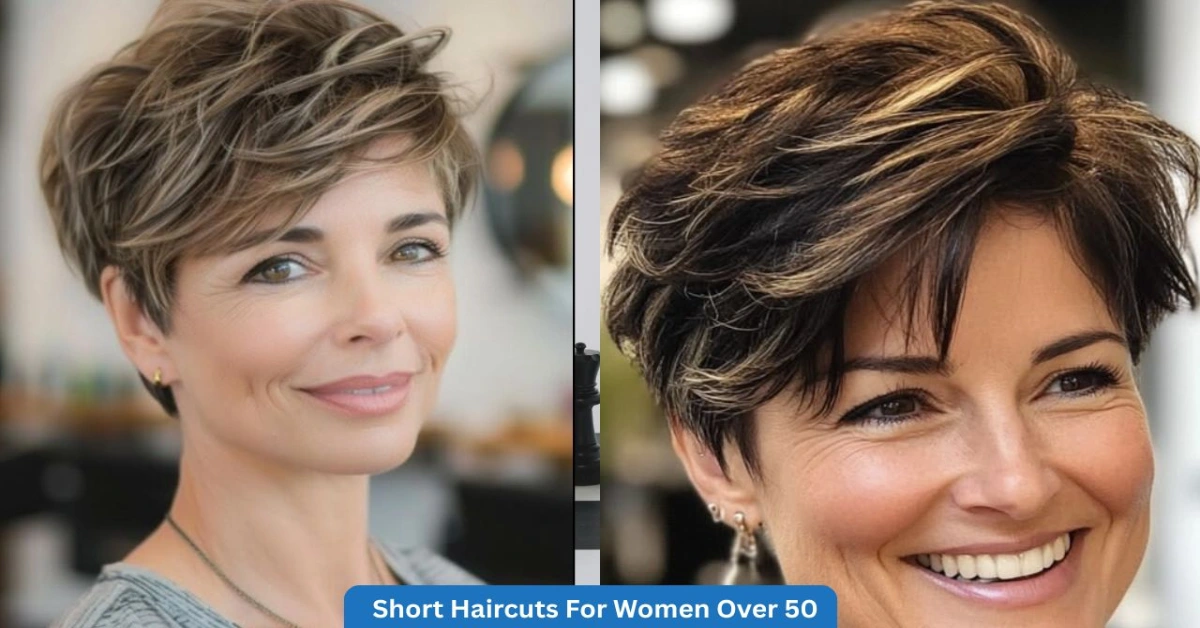
Short at the sides and back, left slightly longer through the crown for a lightweight volumizing product to lift. One of the most reliable ways to create the appearance of density when overall hair volume has decreased.
2. The Textured Crop
A short, choppy cut with disconnected pieces through the top. The irregular lengths create texture and movement that a smooth, uniform cut can’t, which helps finer or gray hair look intentional rather than flat.
3. The Graduated Bob
Shorter at the nape, building length toward the front, with internal layering for volume. A softer, rounder alternative to a sharply angled bob, and one of the more forgiving shapes if hair has thinned unevenly.
4. The Side-Swept Pixie
A pixie with extra length left at the front, swept across at an angle. The swept line softens the whole cut and works well with glasses, since it doesn’t compete with the frame the way a very short, close-cropped style can.
5. The Shag With Curtain Layers
Heavy layering with face-framing pieces around the cheekbones. Genuinely low-maintenance — the layers are cut to fall into place air-dried — and the broken-up shape works especially well with the coarser texture that often comes with gray hair.
6. The Classic Bob With Soft Layers
A chin-length bob with gentle internal layering rather than a completely blunt line. More structured than the shag but still easy to maintain, and a good middle-ground choice for anyone not ready for a very short cut.
7. The Short Crop With Root Lift
A very short, all-over crop styled with volumizing mousse at the roots and a light blow-dry. The most low-maintenance option here, and one that works particularly well if scalp visibility at the crown has become more noticeable — shorter length overall makes thinning far less obvious than longer hair lying flat against the scalp.
Working With Gray or White Hair
Gray and white hair often has a different texture from the hair it replaces — frequently coarser, sometimes drier, and more resistant to holding a curl or wave the way it used to. Purple or blue-toned shampoos help prevent yellowing in white hair, and a lightweight leave-in conditioner helps manage the increased dryness many people notice. Shorter cuts also tend to show off the natural texture of gray hair more clearly than longer styles, which many people find is one of the more appealing parts of wearing it short.
Building Real Volume, Not Just Height
- Apply volumizing mousse at the roots on damp hair, not through the ends — that’s where lift actually needs to happen.
- Air-dry upside down for the first few minutes before finishing with a round brush or diffuser.
- Choose a cut with layers rather than one solid length — layers are what create the appearance of thickness.
- A dry shampoo at the roots between washes adds texture that helps fine hair hold a style longer.
A pixie with volume on top or a textured crop work best. Both use shorter length and layering specifically to create the appearance of density where volume has decreased.
Not a different cut necessarily, but gray hair’s often-coarser texture means cuts with movement and layering — like a shag or textured crop — tend to work better than very sleek, blunt styles that rely on smooth, uniform hair.
A purple or blue-toned shampoo used once a week helps prevent yellowing in white or light gray hair, and a lightweight leave-in conditioner addresses the extra dryness gray hair often has, which keeps it looking healthier and more vibrant.
Final Thoughts
The most useful starting point is an honest read of your current hair — its density, its texture now that any gray has grown in, and how much daily styling time you actually want to spend. Any of these seven cuts adapts well once a stylist sees your hair in person.
For more short-cut ideas, see our guides to short haircuts for women over 40 and short bob haircuts.