Curtain Bangs for Straight Hair: The Real Styling Routine
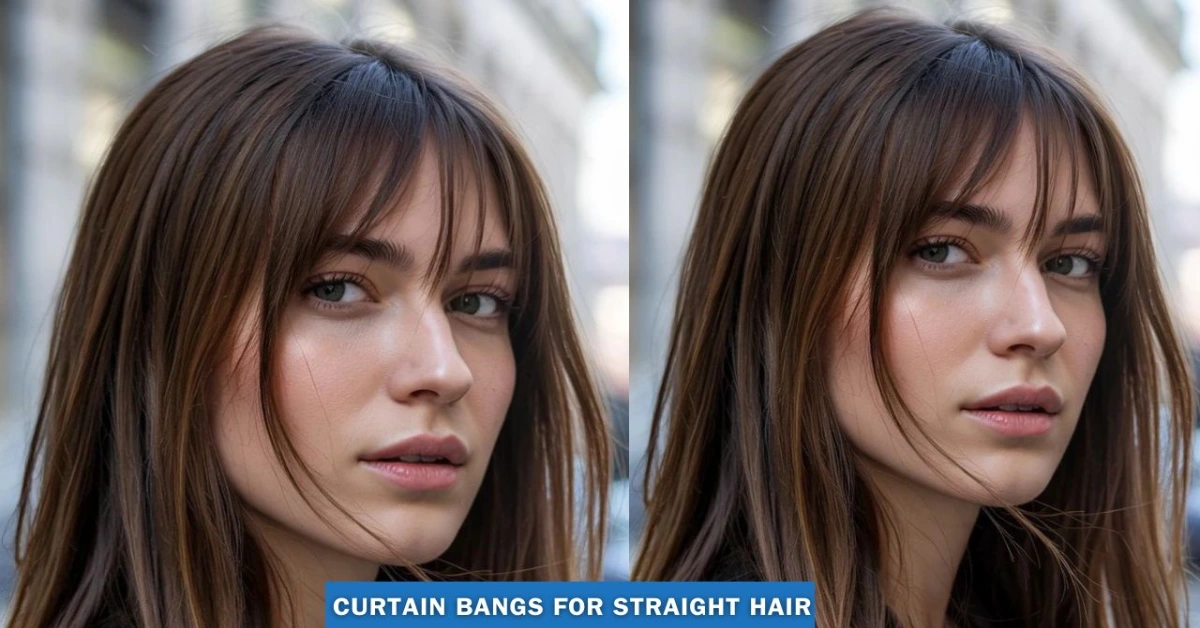
Curtain bangs are a center-parted fringe that’s cut longest at the center and graduates shorter toward the temples, framing the face on both sides rather than sitting as one straight-across blunt line. On straight hair specifically, they need a bit more active styling than on wavy or curly hair, since straight bangs have no natural bend to fall into the curtain shape on their own.
Here’s what actually makes curtain bangs work on straight hair, from the cut itself to the daily styling routine.
In This Guide
Getting the Cut Right
The center section should be the longest part of the fringe — usually reaching to somewhere between the brow bone and cheekbone — with the length graduating shorter as it moves toward each temple. On straight hair, ask specifically for the bangs to be cut dry rather than wet, since straight hair doesn’t shrink the way curly hair does, but a dry cut lets the stylist see exactly how the length will fall and part naturally around the face.
Daily Styling for Straight Hair
Straight hair needs the most active styling of any hair type to hold the curtain shape, since there’s no natural wave pushing the bangs outward and away from the face:
- Blow-dry with a round brush, pulling each side of the fringe outward and slightly under as you dry, rather than straight down. This trains the direction the bangs will fall for the rest of the day.
- Use a small amount of heat protectant before blow-drying or using a curling iron, since bangs are styled with heat more frequently than the rest of the hair and are more prone to damage as a result.
- Finish with a small barrel curling iron or wand if a blow-dry alone doesn’t hold, curling each side of the fringe outward in a loose C-shape rather than a tight curl.
- Set with a light-hold hairspray at the root only, so the bangs keep movement rather than becoming stiff or helmet-like.
Growing Out and Maintaining the Shape
Curtain bangs need a trim every 3-4 weeks to keep the graduated shape — straight hair especially shows unevenness quickly since there’s no natural wave to soften a slightly uneven line. Between trims, straight-hair bangs are more prone to looking flat or pin-straight down the face than wavy or curly bangs, so a bit of texturizing spray at the roots before styling helps them hold shape through the day.
Frequently Asked Questions
Yes, but fine straight hair may need a texturizing spray at the root before styling to keep the bangs from looking flat, since fine hair holds a round-brush blowout shape for a shorter time than thicker hair.
Every 3-4 weeks to maintain the graduated shape — straight hair shows unevenness in the line faster than wavy or curly hair, which naturally hides small irregularities.
They can, but they generally won’t fall in the outward curtain shape without a round-brush blow-dry or a quick pass with a curling iron, since straight hair has no natural wave to push the bangs away from the face.
Most commonly cut to fall between the brow bone and cheekbone at the center, graduating shorter toward the temples — though the exact length depends on face shape and how much forehead coverage is wanted.
Bangs cut to brow or cheekbone length typically take 4-6 months to blend into the rest of the hair, though clip-ins or a side-sweep can disguise the growing-out phase in the meantime.
Final Thoughts
Curtain bangs on straight hair take more daily effort than the trend often gets credit for — a round-brush blow-dry is essentially non-negotiable if you want them to fall outward instead of straight down the face. If that daily styling time isn’t appealing, ask your stylist about a slightly shorter, wispier version that’s more forgiving of an air-dry. For more on general men’s and women’s fringe styles, see our guide to fringe haircuts.