How to Get Rid of Carpet Beetles?
Quick answer: Wash or dry-clean infested fabric, seal anything you can’t wash in a bag in the freezer for two weeks, vacuum every edge, crevice, and closet daily for a week (discarding the bag outside each time), and treat cracks and baseboards — not the carpet fibers themselves — with an insecticide containing permethrin, bifenthrin, or lambda-cyhalothrin if the infestation persists past two weeks of cleaning. Carpet beetle larvae can survive 70 days to over a year depending on temperature and food, so a single clean rarely finishes the job — this takes a sustained routine, not one deep-clean session.
If you’re not yet sure whether what you’re dealing with is actually carpet beetles — as opposed to bed bugs or another pest — our guide to identifying carpet beetle signs covers that first. This guide picks up from there: what actually gets rid of them once you’ve confirmed that’s what you have.
Why One Cleaning Session Never Finishes the Job
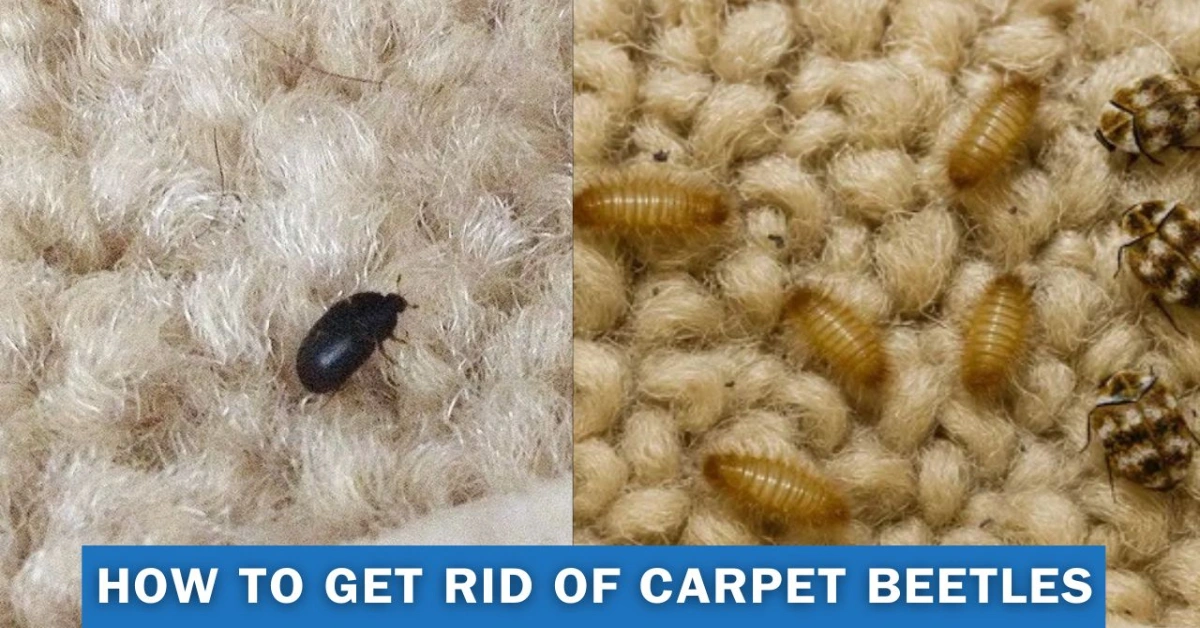
Carpet beetle larvae molt 8 to 17 times before becoming adults, and that larval stage alone can last anywhere from about 70 days to more than a year, depending on temperature and how much food (natural fiber, pet hair, skin cells) is available. That’s the single biggest reason a one-time vacuum and spray doesn’t work: eggs laid in a closet corner or under a sofa can still be hatching weeks after you think the problem is solved.
The fix isn’t a stronger product — it’s a sustained routine that removes food sources and interrupts the life cycle at every stage, not just the adults you can see near windows.
Step 1: Deal With Fabric First — Wash, Dry-Clean, or Freeze
This step matters more than any spray, because fabric is where eggs and larvae actually live and feed.
- Washable items (clothing, bedding, small rugs): launder on the hottest setting the fabric allows, or take it to be dry-cleaned. Heat kills eggs and larvae at every stage.
- Non-washable items (wool sweaters, delicate textiles, some rugs): seal in a plastic bag with as much air pressed out as possible and place in a household freezer for a full two weeks. Let the bag return to room temperature before opening it, still sealed — this prevents condensation from soaking into the fabric.
- Large carpets and curtains you can’t remove: steam cleaning (see our steam cleaning guide) combines heat and extraction, which handles both the insects and any trapped skin cells or pet hair they’re feeding on.
Step 2: Vacuum Like You Mean It — Daily, Not Weekly
A single weekly vacuum won’t outpace a life cycle that can run over a year. For the first 7–10 days of active treatment:
- Vacuum slowly along every wall edge, baseboard, and the perimeter where carpet meets furniture legs — larvae cluster in these undisturbed seams far more than in open floor area.
- Pull furniture away from walls at least once during this period to reach the floor and baseboards behind it.
- Vacuum inside closets, under beds, and along shelf edges — not just visible floor space.
- Discard the vacuum bag or empty the canister outside the house immediately after each session. Beetles and larvae vacuumed up can survive inside a bag and simply crawl back out later if left indoors.
Step 3: Treat Cracks and Edges — Not the Carpet Itself
This is the step people get backwards. Spraying pesticide directly onto carpet fiber is largely wasted effort and unnecessary chemical exposure — the goal is the gaps and voids where beetles breed and hide, not the visible surface.
- Diatomaceous earth (food-grade) is a lower-toxicity option: a thin layer worked into baseboard cracks, under furniture, and along closet edges dehydrates larvae on contact and stays effective for weeks as long as it stays dry.
- For persistent infestations, an insecticide containing permethrin, bifenthrin, or lambda-cyhalothrin applied to cracks, crevices, and closet interiors (following label instructions exactly) is the standard professional-grade approach — again targeting voids and edges, not fabric surfaces people or pets will contact directly.
- Cedar blocks and cedar oil are a reasonable supplementary deterrent in closets and storage, but treat them as prevention, not treatment — they won’t resolve an active infestation on their own.
Step 4: Remove What’s Feeding Them
Larvae feed on keratin — found in wool, silk, feathers, pet hair, and even accumulated human skin cells and dander. Cutting off the food supply is as important as killing the insects you can see.
- Clean pet resting areas and under furniture regularly — trapped pet hair is one of the most common hidden food sources.
- Don’t store worn (not freshly laundered) clothing for long periods — body oils and skin cells left in fabric are exactly what attracts and feeds larvae.
- Store off-season blankets, wool items, and rugs in airtight, sealed containers rather than open bins or garment bags.
When to Call a Professional
Bring in pest control if any of these apply: the infestation has spread across multiple rooms, you’re still seeing new damage after two full weeks of the routine above, the carpet involved is a large or high-value rug that’s impractical to wash or freeze, or anyone in the household is reacting to larval hairs (skin irritation is common and isn’t dangerous, but it’s unpleasant enough that faster resolution is worth the cost). Professional treatment reaches wall voids, subfloor gaps, and other spaces that household cleaning simply can’t access.
Frequently Asked Questions
How long does it take to get rid of carpet beetles completely?
Expect at least 2–4 weeks of consistent treatment, not a single session. Because larvae can survive 70 days to over a year depending on conditions, eggs already laid before you started cleaning may still hatch during that window — which is why daily vacuuming and repeat inspection matter more than any one product you use.
Do I need to throw away an infested carpet?
Almost never, if you catch it early. Steam cleaning plus consistent vacuuming and crack/crevice treatment resolves the large majority of household infestations. Full replacement is only worth considering if the carpet already has extensive fiber damage from long-term, unaddressed larval feeding — see our guide on signs it’s time for new carpet if that’s the situation you’re in.
Is diatomaceous earth safe to use around pets and kids?
Food-grade diatomaceous earth is considered lower-toxicity than most conventional insecticides, but it’s still a fine dust that can irritate lungs if inhaled in quantity. Apply it into cracks and crevices rather than open floor areas, and keep pets and children away from treated areas until settled.
Can carpet beetles bite people?
No — carpet beetles and their larvae don’t bite. Skin irritation some people experience comes from contact with the larvae’s tiny hairs, not from bites. If you’re seeing bite-like marks, that’s a stronger indicator of bed bugs than carpet beetles — our identification guide covers how to tell the difference.
Editorial note: Life-cycle figures, freezing duration, and insecticide guidance in this article are drawn from university extension entomology sources (Rutgers NJAES) and current pest-control industry practice as of 2026. Always follow product label instructions for any insecticide, and consult a licensed pest control provider for infestations that don’t resolve with home treatment.