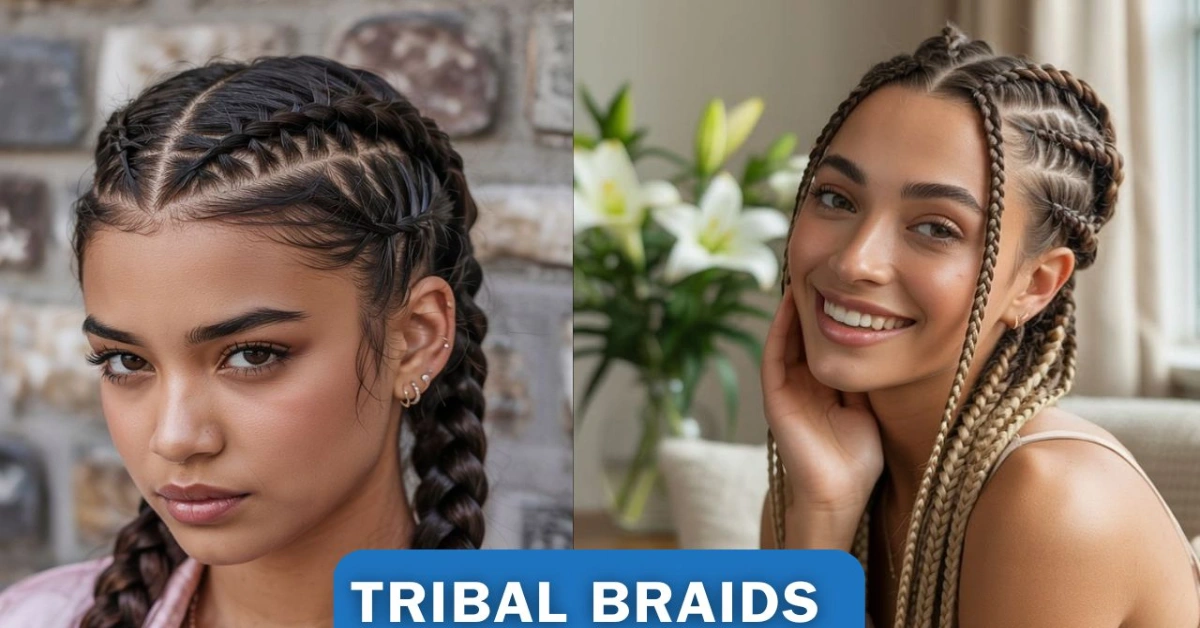
6 Tribal Braid Patterns (Zigzag, Swirl, and More)
“Tribal braids” specifically refers to large, geometric cornrow patterns — curved, zigzagged, or spiraled rather than straight rows — usually left voluminous and down rather than tightly braided flat like traditional cornrows. That geometric base is what separates it from related styles like Fulani braids or Ghana braids, which use straighter, more uniform rows.
Below are 6 real tribal braid patterns and what makes each one distinct.
In This Guide
6 Tribal Braid Patterns
1. Zigzag Tribal Braids
Cornrows are parted in a sharp zigzag line rather than straight rows before braiding, creating an angular geometric pattern across the scalp. One of the most recognizable tribal braid layouts.
2. Swirl (Spiral) Tribal Braids
Parts curve in a spiral pattern from the crown outward, rather than running in straight or zigzagged lines. More time-intensive to part correctly but creates a distinct, circular visual effect.
3. Boho Tribal Braids
The geometric cornrow base is combined with loose, curly pieces left out around the face and blended through the braided sections. Softer and less structured-looking than a fully braided tribal style.
4. Jumbo Tribal Braids
The same geometric parting done in larger, thicker sections rather than thin ones, resulting in fewer, bolder braids. Installs faster than thin tribal braids but makes a more dramatic visual statement.
5. Triangle-Part Tribal Braids
Each section is parted into a triangle rather than a square or rectangle before braiding, which reduces visible scalp gaps between braids as they grow out and gives a denser overall look.
6. Colored Tribal Braids
Any of the patterns above done with pre-colored braiding hair — often a bold or contrasting shade — to make the geometric pattern itself more visually distinct rather than relying on beads or accessories.
Frequently Asked Questions
The parting pattern. Regular cornrows run in straight, parallel rows; tribal braids use curved, zigzagged, or spiraled parts to create a bolder geometric pattern across the scalp.
Typically 4-6 weeks, similar to other cornrow-based protective styles, though jumbo tribal braids may need to come out slightly sooner since the larger sections show new growth more visibly.
Not inherently — pain comes from excessive tension, not the pattern itself. A properly installed tribal braid, regardless of pattern, shouldn’t cause pain or headaches during or after installation.
Jumbo tribal braids install fastest since fewer, larger sections need less parting time than thin zigzag or spiral patterns, which require more precise, time-intensive sectioning.
Yes — like most braided styles, tribal braids can be gathered into a ponytail, bun, or half-up style once installed, though the geometric pattern is most visible when worn down.
Final Thoughts
The pattern is what defines a tribal braid style more than length, color, or accessories — a zigzag, swirl, or triangle part is what separates it from a straight-row style like Fulani or Ghana braids. Pick a pattern based on how much time you have (jumbo sections install fastest, spirals take longest) and how bold a statement you want. For more braided protective styles, see our full braided hairstyles guide.