Baby and Toddler Boy Haircuts: A Gentle First-Cut Guide
The first haircut is a bigger milestone for parents than for babies, who mostly just want the clippers to stop buzzing near their ears. This guide covers what actually matters for baby and toddler boy haircuts, roughly ages six months to four years: when to book that first cut, how to keep a squirmy toddler calm in the chair, and which styles hold up on soft, still-developing hair without needing daily effort from you.
When Should a Baby Get Their First Haircut?
There is no fixed age requirement, since it depends entirely on how much hair your baby has and how it is growing. Many parents wait until somewhere between 12 and 18 months, once there is enough hair to actually shape, though some babies have a full head of hair by six months and others still have very little at two years old. The better signal than age is whether hair is getting into your baby’s eyes, curling awkwardly at the neckline, or genuinely bothering them, rather than a specific birthday.
If your toddler already has a sibling or parent who gets regular haircuts, bringing them along to watch a cut a week or two before their own first appointment helps make the chair, the sounds, and the general routine familiar rather than unexpected.
Scissors or Clippers: What Actually Works Best for a First Cut
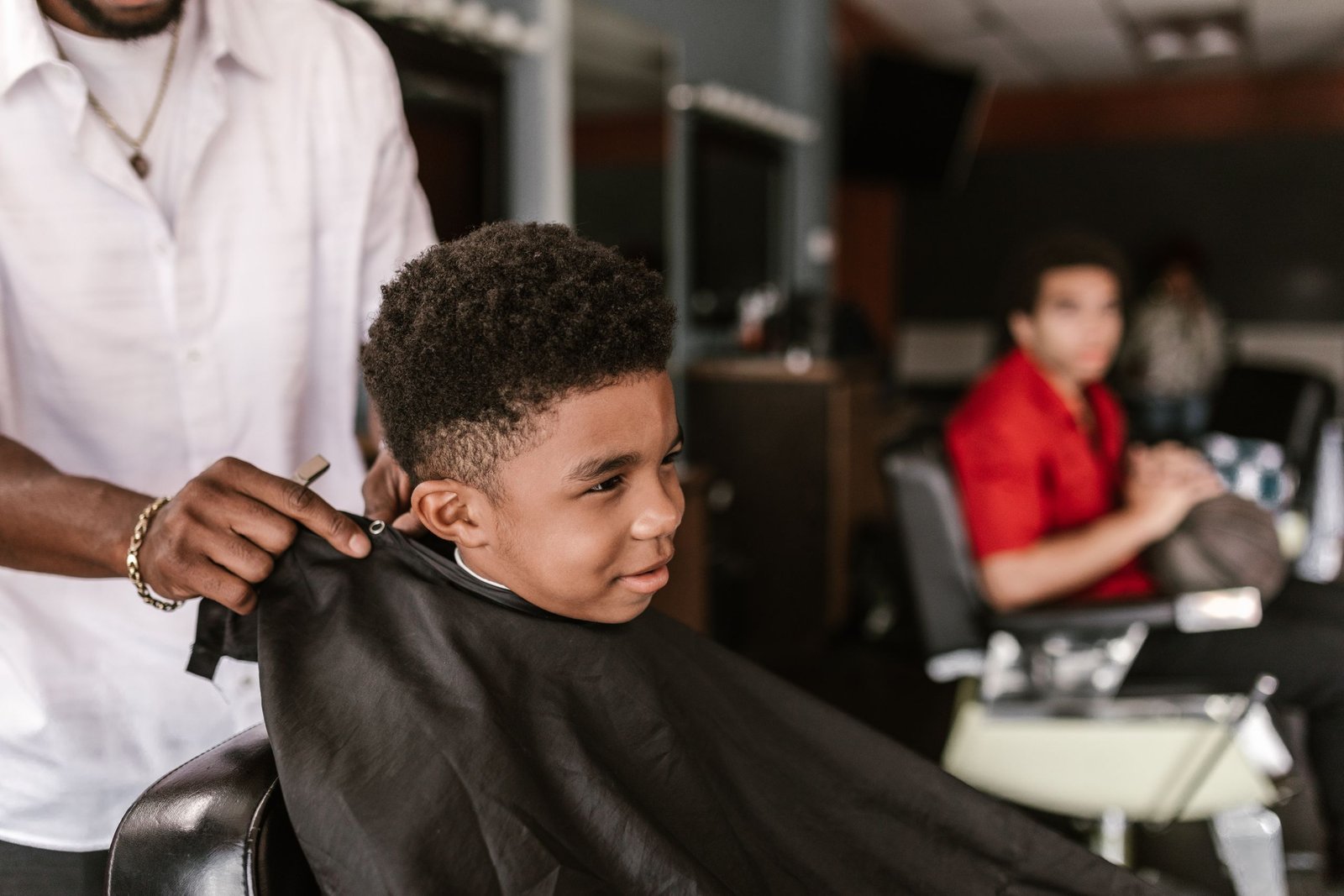
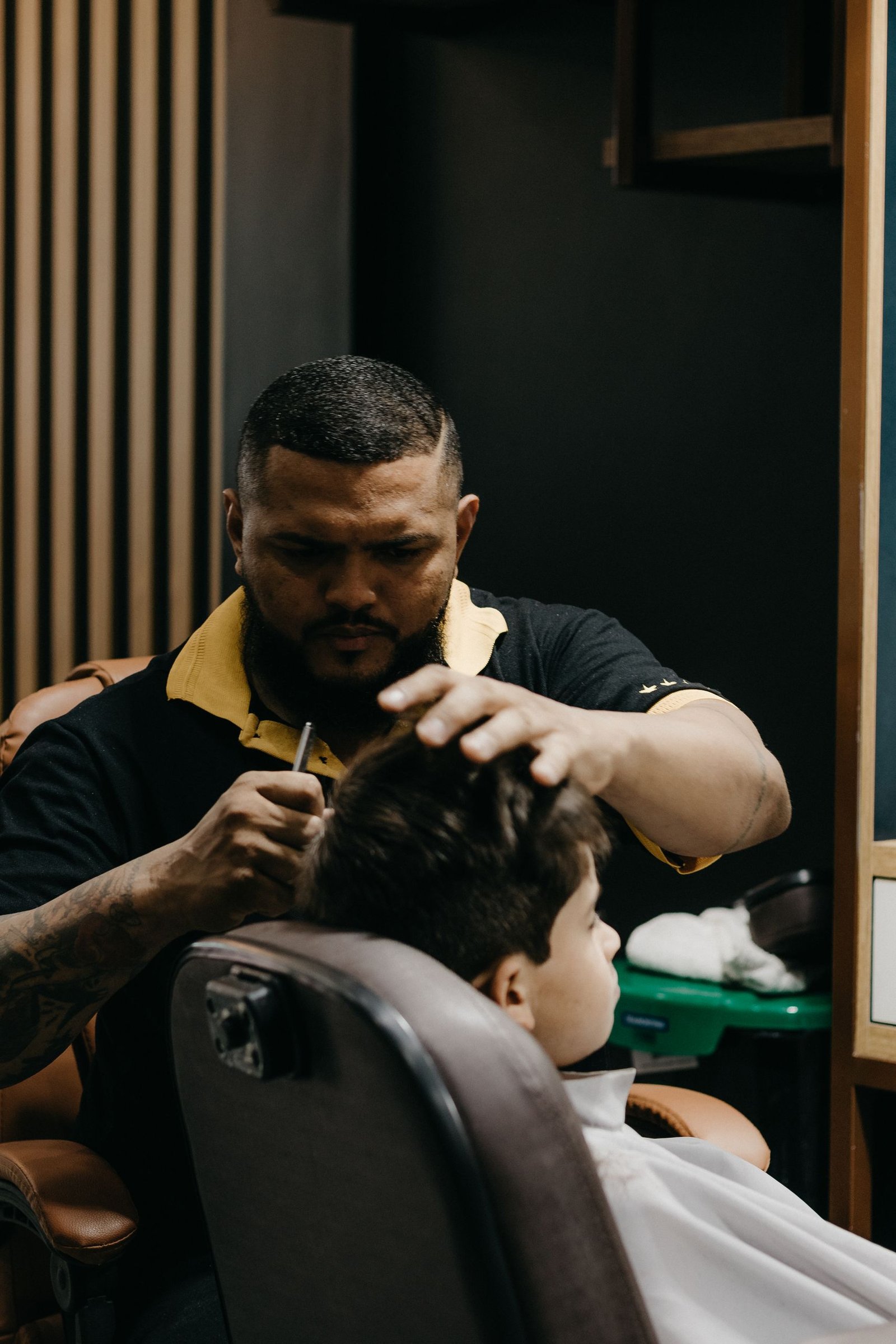
For a genuine first haircut, a scissor-only trim is usually the easier starting point. The buzzing vibration and the sensation of clippers against the scalp and neck are common triggers for distress in children under five, while scissors are quieter and less physically startling. If your toddler tolerates the appointment well, clippers can be introduced gradually in later visits, often starting with just the neckline or a light trim around the ears rather than a full clipper cut.
A few practical tips that consistently help:
- Book a morning appointment after a full feeding, when your toddler is rested and not hungry.
- Bring a favorite toy, book, or allow a short video on a phone or tablet to keep them still and distracted.
- Ask the stylist to keep the cut soft around the ears and leave the neckline natural rather than sharply lined, which reduces the sensation toddlers tend to react to.
- Keep the first cut simple. A trim to even things out and get hair out of the eyes is a reasonable goal; a precise, styled look can wait for a later visit once your child is more comfortable in the chair.
Haircut Styles for Babies and Toddlers
At this age, comfort and low maintenance matter far more than a specific trend. The styles below all work well on soft baby and toddler hair without requiring daily styling from a parent.
Simple Scissor Trim
An all-over light trim that keeps the natural shape of the hair while tidying the ends and getting hair away from the eyes. This is the safest, gentlest option for a true first haircut and works on any hair type.
Soft Side Part
A light part with slightly shorter sides, styled with fingers rather than product. Works well for straight or wavy hair and reads as neat without needing a comb-over routine.
Curly Crop
For toddlers with curly or coily hair, a light all-over trim that keeps the curl pattern intact rather than cutting against it. Preserves natural texture and avoids the frizz that can come from cutting curls too short or unevenly.
Gentle Fringe Trim
Just enough of a trim across the front to keep hair out of the eyes, without a full cut elsewhere. A good option for toddlers who are not ready for a longer appointment but genuinely need hair managed for visibility and comfort.
Light Crew Cut (For Toddlers Who Tolerate Clippers)
Once a toddler is comfortable with clippers, a simple crew cut, short sides and back with slightly more length on top, is a practical next step that grows out evenly and needs minimal styling between trims. If your toddler is moving into more active, school-age haircut territory, our guide to low-maintenance haircuts for boys covers styles built specifically for sports, sweat, and swimming.
Caring for Baby and Toddler Hair Between Cuts
Baby and toddler hair and scalp are more sensitive than adult hair, so a gentle approach matters as much between cuts as during them.
- Use a mild, tear-free shampoo formulated for babies or toddlers rather than an adult formula, and wash no more than two to three times a week unless hair gets visibly dirty or sweaty.
- A light, leave-in conditioner or detangling spray makes brushing curly or longer hair far less uncomfortable for a squirmy toddler.
- If you notice flaky, greasy patches on the scalp, this is commonly cradle cap, which is harmless and usually resolves on its own; a soft brush and gentle washing helps loosen flakes, but persistent or spreading patches are worth mentioning to a pediatrician.
- Trim bangs and fringe every four to six weeks to keep hair out of the eyes between full haircuts, without needing a complete cut each time.
For toddlers with easy-to-brush hair between cuts, our guide to choosing hair clippers is useful once you are ready to try light trims at home between salon visits.
Common Mistakes to Avoid
| Mistake | Why it matters |
|---|---|
| Scheduling the first cut during nap time or right before a feeding | A tired or hungry toddler is far more likely to be uncooperative in the chair |
| Starting with clippers on a first-time visit | The noise and vibration are common triggers for distress in children under five |
| Cutting curly hair too short | Can disrupt the natural curl pattern and lead to frizz as it grows back out |
| Choosing a style that needs daily product or styling | Toddlers cannot maintain a routine themselves, so the cut should look neat while growing out |
Frequently Asked Questions
What is the best age for a baby’s first haircut?
There is no strict age requirement. Many parents wait until 12 to 18 months, but the better signal is whether hair is getting in your baby’s eyes or bothering them, rather than a specific birthday.
Should a baby’s first haircut use clippers or scissors?
Scissors are usually the gentler starting point, since the noise and vibration of clippers commonly cause distress in children under five. Clippers can be introduced gradually once your toddler is comfortable in the chair.
How often should a toddler’s hair be trimmed?
A light trim around the bangs or fringe every four to six weeks keeps hair out of the eyes, with a fuller cut every couple of months depending on how quickly your toddler’s hair grows.
Is it normal for a toddler to cry during their first haircut?
Yes, it is common. Bringing a familiar toy or allowing a short distraction, keeping the appointment short, and choosing a gentle scissor trim over clippers all help reduce distress for most toddlers.
Final Thoughts
A baby or toddler’s first haircuts are less about achieving a specific look and more about building a positive, low-stress routine that makes every future visit easier. Start gentle, keep the first few cuts simple, and let your child’s comfort guide the pace rather than a particular style or trend.