34 Hottest Pink Hair Color Ideas: From Pastels to Neons (2026)
Pink hair has moved well past the “bold statement only” phase. In 2026, it ranges from a barely-there champagne blush that reads as natural in most lighting to a fully saturated magenta that stays loud from every angle. The tricky part is not finding a shade you like in a photo, it is finding one that suits your skin tone, works with your current hair color and condition, and that you are prepared to maintain, since pink fades faster than almost any other hair color.
This guide breaks down 34 pink hair color ideas by depth and technique, then covers the maintenance side most color roundups skip: how to pick a shade based on your skin tone, how fast pink actually fades, and what it takes to keep it looking fresh between salon visits.
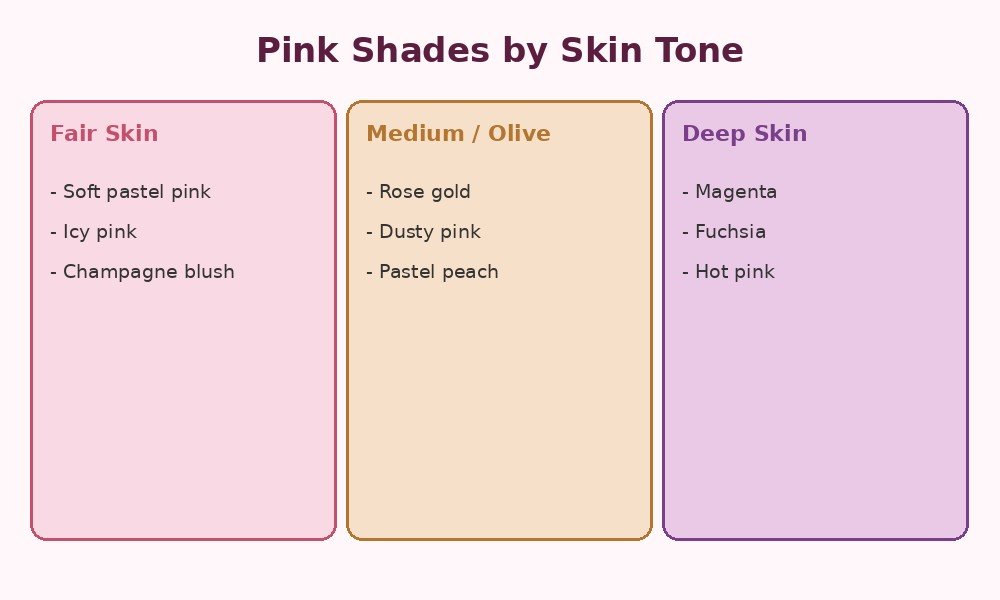
Choosing a Pink Shade for Your Skin Tone
Pink hair color sits on a spectrum from cool-toned to warm-toned, and matching that undertone to your skin makes the difference between a shade that looks flattering and one that washes you out.
- Fair skin generally suits soft pastels, blush tones, and cool-toned pinks, which blend rather than compete with lighter skin.
- Medium and olive skin tones tend to carry rose gold, dusty pink, and warmer coral-leaning shades particularly well.
- Deep skin tones often look striking in more saturated colors like magenta, fuchsia, or hot pink, since these have enough depth to stand out rather than fade into the hair.
These are starting points rather than strict rules. A colorist can adjust any shade’s warmth or coolness during formulation, so if a specific pink in this list appeals to you but the undertone feels off, ask your stylist whether it can be shifted warmer or cooler to suit you.
34 Pink Hair Color Ideas
Pastel and Soft Pinks
- Pastel Pink – A soft, muted pink that reads as dreamy rather than costume-like, one of the most requested pink shades because it suits nearly every skin tone.
- Icy Pink – A cool-toned pale pink with a slightly silvery cast, closer to a tinted platinum than a true pink.
- Champagne Blush – A barely-there shade blending gold and rosy tones, subtle enough to pass as a natural highlight in most lighting.
- Pastel Peach – A warm, muted option that leans closer to peach than pink, flattering on warmer skin tones.
- Rose Quartz – A cool, dusty pink named for the crystal, softer than bubblegum but with more presence than a true pastel.
- Cotton Candy Pink – A light, slightly saturated pink often paired with equally soft blues or lavenders for a two-tone effect.
Bold and Saturated Pinks
- Bubblegum Pink – A bright, playful, medium-saturation pink that has stayed one of the most popular vivid shades for years.
- Barbie Pink – A high-saturation, slightly warm pink with strong visual impact, best suited to those comfortable with a lot of upkeep.
- Flamingo Pink – A vibrant coral-leaning pink, warmer than Barbie pink but just as bold.
- Fruit Punch – A bright, energetic red-pink that can be adjusted lighter or darker depending on how bold you want the finish.
- Magenta – An electric, cool-toned pink-purple that tends to fade fastest of all pink shades and needs the most frequent refreshing.
- Watermelon Hair – Soft pink blended with pastel green sections, a two-tone look that references the fruit’s color combination.
Dimensional and Blended Techniques
- Pink Balayage – Hand-painted pink woven through a natural base color, a lower-maintenance way to try pink without a full head of color.
- Pink Ombre – A gradient running from a natural or platinum root down to light pink ends, growing out more gracefully than an all-over color.
- Babylight Pink – Very fine, delicate pink highlights woven through the hair for subtle shimmer rather than a color change.
- Peekaboo Pink – A hidden pop of pink placed underneath the top layer of hair, visible only when hair is tucked back or moves.
- Face-Framing Pink Highlights – Pink placed strategically around the face, drawing attention to the features without committing to full color.
- Chunky 90s-Style Pink Streaks – Bold, wide streaks of pink against a natural base, a throwback look that has returned as a low-commitment way to wear vivid color.
Pink Paired with Other Colors
- Pink and Blue Roots – A cotton candy-inspired combination blending pink and pale blue from the root outward.
- Silver and Pink – A cool, metallic-leaning combination that pairs well with fair to medium skin tones.
- Purple-Pink Blend – A transitional shade sitting between magenta and violet, popular for those who cannot decide between the two colors.
- Gemini Pink – A striking half-and-half style, with one side left in a natural or blonde base and the other dyed a saturated bubblegum pink.
- Pink and Platinum – Soft pink over a platinum base, letting the pink read lighter and more transparent than it would on darker hair.
Short and Textured Pink Styles
- Pink Buzzcut – Vivid, saturated pink on a closely cropped cut, a look that shows the color at maximum intensity since there is minimal length to dilute it.
- Light Coral Pixie – A softly washed-out coral-pink shade on a short pixie cut.
- Pink Bob – A blunt or lightly layered bob in a solid pink shade, one of the lower-maintenance ways to wear bold color since regrowth is less visible on shorter styles.
Understated and Everyday Pink
- Dusty Pink – A muted, slightly brown-toned pink that reads as a natural-adjacent color rather than a fashion shade.
- Soft Pink Hue – An all-over, low-saturation pink meant to look soft and cohesive rather than graphic.
- Rose Gold – A warm blend of pink and gold tones, one of the most office-friendly vivid colors because of how closely it can resemble a natural warm brunette in low light.
- Dark to Bright Pink Ombre – A deeper root blending into a bright pink through the mid-lengths and ends, offering contrast without needing full-head upkeep.
- Faded Pink Ombre – An intentionally soft, “grown-out” looking ombre that reads as low-maintenance by design.
- Pink Platinum – A cool, icy platinum base with a pink cast running through it rather than a distinct pink color.
- Pink Champagne – A warm, muted blend of blonde and pink, sitting between champagne blonde and rose gold.
- Two-Toned Pink – Two distinct pink shades, usually a lighter and darker tone, layered through the hair for depth.
How Long Does Pink Hair Color Last?
Pink is a fashion color rather than a permanent dye in most formulations, which means it fades gradually with every wash rather than growing out cleanly like a permanent brunette or blonde color would. Bright, saturated shades like magenta and bubblegum pink typically start noticeably softening within two to four weeks, while pastel and dusty pink tones fade more gracefully since a lighter starting point makes the fade less obvious. UV exposure speeds this up significantly, fading pale pinks toward white and pushing warmer pinks toward a brassy tone, so daily sun exposure (a real factor in a hot, sunny climate) will shorten how long any pink shade stays true.
Maintaining Pink Hair Color
- Wash less often, and always with cool water. Hot water opens the hair cuticle and accelerates color loss, while cooler water helps seal it.
- Use a color-depositing conditioner or mask in your shade once a week in place of your regular conditioner, which redeposits a small amount of pigment with every use and extends the color between salon visits.
- Choose sulfate-free, color-safe shampoo. Sulfates strip color faster than gentler cleansers.
- Protect hair from direct sun with a hat or scarf during long outdoor exposure, since UV is one of the fastest ways pink fades or shifts warm.
- Limit heat styling and use a heat protectant on the occasions you do use hot tools, since heat both fades color and dries out hair that is often already lightened to accept pink dye.
- Book a “gloss” refresh between full color appointments rather than waiting for a complete recolor, which keeps the shade even without the cost or hair stress of starting over.
Is Pink Hair Damaging?
Pink dye itself is not usually what causes damage. Most pink shades, especially bright or pastel ones, require pre-lightening the hair to a pale blonde base first so the color shows true, and that lightening process is the step that carries the most risk to hair condition. If your hair is already dark, ask your colorist honestly about how many sessions the lightening will take and whether your hair’s current condition can handle it in one visit or needs to be spread out with strengthening treatments in between.
Frequently Asked Questions
Does pink hair suit every skin tone?
Some shade of pink suits nearly every skin tone, but the specific pink matters. Cooler, softer pastels tend to flatter fair skin, warmer rose golds and dusty pinks work well on medium and olive tones, and deeper, more saturated pinks like magenta and fuchsia tend to stand out best against deep skin.
Do I need to bleach my hair to go pink?
Most pink shades need a lightened base to show true, especially pastels and bright saturated pinks. Darker, more muted options like dusty pink or a subtle balayage can sometimes be achieved with less lightening, but a consultation with a colorist is the only reliable way to know what your specific hair needs.
How often will I need to touch up pink hair?
Root touch-ups are typically needed every four to eight weeks depending on how fast your hair grows and how much contrast you are comfortable seeing at the root. Color refreshes for fading through the lengths can be needed as often as every two to three weeks for bright, saturated shades.
Can I dye pink hair back to a natural color?
Yes, though pink pigment can be stubborn to fully remove, particularly from previously lightened hair. A colorist will usually use a color remover or a series of toning sessions rather than attempting to cover it directly, since pink can shift a new color if it is not neutralized first.
Will pink hair color work on dark hair without lightening?
A subtle, low-maintenance option like a peekaboo panel or a small balayage section can sometimes be lightened just in that area rather than requiring an all-over process, which limits both the cost and the damage compared to lightening a full head.
Final Thoughts
Pink hair works best when the shade is chosen around your skin tone and your willingness to maintain it, not just how it looks in someone else’s photo. Start with a softer, more forgiving shade like a balayage or a dusty pink if you are new to fashion color, and reserve the boldest saturated pinks for when you know you can commit to the refresh schedule they need. If you are drawn to bold color generally, our guides on silver purple hair colors and blonde ombre hair color ideas cover two more directions worth comparing before you commit to a shade.