10 Best Kitchen Flooring Ideas for a Modern Home (2026 Guide)
The kitchen is the busiest room in most homes, and in a Gulf home it works even harder. Meals get cooked there, everyone ends up gathering there, and the floor underneath has to cope with sand tracked in from outside, constant mopping, and the daily swing between blasting air conditioning and outdoor heat.
A good modern kitchen floor needs to look sharp, hold up to that kind of use, clean up fast, and feel comfortable underfoot. It also has to match the rest of your home’s style — no small ask.
Homeowners across Dubai, Abu Dhabi, and the wider UAE have more options than ever, from warm wood-look planks to sleek stone-inspired tile, spanning nearly every budget. Availability and pricing here also differ from what you’ll see in flooring guides written for other climates, which is where a lot of generic advice falls short.
Quick answer: for most UAE kitchens, large-format porcelain tile and wood-look porcelain tile are the safest all-round choice — both shrug off humidity, heat, and heavy foot traffic while still looking warm and current. Real hardwood needs more care in this climate; luxury vinyl plank is the best fully waterproof option on a tighter budget. The full breakdown, with UAE-specific pricing, is below.
This guide was refreshed for 2026 with a UAE-specific comparison table, current AED cost ranges cross-checked against local supplier price lists, climate-specific notes for every material, and an expanded FAQ covering the questions homeowners here ask most.
In This Guide
- Quick comparison: all 10 floors at a glance
- 1. White oak hardwood flooring
- 2. Large format porcelain tiles
- 3. Luxury vinyl plank flooring
- 4. Polished concrete flooring
- 5. Marble-look tiles
- 6. Herringbone pattern flooring
- 7. Natural stone flooring
- 8. Terrazzo flooring
- 9. Matte finish tiles
- 10. Wood-look porcelain tiles
- How to choose the right kitchen flooring
- What kitchen flooring costs in the UAE
- Kitchen flooring trends for 2026
- FAQ
Kitchen Flooring At A Glance: Quick Comparison
A fast side-by-side before the detail. “Cost tier” reflects material only, not installation, and is a general guide, not a quote — always confirm current pricing with a local supplier.
| Flooring | Humidity/Water Resistance | Durability | Maintenance | Cost Tier (UAE) | Best For |
|---|---|---|---|---|---|
| White oak hardwood | Low–Medium | High (if finished well) | Medium | Mid–High | Low-mess, climate-controlled homes |
| Large format porcelain | High | Very High | Low | Mid (≈AED 35–200/sqm) | Busy family kitchens, villas & apartments |
| Luxury vinyl plank | Very High | Medium–High | Low | Budget | Rentals, quick renovations, tight budgets |
| Polished concrete | High | Very High | Low | Mid | Modern, minimalist apartments & lofts |
| Marble-look porcelain | High | High | Low | Mid (≈AED 35–200/sqm) | Villas wanting a marble look, low upkeep |
| Herringbone pattern | Depends on material used | Depends on material used | Depends on material used | Varies | Elevating a standard material |
| Natural stone | Medium (needs sealing) | High | Medium–High | High (≈AED 80–600/sqm) | Statement villa kitchens |
| Terrazzo | High | Very High | Low | Mid–High | Heritage-inspired or bold modern homes |
| Matte finish tiles | High | High | Low | Mid | Dust- and sand-prone households |
| Wood-look porcelain | High | High | Low | Mid (≈AED 35–200/sqm) | Wood look near sinks & wet zones |
1. White Oak Hardwood Flooring
White oak remains one of the most requested kitchen floors, and it’s easy to see why. It reads clean and natural, which lets it slot into almost any design style without a fight.
The warm grain adds coziness to a room that can otherwise feel clinical. It pairs especially well with dark cabinetry, matte black fixtures, and natural stone counters — if you’re weighing cabinet-and-floor combinations, our guide to flooring that pairs with dark kitchen cabinets goes deeper on that specific pairing. Oak is also genuinely durable when properly finished, and it tends to look better with age rather than worse.
Good to know in the UAE: solid oak is more sensitive to the humidity swings you get between an air-conditioned interior and Gulf outdoor air, so engineered oak with a stable core copes noticeably better here than solid boards. Keep it away from sinks, dishwashers, and doors that open onto a terrace, where sand and moisture do the most damage.
2. Large Format Porcelain Tiles
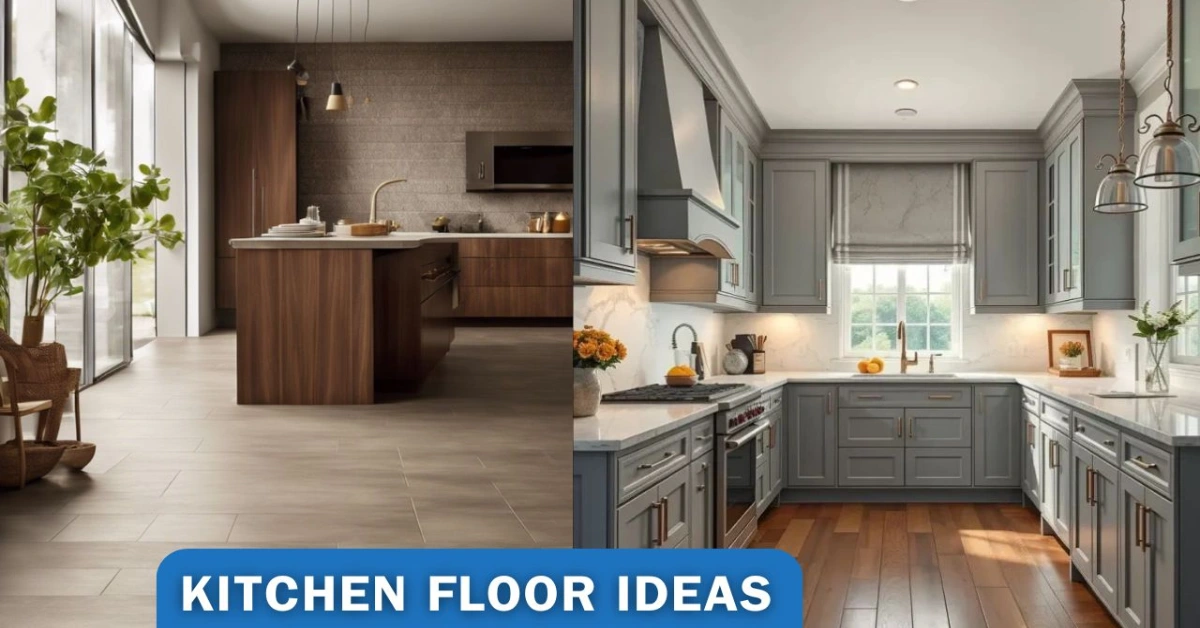
Large-format porcelain tile is having a real moment in modern kitchens right now. The wide, continuous surface creates the open, uncluttered look a lot of homeowners are chasing, in finishes that mimic stone, concrete, and even wood — maintenance-free appeal without giving up visual warmth.
Durability is where porcelain earns its keep. Spills, dropped pans, dragged chairs — it shrugs most of it off, which matters if you’ve got kids, pets, or simply cook often enough that the floor takes a beating. Fewer grout lines is the other quiet advantage: less grout to scrub, fewer seams collecting grime, and a floor that stays sharp-looking for longer.
Good to know in the UAE: this is one of the most common choices in both new-build villas and apartment renovations here, largely because it doesn’t fade under strong sun through kitchen windows and holds up well with underfloor cooling systems used in some villas. One honest trade-off worth knowing before you commit: because tiles are laid edge to edge with minimal grout, an exact colour-and-batch match can be hard to source if a single tile ever cracks years later — ask your supplier to set aside a few spare boxes from the same production batch at installation time.
3. Luxury Vinyl Plank Flooring
Luxury vinyl plank (LVP) has come a long way from the vinyl of decades past. The best versions convincingly mimic real hardwood grain and colour, close enough that people often don’t clock it as vinyl on first glance.
Here’s the thing: LVP’s real selling point in a kitchen isn’t looks, it’s water resistance. Standing water and the occasional flood-level spill won’t warp or damage it the way real wood can. It’s also softer underfoot than tile or stone, and installation is typically quicker and cheaper.
Good to know in the UAE: LVP is a strong pick for rental apartments and fast renovations, since it’s budget-friendly and fully waterproof. The one caution: cheaper vinyl can soften slightly under prolonged, direct sun near floor-to-ceiling windows or patio doors, so check the product’s heat rating if that describes your kitchen.
4. Polished Concrete Flooring
Polished concrete brings a clean, minimalist look that suits contemporary kitchens well. It’s a floor that doesn’t try too hard, which is exactly the point for a lot of homeowners.
Properly sealed concrete is extremely durable and, with basic maintenance, can last for decades. It reflects ambient light, which helps rooms feel more open, and homeowners can choose from a range of finishes, tints, and textures, so “concrete” doesn’t have to mean grey and industrial.
Good to know in the UAE: it’s a popular choice in modern Dubai apartments and lofts and stays comfortably cool in an air-conditioned home. In direct sun, though, dark-tinted concrete can get noticeably warm underfoot — a lighter tint is the safer call for a sun-facing kitchen.
5. Marble-Look Tiles
Real marble is gorgeous, and also expensive and genuinely high-maintenance — it stains, etches, and needs regular sealing. Marble-look porcelain tile gives you the visual drama without most of that upkeep.
That trade-off is exactly why so many renovations lean on it now. Classic white marble with soft grey veining remains the most popular option, since it reads elegant in almost any kitchen and is far easier to keep clean than the real thing.
Good to know in the UAE: the marble look carries real cultural weight in Gulf interiors, especially in villas with open kitchen-to-majlis layouts where the floor is on show. Porcelain gives you that same statement at a fraction of the maintenance real marble demands in this climate.
6. Herringbone Pattern Flooring
The pattern you lay a floor in matters almost as much as the material itself, and herringbone is one of the more effective ways to elevate an otherwise ordinary floor.
It works with wood, luxury vinyl, and tile alike. The angled layout adds visual movement and turns the floor into a genuine design feature rather than a backdrop. Done well, it reads as understated luxury instead of a passing trend.
Good to know: herringbone doesn’t change a material’s durability or water resistance — it’s a layout choice on top of whichever material you pick from this list, so check that material’s own climate notes above. It also typically adds 10–20% to installation labour versus a straight lay, since more cutting and precision is involved.
7. Natural Stone Flooring
Natural stone brings texture and depth that manufactured materials still struggle to replicate exactly. Limestone, slate, and travertine are the most common choices for kitchens, and each slab carries its own subtle variation in colour and pattern — no two natural stone floors end up looking quite the same.
Stone suits both modern minimalist kitchens and more traditional ones, which is a fairly rare kind of flexibility. It does need periodic sealing and a bit more care than porcelain or vinyl. Most homeowners who choose it decide the upkeep is a fair trade for how the floor looks and feels.
Good to know in the UAE: in coastal areas with higher ambient humidity, natural stone needs sealing checked more often than the manufacturer’s general guidance suggests — porous stones like limestone and travertine are the ones to watch most closely.
8. Terrazzo Flooring
Terrazzo is genuinely back, after decades of being associated mostly with old office buildings and school hallways. The surface is made of chips of glass, stone, or other aggregate set in resin, then ground smooth.
The result is distinctive without feeling busy. Terrazzo is also very hard-wearing and available in a wide range of colours and chip sizes, from subtle neutrals to bold speckled mixes.
Good to know in the UAE: terrazzo actually has deep roots in Gulf residential design — it was a staple in older regional villas long before it became a global trend again, which makes it a nice way to nod to local design heritage in a genuinely modern kitchen.
9. Matte Finish Tiles
Glossy tile used to dominate kitchen design, but matte finishes have largely taken over, and honestly, that’s the right call for most working kitchens. Matte tile looks more refined, and it hides footprints, dust, and water spots far better than a glossy surface does.
These finishes come in plenty of colours and textures, and they pair particularly well with the beige and warm earth-tone palettes that are trending in kitchens right now. Matte tile manages to be both good-looking and genuinely low-maintenance, which isn’t always a combination you get.
Good to know in the UAE: this is a genuinely practical pick for households dealing with fine sand and dust tracked in from outside — matte surfaces show far less of it between cleans than a polished, glossy tile does.
10. Wood-Look Porcelain Tiles
Homeowners love the warmth of real hardwood but often need something less sensitive to moisture, especially near sinks and dishwashers. Wood-look porcelain solves that tension directly, replicating timber grain and tone convincingly, in shades ranging from pale oak to deep walnut, while handling water and heavy use the way porcelain always has.
You get the visual comfort of a wood floor with none of the warping risk. It’s become one of the most requested kitchen flooring options for exactly that reason.
Good to know in the UAE: this is often the best middle ground for renovators here who want a warm, timber look but don’t want to manage humidity the way solid or engineered wood requires — see our guide on installing wood-look flooring over a concrete subfloor if that’s your starting point.
How To Choose The Right Kitchen Flooring
Start with how the room actually gets used, not how you’d like it to look in photos.
- Match the floor to your household. Kids and pets need a floor that can take constant traffic and the occasional dropped dish without showing every mark.
- Prioritize water and humidity resistance. Kitchens are wet spaces by nature — spills, splashes, mopping — so this isn’t optional, it’s baseline, and it matters even more in a humid coastal climate.
- Be honest about maintenance. Cleaning effort varies a lot between materials; pick one you’ll actually keep up with, not the one that looks best on day one.
- Think about comfort underfoot, especially if you spend a lot of time standing at the counter or stove.
- Set a realistic budget in AED that includes both material and installation, not material cost alone.
- Confirm it suits your subfloor, building type, and cooling system. A villa on a concrete slab, an apartment with underfloor cooling, and an older building each have different installation constraints — check with your installer before you fall in love with a material.
I’ve seen conflicting advice on whether hardwood is “worth it” in kitchens — some sources treat it as impractical, others swear by it with proper finishing. My take: it depends entirely on how careful your household is about spills, and on how much humidity swing your home actually sees. For a low-mess household in a consistently air-conditioned home, real or engineered oak is fine. For a busy household, wood-look porcelain or LVP is the safer call — see the comparison table above for a side-by-side.
What Kitchen Flooring Costs In The UAE
Exact pricing depends on your supplier, finish, and installer, but here’s a general sense of 2026 UAE market rates, cross-checked against current local building-materials price guides, to help you budget before you start getting quotes:
- Ceramic tile: roughly AED 18–90 per sqm for the material, with premium glazed finishes at the top end.
- Porcelain tile (including large-format and wood-look): roughly AED 35–200 per sqm — standard matt formats sit at the lower end, rectified large-format tiles push toward the top.
- Natural stone (travertine, granite, marble): roughly AED 80–600 per sqm. Locally sourced marble sits at the lower end of that range; imported European stone (Italian marble especially) runs highest.
- Installation labor generally adds AED 25–70 per sqm on top, with natural stone and herringbone layouts at the higher end due to the specialist skill and extra cutting involved.
- Luxury vinyl plank, engineered hardwood, polished concrete, and terrazzo vary more by brand and finish than by a fixed market rate — treat them as budget, mid-range, or premium relative to the tile figures above, and get a same-scope quote from at least two suppliers.
For a typical apartment kitchen, that puts most porcelain and ceramic projects in the low-to-mid thousands of AED for material alone; natural stone and premium finishes push that meaningfully higher. Always confirm current pricing locally — these ranges are a starting point for budgeting, not a quote.
Kitchen Flooring Trends For 2026
Modern kitchens are currently leaning toward natural textures and softer, warmer colour palettes. Light wood tones remain popular for the bright, welcoming feel they bring to a space. Large-format tile continues to dominate for its clean, minimal look, and interest in more sustainable flooring materials keeps growing as well.
In the Gulf specifically, terrazzo’s revival lines up neatly with regional design heritage, and marble-look porcelain continues to do the heavy lifting in villas that want an opulent, entertaining-ready kitchen without real marble’s upkeep. Designers here are generally favoring timeless, practical choices over anything too trend-driven — floors meant to still look good in ten years, not just this season.
Frequently Asked Questions
What is the best flooring for a kitchen in the UAE climate?
Large-format porcelain tile and wood-look porcelain are generally the safest choice for UAE kitchens — both resist humidity and heat, don’t fade in strong sun, and hold up to heavy daily use with minimal maintenance.
Is hardwood flooring a bad idea in a UAE kitchen?
Not necessarily, but it needs more care here than in cooler, drier climates. Engineered oak with a stable core handles Gulf humidity swings better than solid wood, and it’s best kept away from sinks, dishwashers, and doors that open outside.
Which kitchen flooring is easiest to clean?
Large-format porcelain and matte-finish tiles are among the easiest, thanks to fewer grout lines and finishes that hide dust, footprints, and water spots well between cleans.
How much does kitchen flooring cost to install in the UAE?
As a rough 2026 guide, porcelain and ceramic tile material runs about AED 35–200 per square metre, natural stone about AED 80–600 per square metre, and installation labor adds roughly AED 25–70 per square metre. Get local quotes to confirm current pricing for your project.
Does underfloor cooling in UAE villas limit which flooring I can use?
Not usually, but it narrows the safer choices. Porcelain, natural stone, and terrazzo conduct and release cooling evenly, which is why they’re the default in villas fitted with underfloor cooling. Solid hardwood and thick vinyl insulate more and respond more slowly, so if your villa has this system, confirm compatibility with your installer before ordering material.
Does kitchen flooring need to match the rest of the house?
It doesn’t have to match exactly, but it should feel consistent with your home’s overall palette and flow, especially in open-plan layouts.
Is polished concrete too hot or cold for a kitchen floor?
In an air-conditioned home it stays comfortably cool. In direct, unshaded sun a dark tint can warm up noticeably, so a lighter tint is the safer choice for a sun-facing kitchen.
Final Thoughts
The flooring you choose changes how the entire kitchen feels, arguably more than any single design decision besides the cabinetry itself.
Some homeowners go with white oak for warmth. Others prefer marble-look tile for a touch of drama, or luxury vinyl for sheer practicality. There’s no single right answer here — but in a UAE kitchen specifically, water and humidity resistance should weigh more heavily in that decision than it would in a milder climate.
Weigh durability, maintenance, looks, and climate fit together rather than picking one and ignoring the others. Get that balance right, and the floor will do double duty: making the room better to live in day to day, and potentially adding real value when it’s time to sell.
If you’re planning a renovation and want a second opinion on the right flooring for your specific kitchen, get in touch with our team — we’re happy to help you think it through.
Editorial note: pricing and material notes in this guide are reviewed periodically by the Gulf Decor team against current UAE supplier price lists and climate-performance data, and updated whenever those figures move.