9 Adorable and Safe Hairstyles for Baby Girls (0 to 2 Years)
Most babies do not have enough hair to style until somewhere between 12 and 18 months, and that is completely normal. When your baby girl does have enough length to work with, the goal is simple: keep her hair out of her eyes and mouth without putting any strain on her scalp or creating a choking risk. This guide covers nine gentle, age-appropriate hairstyles for babies and toddlers from birth to two years, along with the safety rules pediatric dermatologists and consumer safety regulators actually recommend, so you can style her hair with confidence instead of guesswork.
When Can You Actually Start Styling Your Baby Girl’s Hair?
Newborn hair is unpredictable. Many babies are born with a full head of hair that sheds within the first two to four months as hormone levels from pregnancy drop, a normal process called telogen effluvium. What grows back afterward can be a completely different texture and thickness than the hair your baby was born with, so do not be surprised if a curly-haired newborn grows in with straight hair, or the other way around.
As a rough guide, most babies have enough hair for a small clip or single puff by 9 to 12 months, and enough for two puffs, a headband style, or a short braid by 18 to 24 months. Hair growth speed varies enormously between babies and has no real connection to overall development, so there is no need to compare your daughter’s hair to anyone else’s.
Safety Rules to Follow Before Trying Any Baby Hairstyle
Before choosing a style, it helps to understand the handful of real risks involved in styling very young hair. None of them should stop you from styling your baby’s hair, but they should shape how you do it.
- Avoid tight pulling. The American Academy of Dermatology notes that hairstyles which pull on the hair, including tight ponytails, buns, and braids, can cause a form of hair loss called traction alopecia, and repeated pulling on the same section can eventually damage the hair follicle. Baby hair and scalps are more delicate than adult hair, so styles should always feel loose enough to fit a finger underneath comfortably.
- Mind the fontanelle. Babies have soft spots on the skull, the largest of which usually closes between 12 and 18 months. Avoid pulling any hairstyle directly over this area or applying pressure with clips or tight bands near it.
- Watch for small parts. Under United States consumer safety regulations, toys and accessories intended for children under three are held to strict small parts standards because loose beads, snap closures, and tiny bows are genuine choking and aspiration hazards. Choose accessories that are a single molded piece, avoid anything with small decorative parts that could detach, and never leave a baby unsupervised while wearing one.
- Never style hair for sleep. Remove clips, bands, and headbands before naps and bedtime. A baby lying down with an accessory in her hair increases the risk of it being pulled loose and becoming a hazard, and elastic left in for hours also increases the risk of localized hair breakage.
- Keep sessions short. A wriggling baby and a rushed parent are a bad combination for anything involving clips or elastics near the scalp. If she is fussing, stop and try again later rather than holding her still.
Caring for Your Baby’s Scalp Before You Style
Healthy styling starts with a healthy scalp. Many parents encounter cradle cap, medically known as infantile seborrheic dermatitis, which appears as greasy, yellowish scales on the scalp and affects a large share of babies in the first few months of life. According to the American Academy of Pediatrics, it is not caused by poor hygiene or allergies, and it is not contagious.
Both the American Academy of Dermatology and the American Academy of Pediatrics recommend a similar approach: wash the scalp every other day with a mild, fragrance-free baby shampoo, gently loosen scales with a soft brush or your fingers while shampooing, and apply a thin layer of mineral oil or baby oil beforehand if the scales are stubborn. Never scratch or pick at the scales, since broken skin increases the risk of infection. Most cases clear up on their own within a few months to a year. If you notice spreading redness, oozing, swelling, or a rash that seems to bother your baby, that is a reason to check in with your pediatrician rather than continuing home care.
9 Adorable and Safe Hairstyles for Baby Girls
Each of these styles is built around one rule: no tight pulling, no accessory left in for hours, and nothing with small detachable parts. Pick based on how much hair your daughter currently has rather than her exact age.
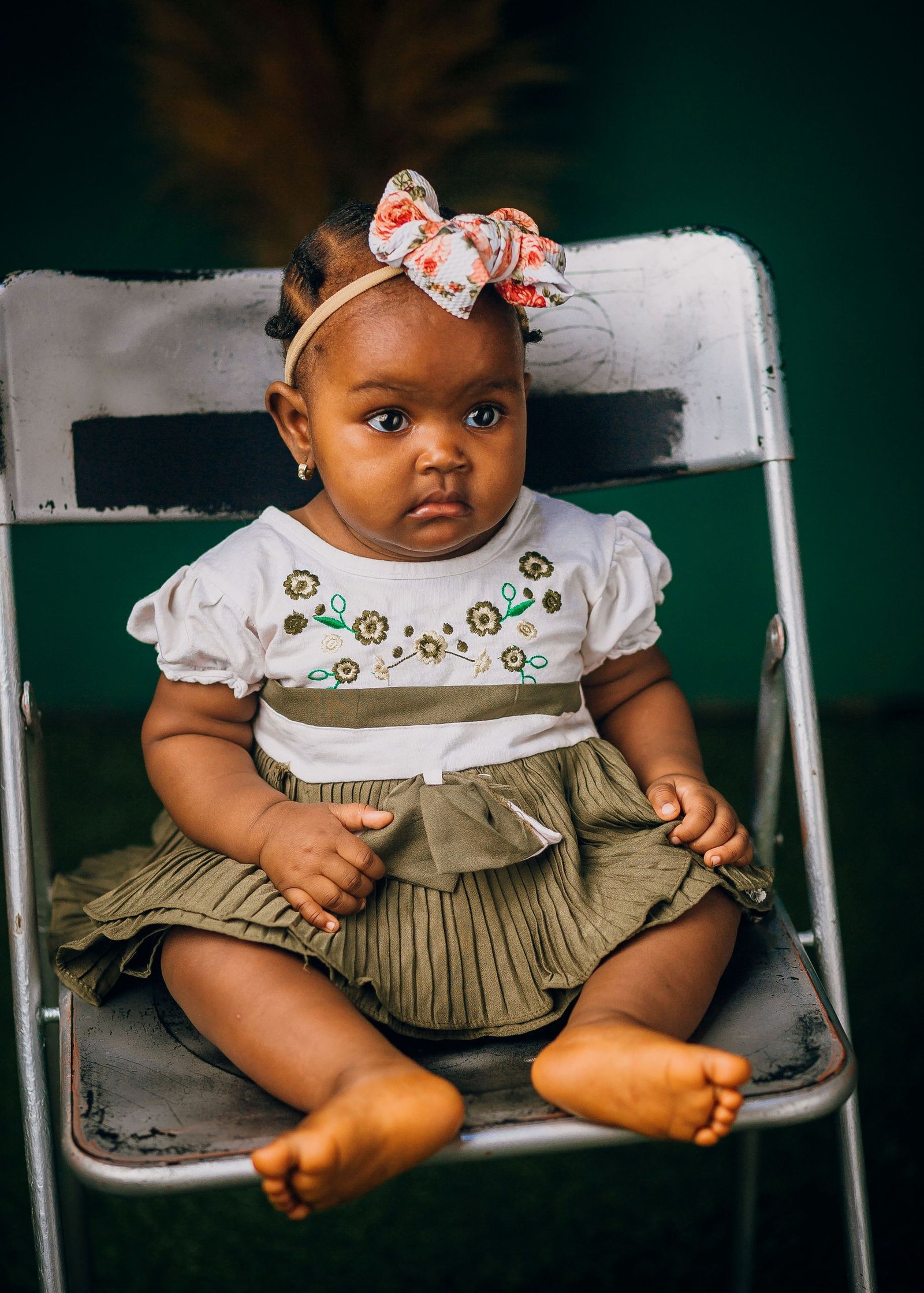
1. The Single Top Puff
For babies with just enough hair to gather, a small puff at the crown is the easiest first style. Use a soft, seamless fabric hair tie rather than a rubber band, and gather the hair loosely rather than pulling it taut. This works well from around nine months onward and takes less than a minute.
2. Two Pigtail Puffs
Once there is enough hair to part down the middle, twin puffs distribute tension evenly across the scalp instead of concentrating it in one spot, which is gentler than a single high ponytail. This is a good option for fine, straight, or wavy hair around 12 to 18 months.
3. Single Side Snap Clip
For babies with only a thin section of hair near the front, a single snap clip with a rounded, closed edge keeps hair out of the eyes without needing enough length to tie. Avoid clips with small beads, charms, or anything glued on, since these can come loose.
4. Soft Headband Half-Up Style
A stretchy fabric headband combined with a small clip or puff at the crown gives a finished look without any tight elastic against the scalp. Choose a headband that leaves a finger’s width of give and remove it once your baby starts pulling at it, which is usually a sign it feels uncomfortable.
5. Loose Two-Strand Twists
For babies with coily or curly hair, two-strand twists using a small amount of leave-in conditioner protect the hair’s natural curl pattern and reduce tangling far better than brushing alone. Keep the twists loose at the root and avoid re-twisting the same strands daily, since repeated manipulation is one of the more common causes of breakage in curly infant hair.
6. Loose Side Braid
By 18 to 24 months, many toddlers have enough length for a simple three-strand braid along one side. Keep it loose enough to see visible give at the scalp, and secure the end with a soft fabric tie rather than a rubber band, which can snag and pull when removed.
7. Twin Space Buns
A playful update on pigtails, twin buns keep hair fully off the neck, which is especially useful in hot weather. Wrap loosely rather than winding the hair tightly around itself, and check that the bun does not sit directly over the fontanelle if it has not yet closed.
8. Finger-Coil Definition for Curly Hair
Rather than a “style” in the traditional sense, finger coiling simply means twisting small sections of damp, curly hair around your finger with a touch of curl cream to define the natural curl pattern. It requires no accessories at all, which makes it one of the gentlest options for very young or sensitive scalps.
9. The No-Style Style
For babies with very little hair, or parents who would rather skip accessories altogether, simply keeping the scalp clean and using a soft brush to smooth hair after washing is a completely legitimate choice. There is no styling requirement in infancy, and skipping accessories entirely removes any risk of choking hazards or traction.
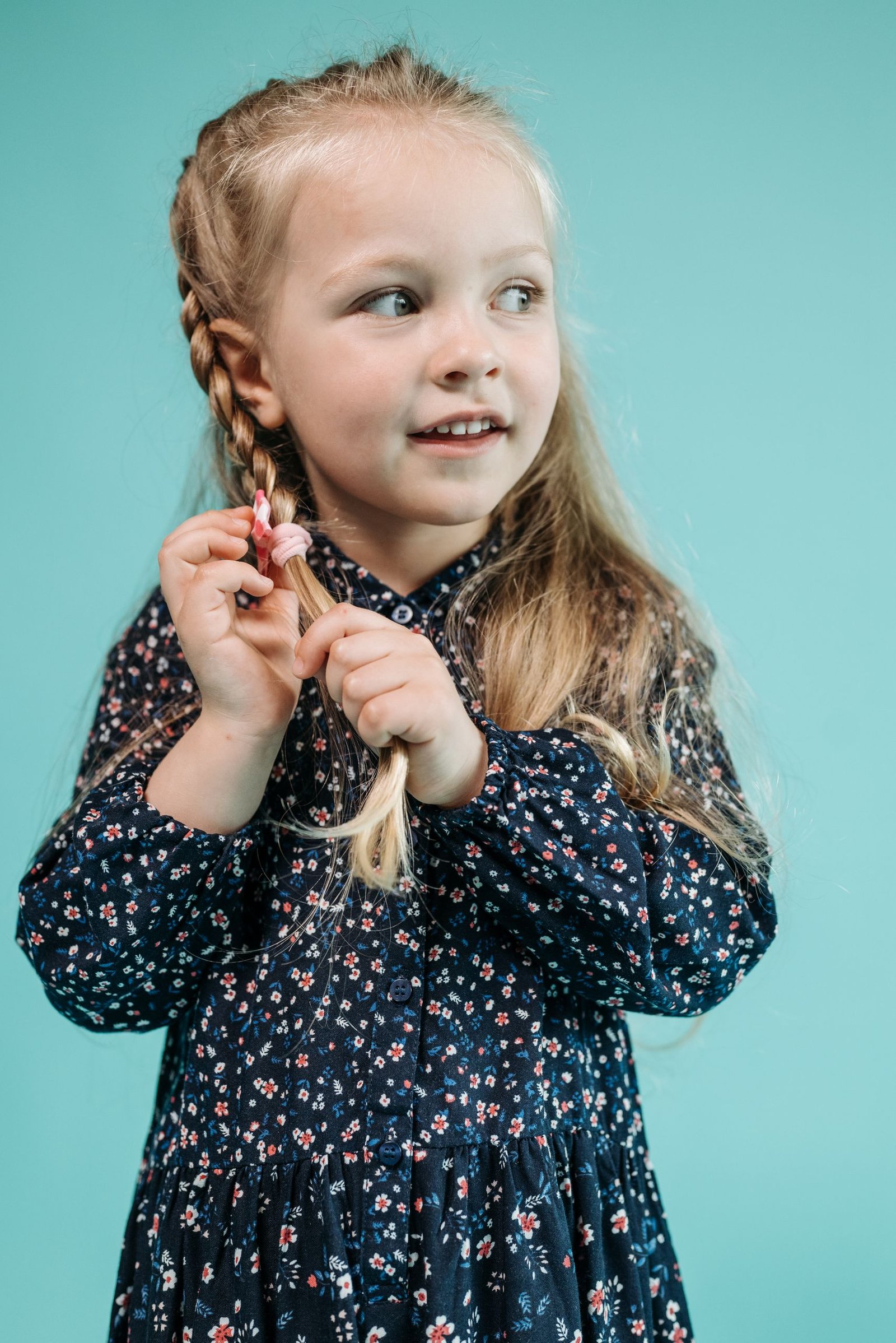
Quick Comparison: Which Style Fits Your Baby’s Hair?
| Style | Minimum hair length | Typical age | Best for |
|---|---|---|---|
| Single top puff | 1 to 2 inches | 9 to 12 months | Fine, straight or wavy hair |
| Two pigtail puffs | 2 inches | 12 to 18 months | Even tension, everyday wear |
| Single side clip | Thin front section | 6 to 12 months | Keeping fringe out of eyes |
| Soft headband half-up | 1 to 2 inches | 9 to 18 months | Photos and special occasions |
| Loose two-strand twists | 2 inches | 12 to 24 months | Curly and coily hair |
| Loose side braid | 3 to 4 inches | 18 to 24 months | Longer, straighter hair |
| Twin space buns | 3 inches | 18 to 24 months | Hot weather, keeping neck clear |
| Finger coils | Any curly length | Any age | Curl definition, no accessories |
| No-style style | None required | 0 to 12 months | Very little hair or sensitive scalp |
Choosing Safe Hair Accessories
The accessory matters as much as the style. Look for seamless fabric hair ties instead of rubber bands, which grip and pull on fine baby hair. Choose snap clips or barrettes that are a single molded piece rather than ones with glued-on decorations, sequins, or beads that could detach and become a choking hazard for a child under three. Skip anything metal against the scalp, since metal edges can pinch delicate skin, and always remove every accessory before nap time or bedtime.
Common Mistakes Parents Make With Baby Hair
- Washing too often. Daily washing with adult shampoo can strip the natural oils a baby’s scalp needs and worsen dryness or cradle cap. Two to three times a week is enough for most babies unless a doctor advises otherwise.
- Using adult styling products. Gels, mousses, and sprays made for adult hair often contain fragrances and alcohol that can irritate a baby’s sensitive scalp. Stick to products formulated for infants.
- Leaving accessories in overnight. Even a soft clip can shift during sleep and become uncomfortable or, in rare cases, a hazard. Remove everything before bed.
- Re-styling the same section daily. Repeatedly parting, twisting, or clipping the exact same spot is one of the most common causes of thinning at the hairline in young children.
- Picking at cradle cap. It is tempting to pick off the scales, but this raises the risk of irritation and infection. Gentle washing and oiling is the safer path.
Styling Baby Hair in the UAE Climate
Dubai’s heat and humidity change a few things about baby hair care compared with cooler climates. Scalp sweat builds up faster in summer, which can worsen cradle cap and make tight styles more uncomfortable, so looser buns and puffs that let air reach the scalp tend to work better than tight braids during the hottest months. If you are heading outdoors, a light cotton sun hat protects both the scalp and the soft spot from direct sun better than hair alone, since infant skin burns easily. Parents with curly or coily haired babies often notice more frizz and dryness in Dubai’s dry air-conditioned indoor environments alternating with outdoor humidity, so a light leave-in conditioner before twisting or coiling helps hold moisture better than styling dry hair.
What to Try Next as Her Hair Grows
These nine styles cover the baby and young toddler stage, but hair care needs keep changing fast in the first few years. Once she has more length and more patience for sitting still, our guide to easy hairstyles for kids covers the next stage of everyday options, and party hairstyles for girls that actually hold up is useful once special occasions start requiring something more polished. If she has curly or coily hair, our braided hairstyles guide for kids builds directly on the twisting and coiling techniques covered above. And if you are looking for something quick for yourself in between school runs, 9 mom hairstyles that actually survive a full day is written for exactly that.
Frequently Asked Questions
At what age can I put my baby girl’s hair in a ponytail?
Most babies need at least one to two inches of hair, usually around 9 to 12 months, before a small, loose ponytail or puff is possible without pulling on too few strands. There is no medical minimum age; it comes down to hair length and how comfortable your baby is sitting still briefly.
Is it safe to use hair gel or styling cream on a baby’s hair?
Products made specifically for infants, free of fragrance and alcohol, are generally fine in small amounts. Adult styling gels and sprays are not recommended because they are formulated for different skin chemistry and can irritate a baby’s sensitive scalp.
Why does my baby’s hair keep falling out in patches?
The most common cause in young infants is friction from lying on their back, sometimes called cradle rub, and it typically resolves once a baby spends more time sitting up and moving. Shedding around two to four months is also normal and related to hormonal changes after birth. Patchy hair loss that appears sudden, is accompanied by scalp redness, or does not improve with more tummy time is worth mentioning to your pediatrician.
Can babies and toddlers wear hair extensions or clip-in pieces?
This is not recommended. Extensions add weight and tension to hair that is still fine and attached to a developing follicle, increasing the risk of traction alopecia, and clip-in pieces carry the same small-parts and pulling concerns as other accessories.
How often should I wash my baby girl’s hair?
Two to three times a week is sufficient for most babies. Daily washing can dry out the scalp and is rarely necessary unless recommended by a pediatrician for a specific skin condition.