24 Wedding Hairstyles for Black Women (Plus Timeline & Veil Tips)
Bridal hair for Black women isn’t just “pick a pretty style” — it’s a planning problem most wedding guides gloss over. Trial timelines, veil placement on locs or an afro, how humidity changes a twist-out over an eight-hour reception, whether a protective style makes more sense than styling natural hair directly: these decisions shape the day as much as the dress does, and they need to be made months out, not the week before.
This guide covers 24 wedding hairstyles organized by hair type and technique, plus the planning details — trial timing, veil attachment, humidity and heat management, and protective-style options — that determine whether any of them actually hold up on the day.
In This Guide
- 24 wedding hairstyles for Black women, grouped by texture and technique
- A realistic bridal hair timeline, from six months out to the morning of
- How to work with a veil on natural hair, locs, and protective styles
- Planning around heat and humidity, including tips for Gulf-region weddings
- Common mistakes to avoid
- FAQ
24 Wedding Hairstyles for Black Women
These are grouped by hair type and technique so you can start with what actually works for your texture, rather than scrolling through styles that assume a different starting point than yours.
Natural Texture and Afro Styles
- Afro with Statement Headpiece — a full, shaped afro with the hairline smoothed and a crown, headband, or floral piece placed at the crown; works well for brides who want their natural texture to be the centerpiece rather than a base for something else.
- Side-Swept Afro — a voluminous afro deep-parted and pulled entirely to one side, which reads as more deliberately styled than a centered afro without changing the texture at all.
- High Side Puff — a natural puff shifted to one side of the crown instead of centered, showing off the neckline and dress in photos taken from the front.
- Afro with Fresh or Silk Florals — natural texture worn out and pinned along the hairline or part with flowers; real flowers need to be wired and placed close to the ceremony time since they wilt, while silk versions can be placed at the trial and left alone.
Locs
- Side-Swept Locs with Veil — locs gathered and swept to one side, with the veil pinned at the gathering point rather than at the crown, which keeps it secure without disrupting the loc style.
- Elegant Locs Updo — locs twisted and pinned into a low, sculpted updo; one of the more formal loc options and pairs well with a cathedral-length veil.
- Halo Crown Locs — locs wrapped around the crown of the head in a braided-crown shape, with the veil or comb placed just behind the halo.
Twists and Braids
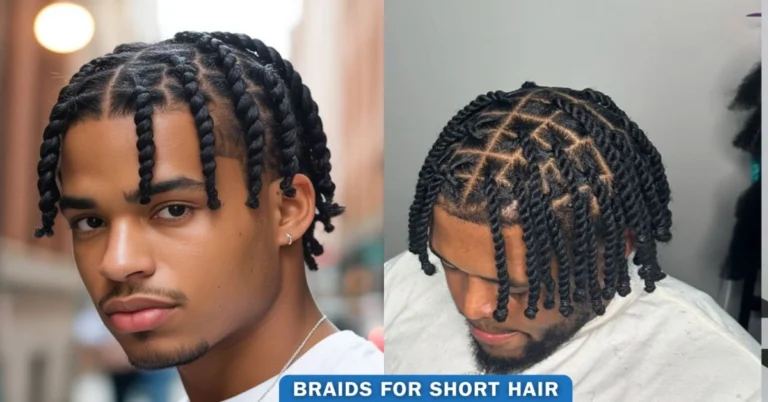
- Feed-In Braided Bun — cornrows fed in from the hairline and gathered into a bun at the crown or nape; a secure, long-wearing option that holds up well through hours of dancing.
- Halo Twist Crown — thick two-strand twists wrapped around the head like a crown, with the remaining hair worn down or gathered into a low bun beneath it.
- Twisted Chignon — flat twists pinned into a low, classic chignon at the nape; one of the most veil-friendly options since the low placement leaves the crown open for a comb.
- Goddess Braids Updo — thick, raised braids styled into a formal updo and usually finished with decorative pins or a comb at the base.
- Twisted Mohawk — the center section twisted or braided upward into a raised strip with the sides smoothed close; a bolder choice that works particularly well for brides who’ve worn similar styles before and want the wedding version to feel like them, not a departure from them.
- Criss-Cross Braided Bun — braids crossed over each other in a pattern before being wrapped into a bun, adding visible detail without needing an accessory.
Curls, Waves, and Blowouts
- Defined Twist-Out Updo — twist-out curls pinned up into a loose, textured updo rather than worn down; this is one of the more humidity-resistant natural options since the curls are already meant to have texture and movement.
- Bridal Wash-and-Go — natural curls defined with a curl cream or gel and left down, usually with a deep side part; best suited to indoor or lower-humidity ceremonies since it’s the least protected from moisture in the air.
- Soft Bridal Waves — hair stretched (via blowout or roller set) and curled into loose S-waves; this works on straightened or heat-stretched hair and needs a strong-hold, humidity-resistant product to last outdoors.
- Vintage Finger Waves — smooth, S-shaped waves set close to the scalp with gel for a retro bridal look; a striking option for a vintage or Art Deco wedding theme, though it needs to be set well ahead of the ceremony and left completely undisturbed until it’s fully dry.
Updos and Buns
- Low Sculpted Bun — a sleek, low bun with smoothed edges; a classic choice specifically because a veil sits naturally at the crown above it without competing for space.
- High Pineapple Updo — curly hair gathered high at the crown into a pineapple shape, giving volume and height without committing to a full pinned updo.
- Half-Up, Half-Down with Accessory — the top section pinned back and accessorized with a comb, pins, or florals, while the rest is worn naturally curly or straightened down.
- Hollywood Waves with Side Pin — a deep side part with glamorous waves swept across the forehead and pinned to one side; typically done on straightened hair for a smooth, uniform wave pattern.
Protective Styles and Short Hair
- Bridal Wig or Closure Install — a full protective install that lets you wear a completely different texture, length, or color for the day while your natural hair stays braided or twisted underneath, protected through the wedding and honeymoon.
- Tapered Pixie with Soft Waves — for brides with a short natural cut, styled with defined waves and a swept side part rather than trying to force length or volume that isn’t there.
- High Puff Twist-Out — an elevated, voluminous twist-out styled into a high puff; specifically well-suited to veils since the raised puff leaves room for a comb to sit securely just beneath it.
A Realistic Bridal Hair Timeline
Bridal hair — especially anything involving a custom wig, closure, or specific braiding pattern — needs more lead time than most wedding guides suggest. Treating it as a last-minute decision is one of the most common sources of day-of stress.
| Timeframe | What to Do |
|---|---|
| 3-6 months before | Research stylists and styles, book consultations, and if you’re using a wig or closure, start sourcing the hair. |
| 2-3 months before | Confirm texture, style, length, cap size, and color; order any custom units now rather than waiting. |
| 4-6 weeks before | Do a full hair trial — not just a consultation — with the actual accessories, veil, and any protective style you plan to wear. |
| 2-3 weeks before | Make final adjustments based on the trial; schedule any protective style (braids, locs maintenance) that needs to be freshly installed. |
| Wedding week | Confirm the plan with your stylist, do a final trim or edge-up if needed, and pack a small touch-up kit for the day. |
Working With a Veil on Natural Hair, Locs, or Protective Styles
Veil placement is one of the most common things to get wrong precisely because it’s easy to assume it’ll “just work” on the day. A few placement principles that generally hold across hair types: on a low bun or chignon, the veil comb sits naturally at the crown, above the gathered hair, with nothing to compete with; on an afro or high puff, it usually needs to sit just behind the highest point rather than on top of it, so the volume doesn’t push it out of place; on locs or braided styles, the comb should anchor into a section that’s braided or twisted tightly enough to hold weight, not into loose ends. Whatever the style, test the veil at the trial, not for the first time on the wedding morning — this is the single most common source of “the veil kept sliding” complaints after the fact.
Planning Around Heat and Humidity
For a Dubai or Gulf-region wedding — indoors in air conditioning for the ceremony and reception, but often with outdoor photos in serious heat and humidity — hairstyle choice matters more than in a cooler, drier climate. Protective and low-manipulation styles (braided updos, locs, twisted crowns, sculpted low buns) hold their shape through heat exposure far better than a wash-and-go or loose curls, which can lose definition or frizz within an hour outdoors. If a looser, curlier style is what you want, plan the outdoor portion of photography for the coolest part of the day where possible, use a strong-hold, humidity-resistant styling product rather than a light one, and ask your stylist about a light setting spray specifically formulated for humidity rather than a standard hairspray, which tends to lose hold faster in high humidity. A small touch-up kit — bobby pins, a travel-size edge control, and a setting spray — is worth having on hand regardless of style.
Common Mistakes to Avoid
- Skipping the trial, or treating the consultation as the trial. A consultation is a conversation; a trial is the actual style, veil, and accessories tested together, ideally under lighting similar to your venue.
- Choosing a wig or closure texture that doesn’t blend with your leave-out. Overly silky units next to textured natural hair at the hairline is one of the most common and most fixable bridal hair mistakes — bring your natural hair sample when sourcing the unit.
- Waiting too long to order a custom unit. Quality bridal wigs and closures often take weeks to source and customize; ordering with less than a month of buffer limits your options.
- Ignoring how your specific venue’s climate will affect the style. A style that held perfectly at an air-conditioned trial can behave differently after twenty minutes of outdoor photos in heat and humidity.
- Choosing a style because it photographs well online, not because it fits your hair type. A style built for looser curl patterns will need far more manipulation — and heat — to recreate on a tighter coil pattern, which shows in longevity and hair health afterward.
Frequently Asked Questions
How far in advance should I book a bridal hair trial?
Four to six weeks before the wedding is the general guideline, after your dress, veil, and any accessories are finalized — trying the hairstyle before you know the neckline or veil length often means redoing the trial anyway.
Is a wig or closure a good option for a wedding?
Yes, and it’s a common choice specifically because it protects natural hair from the heat styling and manipulation a wedding day (and honeymoon) often involves, while still giving you flexibility on texture, length, and color for photos.
How do I keep a wash-and-go or twist-out from frizzing during an outdoor ceremony?
Use a strong-hold, humidity-resistant curl product rather than a lightweight one, and consider a humidity-specific setting spray over a standard hairspray. That said, for consistently hot, humid conditions, a protective updo or braided style will generally hold its shape more reliably than any loose curl pattern.
Can locs be styled for a formal wedding look?
Yes — locs styled into an updo, halo crown, or side-swept gather read as formal as any other bridal updo, and locs generally hold styling well through heat and humidity since they’re already a low-manipulation style.
What should I bring to my hair trial?
Your veil (or a similar-weight placeholder), any hair accessories you’re considering, and photos of your dress neckline, since that affects whether an updo or a style worn down will suit the overall look better.
Final Thoughts
The best wedding hairstyle for a Black bride is less about which specific style photographs best and more about which one fits your hair type, your venue’s climate, and how many hours it needs to hold up without a touch-up. Start the process early enough to get a real trial in, test the veil before the day itself, and lean toward protective, low-manipulation styles if your celebration involves any real time outdoors — they consistently hold up better than they get credit for, and they protect your hair through the honeymoon too.
For more on protective styling before and after the big day, our guides to braided hairstyles for Black women and caring for 4C hair are useful next reads, and our guide to human hair wigs covers what to look for if you’re considering a bridal unit.