Best Curling Iron Size for Beach Waves: A Barrel Size Guide
Getting a natural, undone beach wave has less to do with a specific curling iron brand and everything to do with barrel size and technique. A barrel that is too small produces tight, obvious ringlets, while one that is too large barely adds texture at all. This guide covers which barrel sizes actually produce a beach wave finish, how barrel shape and material affect the result, and the technique that makes the difference between a wave that looks styled versus one that looks like it just happened naturally.
Why Barrel Size Matters More Than Any Other Factor
A beach wave is defined by a loose, irregular curl pattern with visible separation between waves, closer to how hair naturally waves after a day at the ocean than to a uniform, salon-perfect curl. Barrel diameter controls how tight or loose that wave ends up. Smaller barrels wrap hair into a smaller circumference and produce a tighter spiral, which reads as a defined curl rather than a wave. Larger barrels wrap hair around a wider circumference, producing a looser bend that relaxes into a wave shape once it cools and you brush your fingers through it. If you want volume and movement without a curl at all, a blowout guide covers how to get body and bend using a round brush and blow dryer instead of a hot iron.
Choosing the Right Barrel Size for Beach Waves
| Barrel Size | Resulting Texture | Best For |
|---|---|---|
| 19mm to 22mm | Tight, defined ringlets rather than a loose wave | Shorter hair or a more structured curl look, not typically used for beach waves |
| 25mm to 32mm | The classic loose beach wave, with visible but relaxed bends | Most hair lengths and the most common choice for a natural beach wave finish |
| 32mm to 38mm | A very loose, subtle bend rather than a defined curl | Longer hair, or anyone who wants the softest, most undone version of the look |
| 38mm and above | Minimal curl, mostly adds volume and gentle movement | Adding body to straight hair without a noticeable curl pattern |
Hair length changes how a given barrel size reads on you. The same 25mm barrel that creates a soft wave on shoulder-length hair can look like a much tighter, more defined curl on shorter hair, simply because shorter hair wraps around a smaller portion of the barrel relative to its total length.
Barrel Shape and Material
Beyond diameter, barrel shape affects the finish. A straight cylindrical barrel gives an even, consistent wave along the full section of hair. A tapered barrel, which narrows from base to tip, is designed to curl closer to the roots without the bulk of a full cylinder at the top, useful for shorter styles or finer hair. A wave-plate or triple-barrel iron creates a looser, more textured, S-shaped wave pattern in one pass rather than a smooth spiral, which some people prefer specifically for a beach wave look since it mimics natural wave texture more directly than a round barrel does.
Barrel material affects heat distribution and how gently the tool treats your hair rather than the shape of the curl itself. Ceramic and tourmaline coatings tend to distribute heat more evenly and reduce hot spots that can cause localized damage, which matters more the more frequently you style, since even heat distribution reduces cumulative stress on any one section of hair. If you are unsure how your natural texture already responds to heat and humidity, a hair texture guide can help set realistic expectations before you start curling.
Technique: How to Curl for a Natural Beach Wave
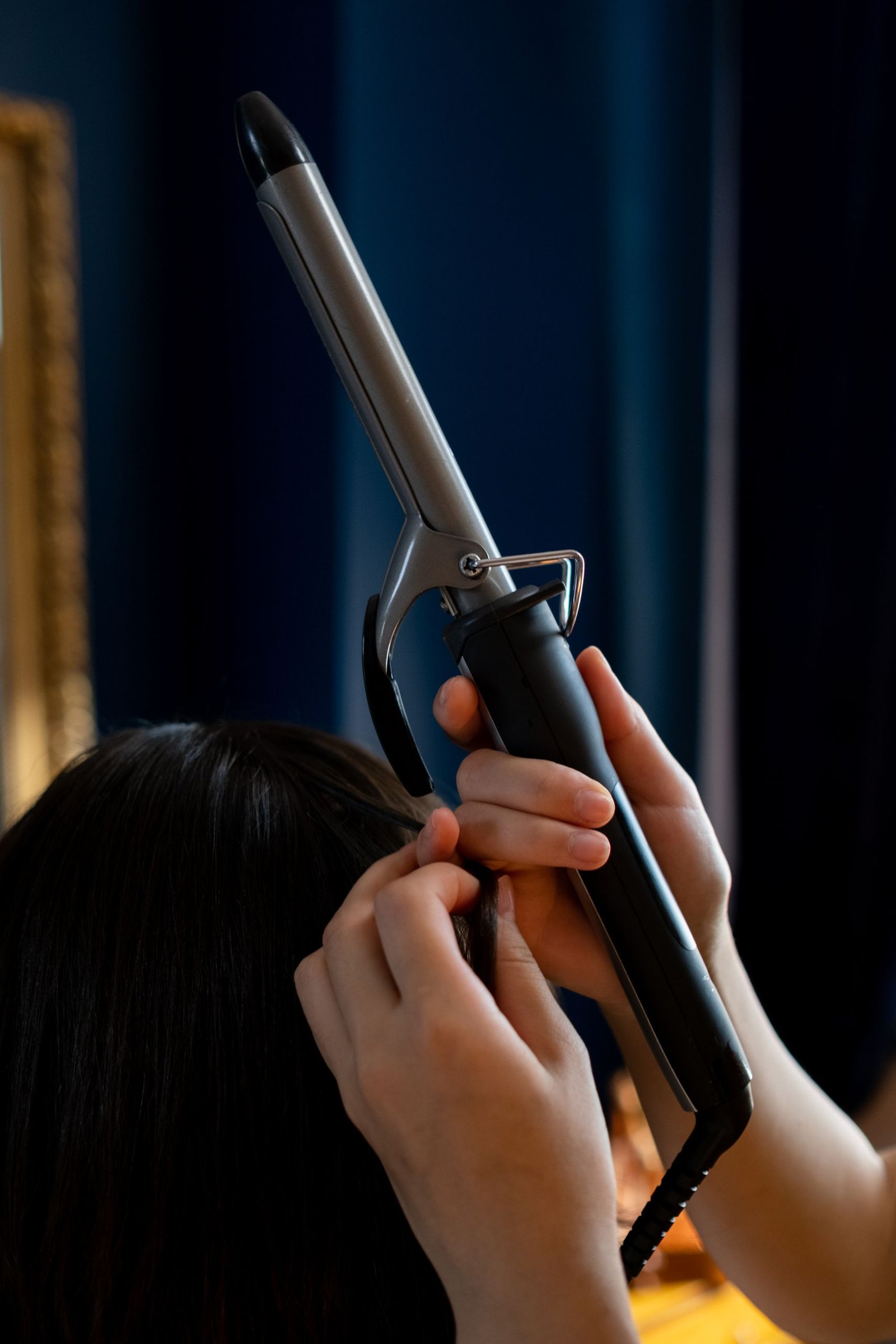
- Start with clean, dry hair, and apply a heat protectant spray before using any hot tool, since curling irons commonly reach 175 to 200 degrees Celsius.
- Section hair into two to four large sections rather than many small ones, since beach waves rely on larger, looser sections for their relaxed look.
- Wrap each section around the barrel, alternating the direction (some sections wrapped away from your face, some toward it) rather than curling every section the same way, which is one of the biggest differences between a beach wave and a uniform curl.
- Leave the last inch or two of the ends out of the curl entirely on some sections, which softens the overall look and avoids the tight, curled-under ends that read as more polished than beachy.
- Hold each curl for a few seconds, then release it and let it cool, unclamped, before touching or brushing through it.
- Once all sections are curled and cooled, run your fingers (not a brush) through the waves to loosen them, and add a texturizing or salt spray if you want extra grit and hold.
Common Mistakes to Avoid
| Mistake | Why It Causes Problems |
|---|---|
| Using too small a barrel | Produces tight, defined curls instead of the loose, relaxed shape of a beach wave |
| Curling every section in the same direction | Creates a uniform, obviously styled look rather than natural-looking irregularity |
| Brushing curls immediately after curling | Breaks up the wave pattern before it has set, often loosening it too much or too soon |
| Skipping heat protectant | Increases the risk of dryness and breakage, especially with repeated use |
| Sectioning hair into too many small pieces | Produces a tighter, more defined curl pattern than the loose look beach waves are meant to have |
Frequently Asked Questions
What size curling iron is best for beach waves?
A barrel in the 25mm to 32mm range typically produces the classic loose beach wave for most hair lengths. Longer hair can go slightly larger for a softer bend, while shorter hair may need a slightly smaller barrel within that range to show a visible wave at all.
Do you curl beach waves toward or away from your face?
Alternating direction, some sections toward your face and some away, is what gives beach waves their natural, undone look. Curling every section in the same direction produces a more uniform, obviously styled curl rather than a wave.
Should you curl the ends of your hair for beach waves?
Not always. Leaving the last inch or two of some sections out of the curl entirely softens the finished look and avoids the tightly curled ends associated with a more polished curl style.
How hot should a curling iron be for beach waves?
Most curling irons for beach waves work well in the 175 to 200 degree Celsius range, though finer or more damaged hair generally does better at the lower end of that range. Always use a heat protectant regardless of the temperature setting.