Perm Hairstyles for Men: The Complete Guide to Every Type and What to Expect
A men’s perm uses chemicals to break and reshape the bonds inside each hair strand, giving naturally straight or barely-wavy hair lasting curl or wave for several months. It is a real chemical process, not a styling trick, and the type of perm you choose has a bigger effect on the final look than most people expect. This guide covers every common perm type, how to pick one for your hair length and texture, what actually happens in the chair, and how to keep the result looking good instead of frizzy or damaged.
What a Perm Actually Does to Your Hair
Hair gets its natural shape from disulfide bonds inside the protein structure of each strand. A perm solution breaks those bonds chemically, the hair is wrapped around rods to force it into a new curved shape, and a neutralizing solution then reforms the bonds while the hair holds that shape. Once the process is complete, the curl or wave stays in the hair even after washing, because the internal bond structure has genuinely changed rather than just being styled temporarily.
This is also why a perm is not risk-free. Breaking and reforming those bonds is a real chemical alteration, and how well your hair handles it depends on its starting condition, thickness, and how carefully the aftercare is followed.
The Main Types of Perms for Men
Perms are not one-size-fits-all. Rod size, chemical strength, and technique all change depending on the result a stylist is trying to achieve.
| Perm Type | Technique | Result | Typical Duration |
|---|---|---|---|
| Korean wave perm | Larger rods, gentler chemicals | Soft, natural-looking waves rather than tight curls | 3 to 6 months |
| Spiral perm | Long, narrow rods wrapped root to tip | Tight, even corkscrew curls | 4 to 6 months |
| Body wave perm | Bigger rods, milder solution | Subtle, loose waves with added volume | 3 to 6 months |
| Beach wave perm | Mixed rod sizes, gentle solution | Varied, casual-looking waves | 3 to 6 months |
| Digital (hot) perm | Heat combined with chemicals | Long-lasting, well-defined waves, works well on thick or resistant hair | 6 to 8 months |
| Cold wave perm | Room-temperature chemicals, no heat | Traditional curl result, widely available | 3 to 6 months |
| Root or volumizing perm | Chemicals applied only near the roots | Lift and volume at the roots, lengths stay straight | 2 to 3 months |
| Spot perm | Chemicals applied to one section only, usually the crown | Targeted texture in a specific area, subtle overall change | Varies, generally shorter |
| Curly undercut perm | Curls permed on top, sides faded or shaved | Bold contrast between curled top and clean sides | 3 to 6 months (sides need trims every 3 to 4 weeks) |
Choosing a Perm by Hair Length
- Short hair (roughly 1.5 inches and up): Spot perms, root perms, and the curly undercut work best, since there is less length for a full curl pattern to develop. The curly undercut is the most popular short-hair option because the faded sides create contrast even with minimal curl on top.
- Medium hair (2 to 6 inches): This length has the widest range of options, including body wave, Korean wave, and spiral perms, and pairs especially well with the styles in our guide to medium length hairstyles for men, since a loose perm adds texture that works with several of those cuts.
- Long hair: Spiral, body wave, and beach wave perms need the extra length for the curl or wave pattern to develop fully. Longer permed hair also needs more product and more careful detangling to avoid tangling and breakage.
Choosing a Perm by Hair Type
- Fine hair: Body wave, beach wave, and digital perms add volume and texture without weighing the hair down the way a tighter curl pattern might.
- Thick or very straight hair: A digital perm is usually recommended, since the added heat helps the chemical solution penetrate strands that standard cold perms sometimes struggle to affect.
- Already curly or textured hair: Perming naturally curly hair is uncommon and usually aims to even out or slightly loosen the existing pattern rather than add curl. This calls for a stylist experienced specifically with curly and coily textures, since standard perm timing and chemical strength are calibrated for straighter hair.
What Happens During a Perm Appointment
- Consultation. The stylist assesses your hair’s current condition, length, and thickness, and discusses the curl pattern you want.
- Washing. Hair is washed to remove oil and product buildup so the chemical solution can penetrate evenly.
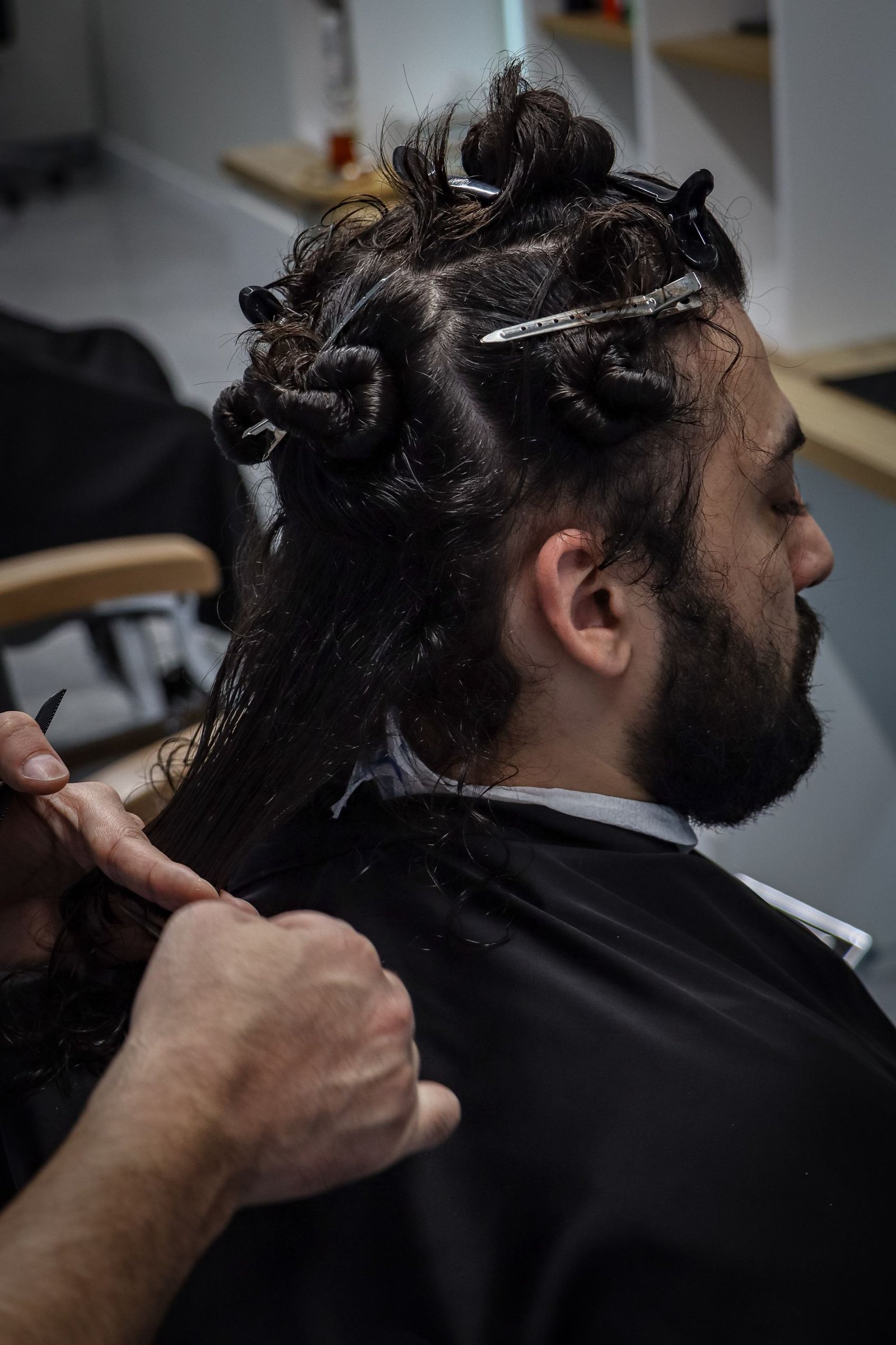
- Sectioning and rod placement. Hair is divided into sections and wrapped around rods. Rod size directly determines curl tightness: smaller rods make tighter curls, larger rods make looser waves.
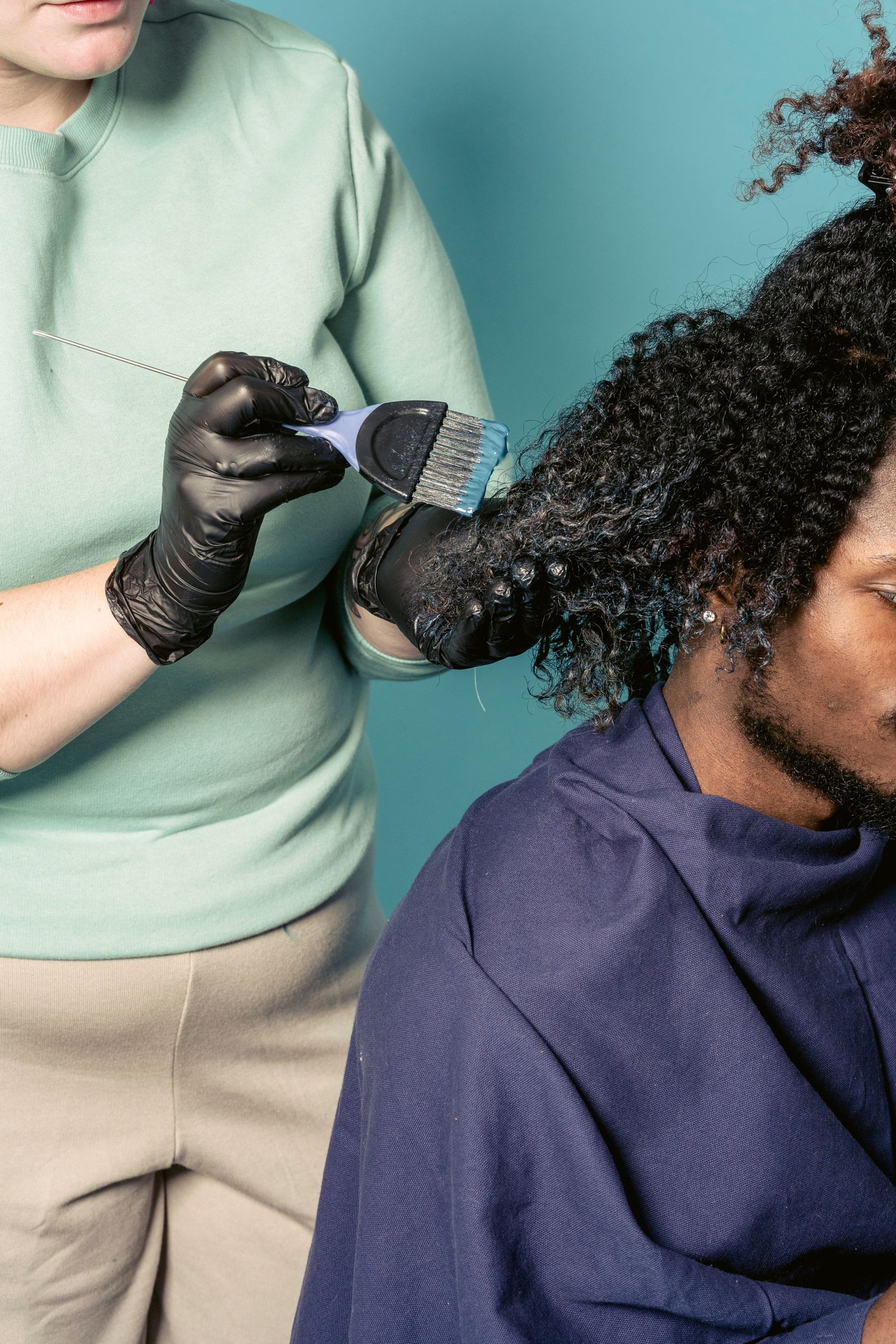
- Chemical application. The perm solution is applied to break the internal disulfide bonds, typically processing for 15 to 30 minutes depending on hair type and desired result.
- Rinsing and neutralizing. A neutralizing solution reforms the bonds in the new curled shape, locking in the pattern.
- Rod removal and finishing. Rods are removed, hair is rinsed again, conditioned, and lightly styled to show the final result.
A full appointment typically takes two to four hours depending on the perm type and hair length, with digital perms generally taking the longest because of the added heat-processing step.
Aftercare: How to Make a Perm Last
Aftercare has more influence on how good a perm looks after the first week than the technique itself. The most common reason perms look frizzy or fall apart early is overwashing and rough handling in the first few days.
- Wait at least 48 hours before the first wash. The curl pattern needs time to fully set after neutralizing.
- Wash only 2 to 3 times a week. Washing more often strips the moisture the curl pattern needs to hold its shape.
- Use a sulfate-free shampoo. Harsh sulfates dry out permed hair faster and shorten how long the curl lasts. Our guide on whether curl-activating shampoos actually work explains what to look for in a formula that supports curl definition without stripping moisture.
- Apply products to damp hair, not dry. Leave-in conditioner and curl cream distribute more evenly and help set the pattern when hair is still wet.
- Scrunch rather than brush. Brushing breaks up the curl pattern and creates frizz. Scrunching upward while drying preserves the shape.
- Air-dry or diffuse on low heat. High heat styling works against the curl pattern and can dry out permed hair further.
- Switch to a silk or satin pillowcase. Cotton pillowcases create friction overnight that roughs up the curl pattern and increases frizz.
- Avoid hats for the first 48 hours. Pressure on freshly permed hair can flatten or distort the curl pattern before it has fully set.
Risks and Who Should Think Twice
A perm is a genuine chemical treatment, and it carries real risks worth understanding before booking an appointment.
- Dryness and breakage. Breaking and reforming the hair’s internal bonds can leave strands drier and more prone to breaking, especially through the mid-lengths and ends.
- Scalp sensitivity. Some people experience irritation or sensitivity on the scalp during or shortly after the chemical process.
- The curl fades over time. Hair naturally works to return to its original shape, so the curl pattern gradually loosens even with good care. This is normal and not a sign anything went wrong.
- Stacking chemical treatments is risky. Recently bleached, colored, or chemically relaxed hair is more vulnerable to damage from a perm, since the hair has already been chemically altered once. Most stylists recommend waiting until hair has recovered before adding a perm on top of another chemical service.
If you notice persistent scalp burning, bald patches, or breakage that continues well beyond the first couple of weeks, see a professional rather than waiting it out.
Cost and How Long a Perm Lasts
Perm pricing varies widely based on hair length, the type of perm, and the salon, typically ranging from budget cold perms to premium digital perms at a significantly higher price point. Length and thickness both affect price, since longer or thicker hair requires more solution and more processing time. Most perms last three to six months, with root and spot perms fading fastest and digital perms generally lasting the longest, assuming proper aftercare throughout.
Common Perm Mistakes to Avoid
| Mistake | Why It Backfires | Better Approach |
|---|---|---|
| Washing within the first 48 hours | Disrupts the curl pattern before it has fully set | Wait the full 48 hours before the first wash |
| Choosing a perm type without considering hair length | Short hair with a spiral perm, for example, may not show the intended pattern | Match the perm type to your current length, or plan to grow it out first |
| Perming hair that was recently bleached or relaxed | Stacked chemical treatments significantly increase damage risk | Let hair recover between different chemical services |
| Brushing permed hair when dry | Breaks up the curl pattern and creates frizz | Detangle gently when wet, style with fingers or a wide-tooth comb |
| Skipping regular trims | Split ends make the curl pattern look messier over time | Get regular trims, especially for the curly undercut style with faded sides |
Frequently Asked Questions
How long does a perm actually last on men’s hair?
Most perms last three to six months, though this depends heavily on the perm type and how well the aftercare routine is followed. Digital perms tend to last the longest, up to six to eight months, while root and spot perms fade fastest since they involve less of the hair shaft.
Does getting a perm damage your hair?
A perm is a real chemical process that breaks and reforms the internal bonds in hair, so some level of change to the hair’s structure is unavoidable. Healthy hair generally tolerates this well with proper aftercare, but hair that is already damaged, bleached, or chemically treated is at higher risk of additional damage.
Can I still style my hair while I have a perm?
Yes, though styling shifts from heat tools toward products that work with the curl pattern, like curl creams, leave-in conditioners, and light-hold gels applied to damp hair. Heat styling tools can loosen or damage the curl pattern, so most stylists recommend minimizing their use.
What is the best perm type for short hair?
The curly undercut perm is generally the most popular option for shorter hair, since the contrast between the curled top and faded or shaved sides creates a defined look even with a limited amount of curled length. Spot perms and root perms also work on shorter hair for more subtle texture.
Should I get a perm if my hair is already damaged or color-treated?
It is worth discussing with a stylist first, since stacking a perm on top of recent bleaching, coloring, or relaxing significantly increases the risk of breakage and damage. Many stylists recommend waiting until hair has had time to recover before adding another chemical service.
Final Thoughts
A perm can genuinely transform straight or barely-wavy hair, but the type you choose, matched to your length and hair texture, makes the difference between a result you love and one that looks like a mismatch. Understanding the process and committing to the aftercare routine matters just as much as picking the right perm type in the first place, since a great perm that is not cared for properly will not look great for long.