Pink Short Hair: 7 Shades and What Each One Actually Takes
Pink shows up more clearly and evenly on short hair than long, since there’s less length for the color to fade unevenly along. Before picking a shade, though, it helps to understand what pink hair color actually requires — most shades need a lightened base first, which changes how committed and low-maintenance this really is.
What Pink Hair Actually Requires
Pink is a semi-permanent fashion color, which means it doesn’t lift your natural pigment — it deposits color on top of it. On dark hair, that means the hair usually needs to be pre-lightened (bleached) to a pale blonde base first, or the pink will barely show. On naturally light blonde hair, pink can sometimes be applied with little or no lightening. This single factor is the biggest thing to discuss with a colorist before booking — it determines cost, time, and how much hair damage to plan around.
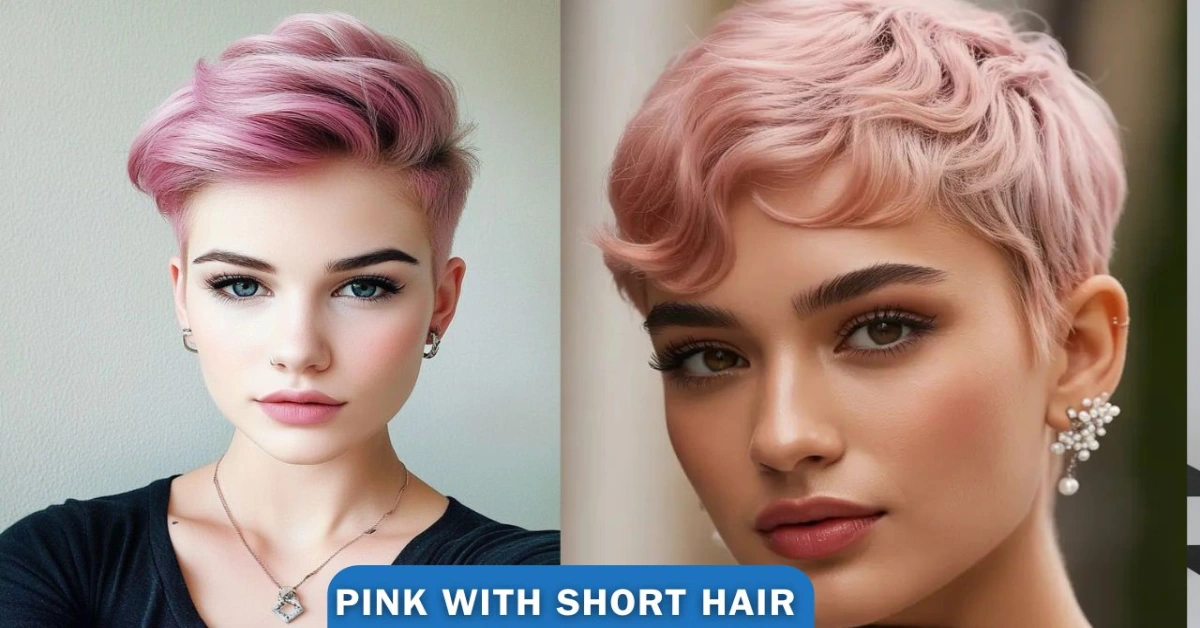
1. All-Over Cotton Candy Pink
A soft, pastel pink applied evenly across pre-lightened hair. The most classic pink look and the easiest to keep looking fresh, since there’s no root-to-tip gradient to maintain.
2. Dip-Dyed Pink Tips
Natural or dark hair left alone at the roots, with pink applied only to the ends. Requires far less bleaching than an all-over color since only the tips need lightening, and grows out more gracefully since there’s no sharp root line to touch up.
3. Money-Piece Pink Streaks
A few face-framing pieces colored pink while the rest of the hair stays natural. The lowest-commitment pink option here — minimal bleaching, and easy to grow out or remove if you change your mind.
4. Root-Smudged Pink
A soft, blended transition from a slightly darker root into pink lengths, rather than a hard line. Extends the time between touch-ups since regrowth blends in rather than creating a visible line.
5. Neon Hot Pink
A saturated, vivid pink rather than a pastel shade. Needs a very pale, well-lightened base to show true — applying vivid pink over anything darker than pale yellow-blonde will read muddy rather than bright.
6. Two-Tone Pink and Black
Natural or dyed black hair paired with pink through specific sections — commonly an undercut, the ends, or one side. The contrast makes the pink read more vivid than it would against a lighter base.
7. Rose Gold
A muted, slightly metallic pink-blonde blend rather than a true pastel or neon pink. Reads as more wearable for everyday and workplace settings than a saturated shade.
Maintenance and Fading
Pink is one of the fastest-fading fashion colors — expect visible fading within 2-4 weeks even with careful care, faster with frequent washing or hot water. A color-depositing purple or pink-tinted shampoo extends the vividness between full touch-ups, and washing with cool water and sulfate-free shampoo slows fading generally. Because the color sits on top of lightened hair rather than replacing pigment, it can be refreshed at home with a semi-permanent gloss between salon visits.
Before You Book: Questions for Your Colorist
- How much lightening will my current hair color need to reach a true pastel-pink-ready base?
- Will this be a single session or does the lightening need to happen in stages to protect hair health?
- What’s the realistic fade timeline for the specific pink shade I want, and how do I maintain it?
- What’s the plan for growing this out or returning to a natural color later?
In most cases, yes — pink is a semi-permanent color that deposits over existing pigment rather than replacing it, so darker hair usually needs to be pre-lightened to a pale blonde base for the pink to show true. Naturally light blonde hair may need little to no lightening.
Pink fades faster than most fashion colors, typically noticeably lighter within 2-4 weeks. A color-depositing shampoo between full touch-ups helps maintain vividness longer.
Dip-dyed tips or a few money-piece streaks require the least bleaching and are easiest to grow out or remove, since only a small section of hair is lightened and colored rather than the whole head.
Final Thoughts
The shade you can realistically get depends heavily on your starting hair color and how much lightening you’re willing to do — that conversation with a colorist matters more than the photo you bring in. Start with dip-dyed tips or streaks if you’re unsure about commitment, and move to an all-over color once you know pink is one you want to keep up with.
For more short-hair color and styling ideas, see our guide to black hair with highlights.