8 Signs It’s Time for a New Carpet
Quick answer: Replace your carpet when you see flattened traffic paths that don’t spring back, odors that return within days of cleaning, stains that go dark instead of lifting, or visible backing/seams through the pile. Most carpets last 5–15 years depending on fiber (polyester and olefin wear out fastest; nylon and wool last longest) — if yours is past that age and showing two or more of the signs below, cleaning will only buy you a few more months, not years.
You walk into a room and something feels off, even though nothing looks obviously broken. Nine times out of ten, it’s the carpet. Fiber wears down in a way your eye adjusts to gradually, so you stop noticing it — until a guest, a photo, or a fresh coat of paint next to it makes the contrast obvious.
The signs below aren’t cosmetic opinions. Each one reflects something physically happening inside the carpet’s fiber and backing that cleaning can’t reverse. Here’s how to tell which stage yours is at, and what actually determines when “worn” becomes “replace it.”
How Long Should a Carpet Actually Last?
Lifespan depends far more on fiber type than on how carefully you vacuum. Here’s what the flooring industry actually tracks:
| Fiber Type | Typical Lifespan | Supply Cost (AED/sq ft) | Best For |
|---|---|---|---|
| Polyester (PET) | 5–10 years | 18–35 | Budget bedrooms, low-traffic rooms |
| Olefin / Polypropylene | 7–12 years | 12–28 | Basements, moisture-prone areas |
| Nylon | 10–20 years | 28–65 | Living rooms, hallways, families with kids/pets |
| Triexta (SmartStrand) | 10–15 years | 35–70 | High-traffic homes wanting stain resistance |
| Wool | 15–30+ years | 45–150 | Formal rooms, long-term investment |
If you don’t know what’s under your feet, check the receipt or ask whoever installed it — but the signs below will tell you the truth regardless of fiber label. A 6-year-old polyester carpet showing heavy wear is normal and due for replacement. A 6-year-old nylon carpet showing the same wear points to poor padding, excess moisture, or a manufacturing defect worth investigating before you simply swap it out.
1. Visible Wear Marks and Flattened Traffic Paths
Fiber is built with a certain amount of twist and bounce-back. Every footstep compresses it slightly, and healthy fiber springs back within seconds. Once the twist breaks down — which happens faster in low-cost polyester than in nylon — it stops recovering.
- Run your hand across the carpet from a doorway toward the room’s center. If the traffic lane feels noticeably flatter and slightly shinier than the surrounding pile, the fiber has lost its resilience for good.
- Fold a section of carpet backward. If you can see the backing clearly through the pile in the traffic lane, it’s lost roughly 50% or more of its original fiber density — replacement territory, not cleaning territory.
- Uneven texture across a room (soft in corners, packed-down in the center) usually means the carpet is past its structural midpoint, even if the color still looks fine.
2. Odors That Return After Cleaning
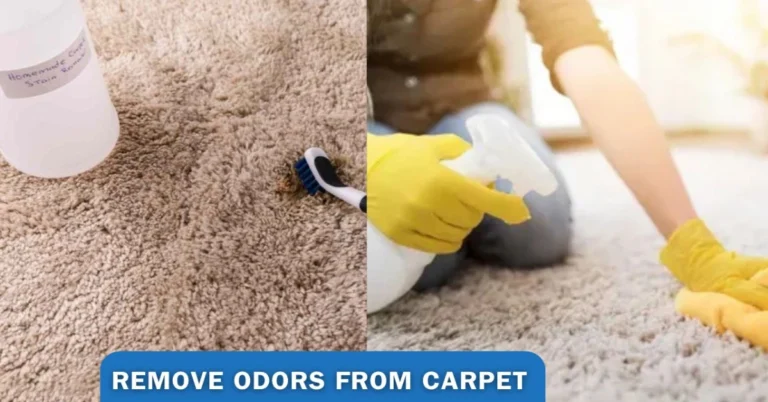
A smell that comes back within a few days of a proper clean means moisture, bacteria, or old spill residue has worked past the fiber and into the backing or padding — layers that surface cleaning and most rental carpet cleaners physically can’t reach. See our full guide to removing carpet odors for the difference between a fiber-level smell (fixable) and a backing-level smell (usually not).
- A musty smell that’s strongest right after the AC kicks on often means trapped moisture in the pad — a mold risk in humid UAE conditions, not just an odor issue.
- Pet-related odors that persist after enzymatic cleaning have usually reached the sub-floor. At that point, replacing the pad alone sometimes solves it without a full carpet swap — worth trying before you write off the whole carpet.
- A general “old” smell with no obvious source is typically just accumulated dust, skin cells, and off-gassing from aging synthetic fiber. Harmless, but a genuine sign of age.
3. Stains That Won’t Lift — or Come Back Darker
Every carpet stains eventually. The question is whether the stain sits on the fiber surface (cleanable) or has been absorbed into the fiber core and backing (permanent). Once a stain reaches that second stage, cleaning products can only lighten it temporarily — it re-darkens within days as residual dye or soil wicks back up.
- Try a stain-specific method first — our baking soda stain-removal guide and coffee stain guide cover the most common household spills.
- If a spot keeps reappearing after three or more genuine cleaning attempts using the correct method for that stain type, the dye has bonded to the fiber — no amount of cleaning will fully remove it.
- Multiple stains scattered across high-use areas (rather than one isolated accident) usually means the carpet has simply absorbed years of normal spills faster than it could be cleaned.
4. Flat, Lifeless Texture With No Bounce
This is the structural version of sign #1. Press your palm firmly into the pile and lift it away. New or healthy carpet fiber rises back within a second or two. Fiber that’s lost its structure stays compressed, or rises only partway.
- Compare a spot under a rug or heavy furniture (protected) to an open walking area. A large gap in bounce-back between the two confirms fiber breakdown rather than a padding issue.
- If the carpet feels noticeably harder underfoot than it did when new — even in areas that don’t get much traffic — the padding underneath has likely compressed and lost its cushioning, which accelerates fiber wear from that point on.
5. Dust and Allergy Symptoms That Don’t Improve With Cleaning
Carpet fiber acts as a filter, trapping dust, pet dander, and pollen that would otherwise stay airborne — that’s actually a benefit when the carpet is relatively new. Past a certain age, the fiber becomes saturated and starts releasing trapped particles back into the air with every footstep instead of holding onto them.
- If vacuuming twice a week still leaves visible dust settling on furniture within a day or two, the carpet is likely at or past saturation.
- Household members noticing more sneezing or stuffiness specifically in carpeted rooms — but not elsewhere in the home — is a reasonable (though not diagnostic) sign worth mentioning to an allergist if symptoms are new or worsening.
- A professional hot-water extraction clean (not just vacuuming) can meaningfully reduce trapped allergens if the carpet is otherwise structurally sound — see our steam cleaning guide for how often that actually needs to happen.
6. Fading That’s Uneven Across the Room
All carpet fades with UV exposure and cleaning chemicals over time — that alone isn’t a reason to replace it. Uneven fading is the actual red flag, because it means the carpet is aging at different rates across the room and will never look uniform again, regardless of cleaning.
- Compare color under furniture (protected from sunlight) to open, sun-exposed areas. A visible difference of more than one or two shades means UV has permanently broken down the dye in exposed zones.
- UV-blocking window film or rotating rugs over high-sun areas can slow this down in a replacement carpet, but won’t reverse damage already done.
7. Rippling, Buckling, or Edges Lifting
This is a structural issue, not a cosmetic one, and it’s the sign most worth acting on quickly. Carpet is stretched tight over padding during installation; when the backing loses tension — from age, humidity cycling, or improper original installation — it starts to ripple.
- Small ripples can sometimes be fixed with re-stretching (power-stretching the existing carpet back into place) rather than full replacement — worth getting a quote for if the carpet is otherwise in good shape and less than half its fiber’s expected lifespan.
- Ripples are also a trip hazard, and they trap moisture underneath, which accelerates mold growth in the pad. Don’t leave this one for “later.”
- Edges pulling away from the wall along with rippling in the middle usually means the backing has fully delaminated — at that point, re-stretching won’t hold, and replacement is the only real fix.
8. Style That No Longer Fits the Room
The only sign on this list that isn’t about physical wear. A carpet in excellent physical condition can still make a renovated or updated room look unfinished if it’s an outdated color or pattern.
- This is a legitimate reason to replace carpet early — but it’s worth separating from the structural signs above so you’re making a style decision consciously, not because you think the carpet is failing when it isn’t.
- If budget is a factor, a single accent rug over structurally-sound outdated carpet is a genuinely reasonable middle ground until a full replacement makes sense.
Repair or Replace? A Quick Way to Decide
Before committing to a full replacement, it’s worth ruling out cheaper fixes:
- Rippling only, carpet otherwise sound: Try re-stretching first — typically far cheaper than replacement.
- Odor only, fiber and texture still good: Try a professional deep clean and, if pet-related, pad replacement before assuming the carpet itself is done.
- Isolated damage (burn, tear, deep stain) in one small area: A patch repair using carpet from a closet or under furniture can fix a single spot without replacing the whole room.
- Two or more structural signs together (flattening + odor, or fading + rippling): This combination reliably means the carpet is past the point where any single fix helps — replacement is the more cost-effective choice long-term.
Frequently Asked Questions
How long does carpet actually last before it needs replacing?
It depends heavily on fiber: polyester typically lasts 5–10 years, olefin 7–12 years, nylon 10–20 years, and wool 15–30+ years. Foot traffic, sunlight exposure, and pad quality all shift these numbers up or down within their range.
Can a carpet be saved with deep cleaning instead of replacing it?
Yes, if the problem is surface-level dirt, mild odor, or light staining and the fiber itself still has bounce-back. Professional hot-water extraction can add real years to a carpet’s usable life. It won’t help once the fiber has physically flattened, the backing has delaminated, or a smell keeps returning after proper cleaning — those are structural, not surface, problems.
Is it cheaper to repair a section of carpet than replace the whole room?
For a single isolated area — a burn mark, a small tear, one stubborn stain — yes, a patch repair using carpet from a closet or under a piece of furniture is far cheaper. Once damage or wear is spread across a room rather than confined to one spot, patching stops being cost-effective and full replacement becomes the better value.
How much does new carpet cost to install in the UAE?
Supply-only prices run from roughly AED 12–28 per sq ft for polypropylene up to AED 45–150 per sq ft for wool, before underlay (AED 8–12/sq ft) and installation labor. A typical living room (~30 sqm) lands anywhere from AED 3,800 at the budget end to AED 24,000 for a premium wool installation, depending on fiber choice and room size.
Does old carpet actually affect indoor air quality?
Yes, once it’s past saturation. Fresh carpet traps airborne dust and allergens, which is a genuine air-quality benefit. Aged carpet fiber that’s already full releases those same particles back into the air with foot traffic instead of holding them — which is why persistent dust or allergy symptoms in carpeted rooms specifically are worth paying attention to.
Editorial note: Fiber lifespan ranges and pricing above are sourced from current UAE flooring suppliers and industry flooring-life data, current as of 2026. Actual carpet life varies with household traffic, sunlight exposure, and maintenance — the physical signs in this guide are more reliable than age alone for deciding when to replace.