20 Bun Hairstyles for Every Hair Type (Plus How to Keep Your Hairline Safe)
A bun does more work than almost any other hairstyle. It clears hair off your neck in the heat, survives a full workday without a single touch-up, and can go from a gym-bag afterthought to a black-tie updo depending on how you pin it. The catch is that most “bun hairstyles” round-ups show the same five photos with no real guidance on technique, hair type, or how to keep a daily bun from thinning your hairline over time.
This guide covers 20 genuinely different bun styles, organized by how they’re built and when to wear them, plus the tools, products, and hair-health guidance that separate a bun that lasts all day from one that’s falling apart by lunch.

In This Guide
- How to pick the right bun for your hair type and the occasion
- 20 bun hairstyles grouped by technique: classic, braided, space buns, special-occasion, and natural/curly
- The tools and products that actually make a difference
- Whether tight buns damage your hairline, and how to wear one safely
- Common mistakes and answers to the questions people ask most
How to Choose the Right Bun for Your Hair, Length, and Occasion
Before picking a style, it helps to know what your hair type and length can realistically do without fighting you all morning.
- Fine or thin hair holds shape better with texturizing spray or dry shampoo added before styling, and generally looks fuller as a slightly looser, lower bun rather than a tight, small one that reads thin.
- Thick or long hair can handle a high bun without slipping, and is the best candidate for braided and twisted styles since there’s enough hair to work with.
- Short hair (chin to shoulder length) works best with a low, loose bun, a half-up version, or a “faux bun” built around a donut or sock tool that a small ponytail can wrap around.
- Curly, coily, or textured hair generally holds a bun with fewer pins than straight hair, but needs more moisture beforehand to avoid frizz and breakage at the edges.
- Occasion matters as much as hair type. Sleek, low buns read professional and formal; messy, textured buns read casual; and buns with braids, twists, or accessories read bridal or special-occasion.
20 Bun Hairstyles Worth Knowing
Classic and Everyday Buns
-
1. High Bun
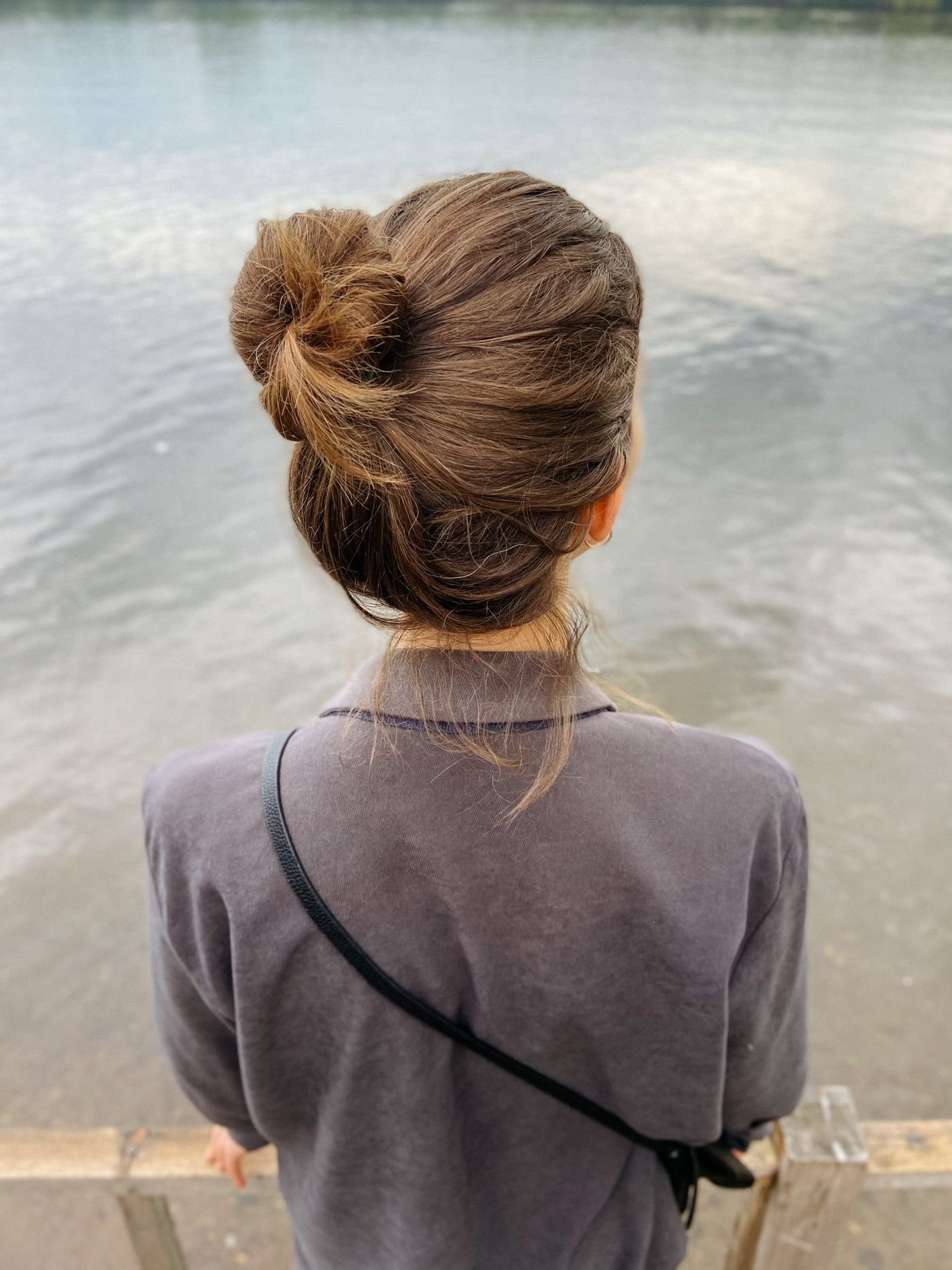
The most versatile bun in the category: hair is gathered into a high ponytail, twisted, and wrapped around its own base. It works with almost any hair length above shoulder height and is the fastest style to execute in under two minutes. For extra hold, spray the roots with a strong-hold hairspray before pulling hair back, and secure the twisted section with two bobby pins crossed in opposite directions rather than parallel — the crossing technique holds significantly better than parallel pins.
-
2. Low Bun / Chignon
Positioned at the nape of the neck, the low bun elongates the neck and suits nearly every face shape, which is why it remains the standard choice for offices and formal events alike. Smooth hair back with a boar-bristle brush and a light-hold gel before securing it into a low ponytail, then twist and pin flat against the head rather than letting it sit high and round.
-
3. Sleek Low Bun
A more polished version of the chignon, built for a completely smooth finish with no visible flyaways. Apply smoothing gel or edge control to a brush — not directly to the hair — for even distribution, comb hair back in sections, and finish with a light mist of hairspray over a fine-tooth comb laid flat against the head to tame baby hairs without stiffening them.
-
4. Messy Bun
Loose, undone, and deliberately imperfect, the messy bun works best on second- or third-day hair that already has some natural texture and grip — freshly washed hair is often too slippery to hold the look. Pull hair into a loose, slightly lower ponytail, twist it just once or twice, and let pieces fall out around the face intentionally before securing with a claw clip or a few bobby pins.
-
5. Top Knot
Similar to a high bun but wound tighter and positioned directly at the crown for a more sculptural, fashion-forward finish. Because the knot sits higher and tighter than a standard high bun, it’s best reserved for occasional wear rather than an everyday style, since repeated tension at the same point on the scalp is one of the more common contributors to thinning at the crown.
Braided and Twisted Buns
-
6. Braided Bun
Hair is first gathered into a classic three-strand braid, then the braid is coiled around itself and pinned into a bun shape. This is one of the more durable options on this list, holding its shape through a full day of movement far better than a plain twisted bun.
-
7. French Braided Bun
A French braid worked from the crown down into a low ponytail, then coiled into a bun, adds texture and structure at the roots that a plain bun doesn’t have. It also disguises regrowth and roots better than most other styles, since the braid pattern breaks up the parting line.
-
8. Dutch Braided Bun
The inverted version of a French braid, where sections cross underneath rather than over, giving a more raised, three-dimensional braid pattern before it’s coiled into the bun. It reads slightly edgier and holds up marginally better on fine hair because the braid sits more visibly on top of the head.
-
9. Rope-Twist Bun
Instead of braiding, two sections of hair are twisted individually and then twisted around each other before being wound into a bun. It’s faster than a full braid and gives a similar textured look, making it a good middle ground between a plain twisted bun and a fully braided one.
-
10. Halo Braid Bun
A braid is worked around the entire head like a crown and the ends are tucked and pinned rather than left hanging, creating the effect of a bun that wraps the whole head rather than sitting in one spot. It needs longer hair to fully circle the head and is best suited to special occasions given the time it takes to execute well.
Space Buns and Double Buns
-
11. Space Buns
Hair is parted down the middle and gathered into two symmetrical high buns, one on each side of the head. The style depends on even parting and equal-sized sections for a polished look, since any imbalance is immediately visible with two buns side by side.
-
12. Braided Space Buns
Each section is braided before being coiled into its bun, adding texture and making the style last considerably longer than plain space buns, which tend to loosen and droop by midday.
-
13. Bubble Buns
Instead of one twist, each section is secured with several small elastics at intervals before being looped and pinned, creating a segmented, “bubble” texture. It works particularly well on thinner hair since the segments create the visual effect of more volume than the hair actually has.
Special-Occasion and Bridal Buns
-
14. Ballerina Bun
The classic, taut, centered bun associated with ballet — hair is slicked back with zero flyaways and the bun sits precisely at the crown or slightly above it. Because it relies on maximum tension for its signature smoothness, it should be reserved for special occasions rather than daily wear.
-
15. Low Bun With Accessories
A sleek or slightly textured low bun finished with a decorative comb, pearl or crystal pins, or a wrapped ribbon. This is the most common base style for weddings and formal events because it photographs well from every angle and holds a veil or headpiece securely.
-
16. Braided Crown With Low Bun
Two front sections are braided back toward the crown and merged into a low bun at the nape, combining the structure of a braided crown with the practicality of a bun. It’s a popular bridesmaid and bridal option because it keeps hair secure through a full day of movement while still looking intentionally styled from the front.
-
17. Twisted Side Bun
Hair is gathered to one side of the neck rather than centered, twisted, and pinned into a low, asymmetrical bun. It suits strapless or off-shoulder necklines particularly well since it keeps one side of the neck and shoulder completely bare.
Natural and Curly Hair Buns
-
18. Curly Puff Bun
Natural curls or coils are gathered into a high ponytail and allowed to stand as a full, rounded puff rather than being smoothed flat. Applying a curl cream or gel to damp hair before puffing preserves definition, while detangling gently with fingers or a wide-tooth comb reduces breakage compared with a fine-tooth comb or brush.
-
19. Coily Top Knot
A more compact, defined version of the curly puff, twisted at the base into a knot rather than left as a loose puff. It holds up well under a silk or satin scarf overnight, making it one of the more practical protective options for coily hair.
-
20. Twist-Out Bun
Hair is first styled into two-strand twists, allowed to set, and then the twists are gathered and coiled into a bun once they’ve dried, giving a textured, defined finish that a plain gathered bun on coily hair doesn’t achieve. It’s a longer process than the other styles on this list but holds shape and moisture noticeably longer.
Tools and Products That Actually Make a Difference
A handful of tools solve most of the common bun problems — slipping, thinness, and flyaways — far more reliably than technique alone.
- Donut or sock bun tools add volume and structure for thin or short hair that can’t otherwise support a full-looking bun. Hair is pulled through the center of the donut and spread evenly around it before the ends are wrapped and pinned.
- Bobby pins, crossed in pairs hold significantly better than pins placed parallel to each other or a hair tie alone, since the crossing creates two points of tension instead of one.
- Edge control or a light-hold gel on a toothbrush is the standard method for smoothing baby hairs along the hairline without applying product directly to the scalp.
- A finishing hairspray held at a distance sets flyaways without stiffening the whole style, and works best applied over a fine-tooth comb held flat against the head.
- Texturizing or dry shampoo spray gives fine, freshly washed hair the grip it needs to hold a bun shape, since completely clean, silky hair tends to slip out of buns faster than hair with a little natural oil or product in it.
Is a Tight Bun Bad for Your Hair?
It can be, if it’s worn the same way, at the same tension, every single day. The American Academy of Dermatology identifies consistently tight hairstyles — including buns, ponytails, braids, and locs — as a cause of traction alopecia, a form of hair loss caused by repeated pulling on the same hair follicles over time.
The AAD lists specific warning signs worth watching for: broken hairs around the forehead, a receding hairline, small bald patches where hair is pulled tightly, pain from tight pulling, or stinging and crusting on the scalp. Early intervention matters, since the AAD notes that traction alopecia can become permanent the longer it goes untreated.
None of this means avoiding buns altogether. It means rotating styles rather than wearing the same tight, high bun daily, keeping tension light enough that it doesn’t hurt or leave visible tenting of the scalp when the bun is first pulled up, and giving the hairline a break with looser, lower styles between tighter ones. If you notice thinning or pain along your hairline, it’s worth seeing a dermatologist rather than waiting it out.
Common Mistakes to Avoid
- Pulling too tight, too often. A bun that hurts when you first put it up is tight enough to cause damage over time, even if it looks neat.
- Skipping prep on fine hair. Clean, product-free fine hair slips out of buns quickly; a texturizing spray or light dry shampoo beforehand makes a noticeable difference.
- Using only a hair tie for hold. A bun secured with elastic alone is far less stable than one finished with a few crossed bobby pins.
- Detangling curly or coily hair with a fine-tooth comb. This causes far more breakage than finger-detangling or a wide-tooth comb, especially when hair is dry.
- Not checking the back view. Buns are one of the few styles other people see mostly from behind — a quick check with a second mirror avoids uneven parting or a lopsided shape going unnoticed all day.
Frequently Asked Questions
How do I keep my bun from falling out during the day?
Cross two bobby pins in opposite directions rather than placing them parallel, add a light-hold hairspray or texturizing spray before styling, and avoid completely clean, freshly washed hair, which tends to be too slippery to hold a bun shape well.
What’s the difference between a bun and a chignon?
They’re closely related terms for the same general shape. “Chignon” traditionally refers to a low, often sleek bun positioned at the nape of the neck, while “bun” is used more broadly for any style where hair is gathered and coiled at any height on the head.
Are buns bad for hair growth?
Occasional buns are not a problem. The concern, according to the American Academy of Dermatology, is wearing the same tight style repeatedly in the same spot, which can gradually cause traction alopecia at the hairline or wherever the tension is concentrated.
Can I do a bun with short hair?
Yes, with a donut or sock bun tool, which adds volume for hair too short to wrap fully around itself. A low, slightly messy bun is generally more achievable on shorter hair than a tight, high one.
How do I make a bun look less thin?
Use a donut tool for added volume, backcomb the ponytail lightly at the base before wrapping it, or try a bubble bun, which uses segmented elastics to create the appearance of more volume than the hair actually has.
Final Thoughts
The right bun depends less on trend and more on your hair type, how much time you have, and whether you’re heading to work or a wedding. Start with the low bun or high bun if you’re new to styling your own updos, since both are the most forgiving of imperfect technique, then build up to braided and textured versions as you get comfortable.
If your hair runs on the finer side, our guide to hair extensions for added volume covers how clip-ins can make bigger, fuller buns easier to achieve. For curly and coily hair specifically, our 4C hair care guide has more detail on the moisture routine that keeps twist-outs and puffs from drying out. And if you’re planning buns for a wedding day, our bridal hairstyle guide covers timing, veils, and how to plan around heat and humidity.